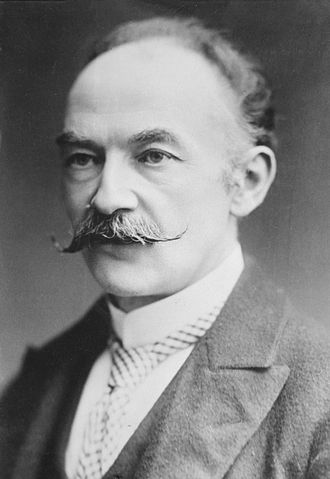
Thomas Hardy:
(Higher Bockhampton, 2 June 1840 – there, 11 January 1928).
English naturalist novelist and poet of the Victorian era and early 20th century. However, his poetry as well as his novels also have strong Romantic undertones. He is widely regarded as one of the great writers of English literature.
And the May month flaps its glad green leaves like wings, delicate-filmed as new-spun silk.

The lines come from Hardy’s poem “Afterwards” The image of May leaves “flapping like wings” and being “delicate-filmed as new-spun silk” captures the almost translucent quality of freshly opened leaves in early spring light — so thin you can see light through them, trembling in the breeze like something alive and fragile. Hardy is being precise and tender as a nature observer.
The poem wonders what Hardy’s neighbours will say after his death, at various times of year. When May arrives and the landscape is green with new growth, will they remember that Hardy was a man who used to notice such things? It is his quiet, melancholy hope to be remembered not for great deeds, but simply as someone who ‘paid attention’ to the world.
Notably, nowhere in the poem does Hardy mention death directly. He uses euphemism throughout — he has been “stilled at last,” his bell of “quittance” has sounded — as if he finds it difficult to contemplate the idea of life going on without him.
Origin:
The poem comes from Hardy’s volume “Moments of Vision”, published in 1917, when he was 77. It was later read at a memorial service after his death ten years later.
Author:
Thomas Hardy (1840–1928), best known today as a novelist (‘Tess of the d’Urbervilles’, ‘Far from the Madding Crowd’), but who considered poetry his true calling and reportedly went on composing poetry right until the end of his life, dictating his last poem while on his deathbed.
