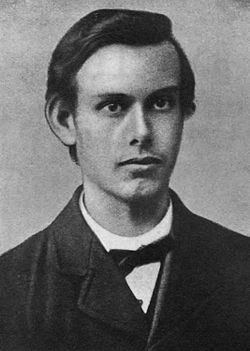
Francis Joseph Thompson:
(16 December 1859 – 13 November 1907).
English poet and Catholic mystic.
At the behest of his father, a doctor, he entered medical school at the age of 18, but at 26 left home to pursue his talent as a writer and poet.
He spent three years on the streets of London, supporting himself with menial labour, becoming addicted to opium which he took to relieve a nervous problem.
It is the month, the jolly month. It is the jolly month of May.
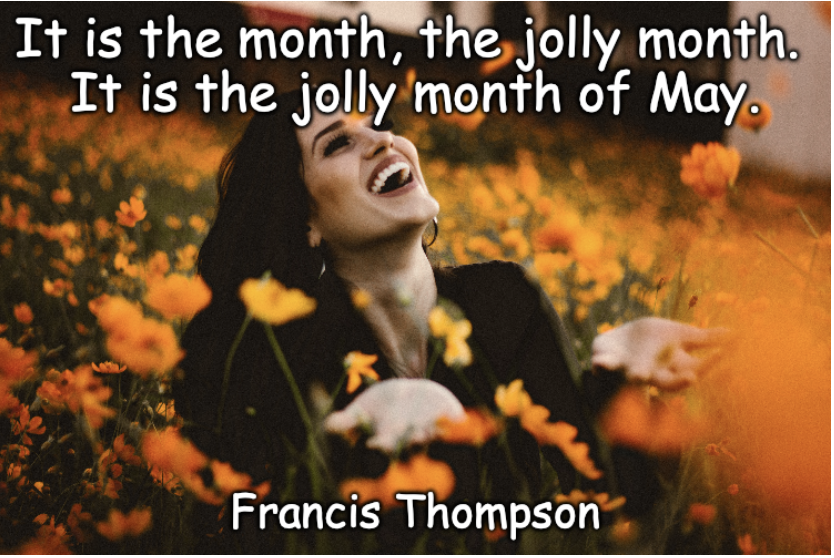
The phrase celebrates May as the most joyful, life-affirming month of the year — a time of blossoming nature, warmth returning, love, and festivity. The word “jolly” (in Thompson’s version) and “merry” (in the older tradition) both convey uninhibited, exuberant delight. The mock-medieval flavour of Thompson’s poem — “By Goddes fay!” (by God’s faith!) — gives it a Chaucerian, almost boisterous quality, evoking ripening corn, birdsong, blossoms, and the season of love and kisses.
Origin:
The tradition of hailing May as the merriest month is ancient, rooted in pre-Christian spring festivals across Europe. In literature, the phrase “the merry month of May” is most famously anchored in Thomas Dekker’s poem of the same name, part of his play “The Shoemaker’s Holiday”, first performed in 1599. Dekker’s refrain — “O the month of May, the merry month of May, / So frolic, so gay, and so green, so green, so green!” — lodged the expression firmly in the English literary tradition. Thompson’s “jolly month” variant is a later echo of exactly this tradition, written in a deliberately Elizabethan style.
Author:
The specific line “It is the month, the jolly month, / It is the jolly month of May” comes from “A May Burden” by Francis Thompson. Thompson was an English poet who fell into poverty and opium addiction as a London vagrant, before a married couple discovered his writing and rescued him, publishing his first book “Poems” in 1893. He died of tuberculosis in 1907. He is best remembered for “The Hound of Heaven”, but “A May Burden” shows his more playful, archaic side — consciously channelling the Elizabethan poets who came before him.
