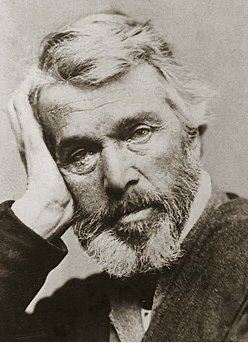
Thomas Carlyle:
(4 december 1795 – 5 februari 1881).
Schots essayist, historicus en filosoof.
Bekend als de “wijsgeer van Chelsea”, beïnvloedden zijn geschriften sterk de intellectuele en artistieke cultuur van het Victoriaanse tijdperk.
Carlyle was een kritische denker die vraagtekens zette bij het liberale democratische ideaal van zijn tijd. Hij geloofde meer in het belang van sterke leiders (“great men”) dan in de collectieve wijsheid van de massa.
Echte humor komt voort zowel uit het hart als uit het hoofd; hij is geen verachting; zijn innerlijk wezen is liefde; hij barst niet in lachen uit, maar glimlacht; een lach van veel dieper betekenis.
Stilte is zo diep als de eeuwigheid; Spraak is zo oppervlakkig als de tijd.
Lange stormachtige lente, nat controversieel april, koude winter in mei; maar uiteindelijk komt het seizoen van de zomer.
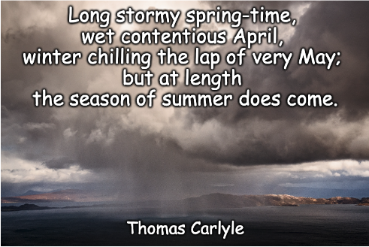
Carlyle was an influential figure in the Victorian era. He was known for his complex and often controversial writings on history, literature, and social issues. He was a fervent critic of the Industrial Revolution and the social inequality of his time. Origin: Although the exact work or letter in which this specific quote first appeared is difficult to pinpoint (since many of his statements have been gathered from his extensive correspondence and various writings), it fits thematically well with his philosophy of perseverance and the cyclical nature of history and human life. Carlyle strongly believed in the power of the individual to overcome adversity and in the ultimate triumph of good. It is important to note that quotes can sometimes be modified over time or that the exact source can be difficult to verify, especially with prolific authors like Carlyle. Nevertheless, this specific passage is consistently attributed to him and reflects the spirit of his work.
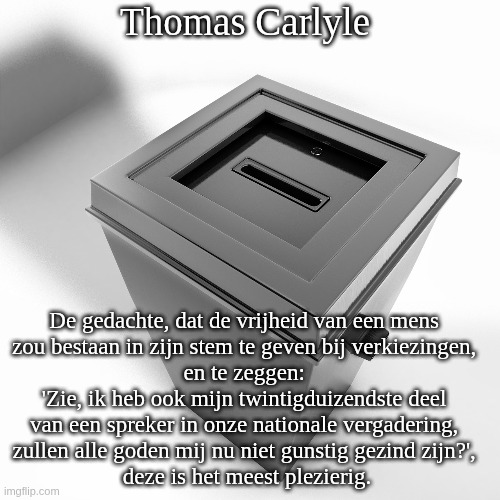
De gedachte, dat de vrijheid van een mens zou bestaan in zijn stem te geven bij verkiezingen, en te zeggen: ‘Zie, ik heb ook mijn twintigduizendste deel van een spreker in onze nationale vergadering, zullen alle goden mij nu niet gunstig gezind zijn?’, deze is het meest plezierig.