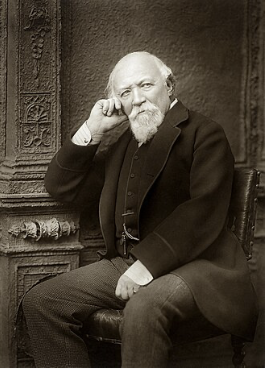
Robert Browning:
(Camberwell, London, 7 May 1812 – Venice, 12 December 1889).
English poet and playwright. He is considered one of the important writers of the Victorian era.
All June, I bound the rose in sheaves. Now, rose by rose, I strip the leaves.
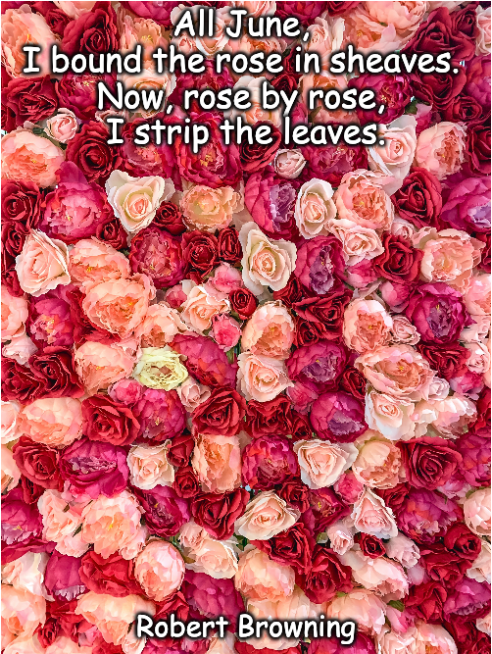
This is a translation of lines from a poem by Robert Browning.
The meaning is:
– Someone has ‘collected and bundled roses’ with great care and dedication.
– Then he ’takes the petals off rose by rose’.
– He scatters those rose petals at the place where ‘Pauline’, the beloved, might pass by.
Figuratively, it is about:
– love that is not guaranteed to be reciprocated 💔
– dedication without a guarantee of a result
– sacrificing something beautiful in the hope that the beloved notices it
– the vulnerability and transience of romantic gestures
The thought is: perhaps Pauline won’t even look back, perhaps the petals will wither unseen — but there was at least a chance that they would catch her attention. A freer meaning would be:
> ‘Out of love, someone makes a beautiful, tender gesture, even though he knows it might be in vain.’
📖 Origin:
The lines come from the poem:
> “One Way of Love” by Robert Browning.
The original English lines read:
> All June I bound the rose in sheaves,
> Now, rose by rose, I strip the leaves
> And strew them where Pauline may pass.
> She will not turn aside? Alas!
> Let them lie. Suppose they die?
> The chance was they might take her eye.
The poem appeared in the collection:
> “Men and Women”, published in 1855.
The poem “One Way of Love” is often read as a poem about a form of love consisting of ‘giving, hoping, and possibly losing’.
✍️ Author: Robert Browning
– Born: 1812
– Died: 1889
– Nationality: English
– Period: Victorian era
– Known for: dramatic monologues and psychologically refined poetry
– Famous works:
– “My Last Duchess”
– “Porphyria’s Lover”
– “The Pied Piper of Hamelin”
– “One Way of Love”
Robert Browning was one of the most important English poets of the 19th century. He was married to the famous poet Elizabeth Barrett Browning.
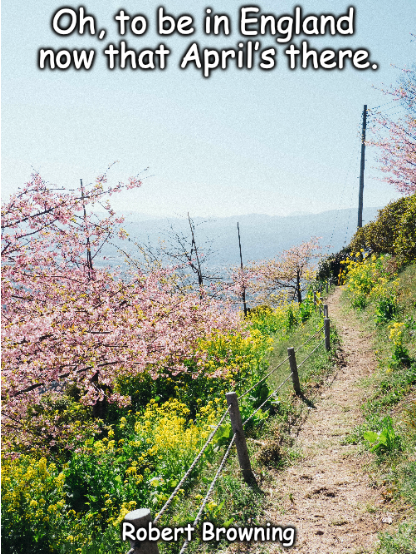
Oh, to be in England now that April’s there.