François de La Rochefoucauld:
2nd Duke of La Rochefoucauld.
(Paris, 15 September 1613 – there, 17 March 1680)
French writer, noble soldier and courtier, who became best known for Réflexions ou sentences et maximes morales (1665) or Maximes for short (Dutch translation: Maximes), short, concise statements or aphorisms on virtue and morality.
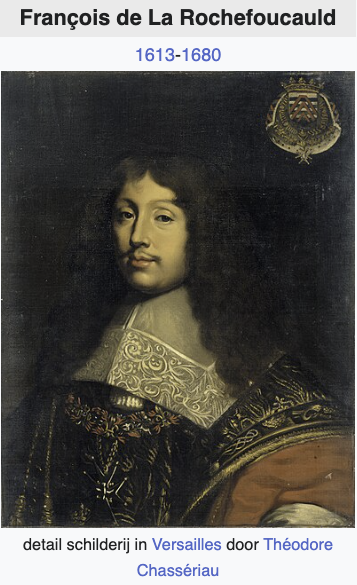
In friendship, as in love, we are often happier by the things we do not know than by those we know.
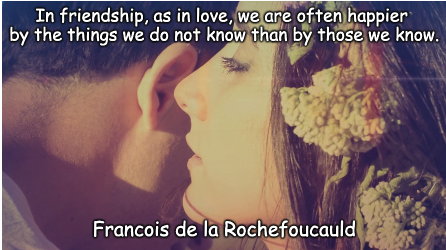
As one grows older, one becomes wiser and more foolish.
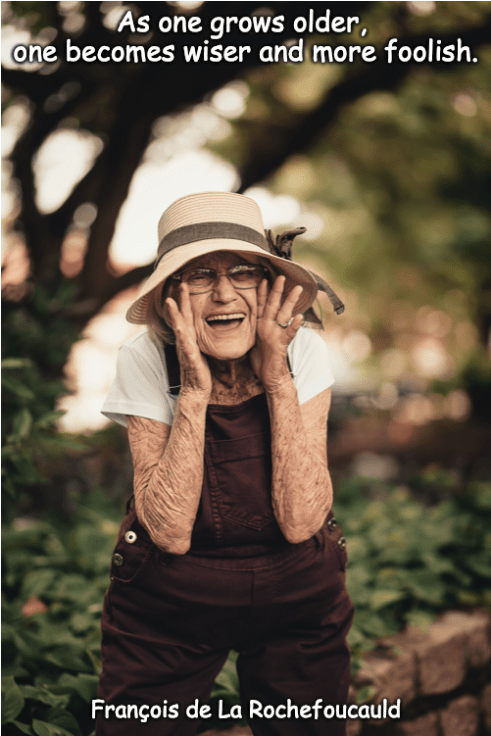
However rare true love may be, it is still less than true friendship.
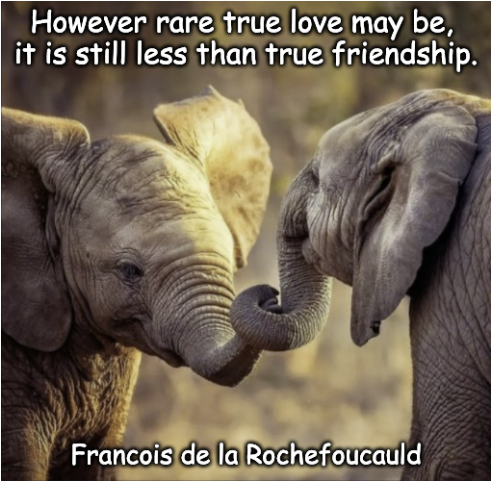
Envy is destroyed by true friendship, and coquetry by true love.
It shows a lack of friendship not to notice that our friends’ friendship has cooled.

Coincidence makes up for many mistakes that the mind would not know how to deal with.
We are never so easily deceived as when we are intent on deceiving other people.
We easily forgive our friends those faults that do no affect us ourselves.

We would gain more by showing ourselves as we are than by trying to appear to be what we are not.
We forgive as long as we love.
Overthinking is a disease.
Those who devote too much attention to little things generally become incapable of great ones.
Vanity makes us do more things that are distateful to us than reason does.
True love is like seeing ghosts: everyone talks about it, but few have ever seen one.

The statement draws a funny but provocative comparison: true love is as elusive as ghosts — something people endlessly philosophize, argue and fantasize about, but rarely, if ever, encounter in reality.
As a moralist, La Rochefoucauld had a rather skeptical view of human nature. His thesis is twofold:
1. “Doubt the authenticity of love” — what most people call “love” is, he says, something else: self-interest, habit, desire, or vanity. “True love” — unconditional, pure, selfless — is extremely rare.
2. “The Power of Stories” — people talk about it all the time, read about it, write about it, and believe in it, but have never actually experienced it themselves. Just like ghost stories, the myth is richer than reality.
There’s something cynical about the quote, but also something endearing — it acknowledges that people never give up the desire for true love, no matter how hard it is to find.
Author: François de La Rochefoucauld.
This famous quote comes from the French writer and moralist François VI, Duke of La Rochefoucauld (Paris, September 15, 1613 – March 17, 1680). François VI, duc de La Rochefoucauld, prince de Marcillac, was a French writer, moralist and memoirist, best known for his “Maximes”. He officially published only his “Mémoires*” and his “Maximes”, but his literary production was extensive.
Origin:
The statement comes from La Rochefoucauld’s “Réflexions ou Sentences et Maximes morales”, published in 1664. This work is also known simply as the *Maximes* — a collection of several hundred sharp, cynical and astute observations on human nature.
The original French text reads: “Il est du véritable amour comme de l’apparition des esprits: tout le monde en parle, mais peu de gens en ont vu.”
