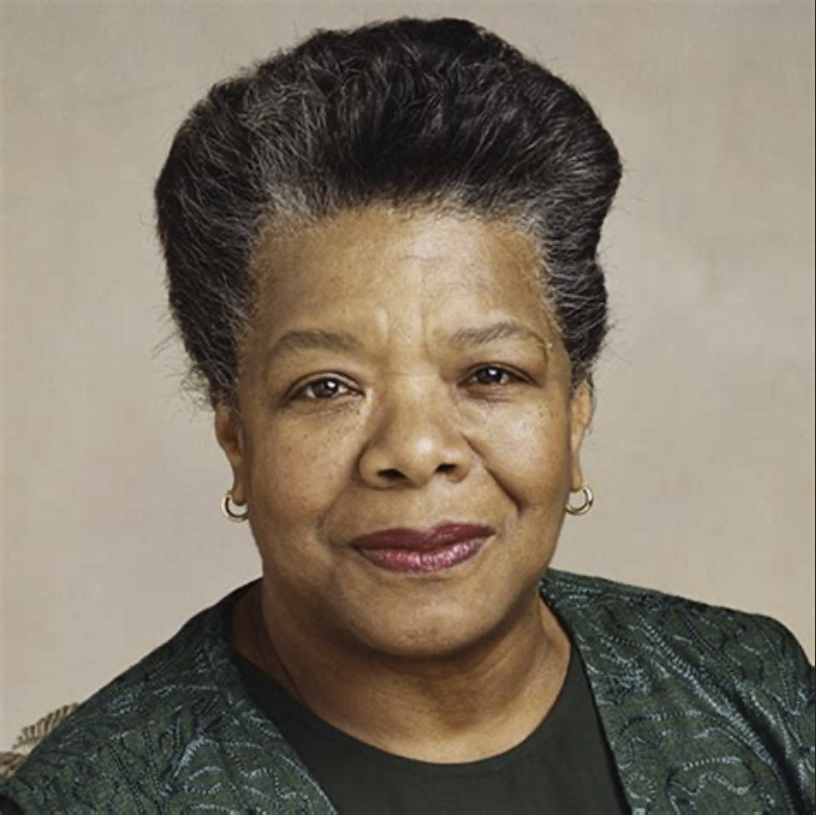
Maya Angelou:
Born Marguerite Annie Johnson.
(Saint Louis, Missouri, 4 April 1928 – Winston-Salem, 28 May 2014).
American writer, poet, singer, dancer, civil rights activist and professor of American Studies. She acted, wrote and produced films, soundtracks and directed.
If you are always trying to be normal, you will never know how amazing you can be.
Every December, I host a tree-trimming party. I serve chili with cornbread and lots of good wine. It’s a wonderful party, and it shows how much adults like to play.

Try to be a rainbow in someone’s cloud.
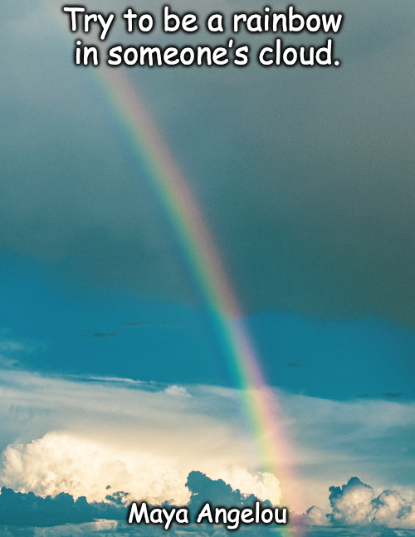
The image is simple: a cloud represents someone’s hardship, sorrow, or difficult period, and a rainbow represents a small but vivid moment of beauty, hope, or relief that appears within that darkness. To “be a rainbow in someone’s cloud” means to bring comfort, encouragement, or light into another person’s hard time, even briefly or in a small way. It’s often read as a call to everyday kindness rather than grand gestures, the idea that a kind word, a smile, or a moment of genuine care can lift someone even while their larger troubles persist.
Origin and author:
Maya Angelou used this phrase often, attributing the underlying spirit to her grandmother and other elders who raised her, describing how they modeled this kind of generosity toward others despite their own struggles during the Jim Crow era. She spoke about it in numerous talks and interviews, and it became closely associated with her public persona and her hospitality center, which she named “Reynolds-Angelou House,” sometimes referencing the rainbow phrase in connection with her motto for helping others. The phrase also appears in connection with her reflections in interviews compiled in works like “Conversations with Maya Angelou”, and she sometimes mentioned it as something she’d say to people she met to encourage them to extend kindness outward.
It’s worth noting that because the phrase circulated widely through her speeches and interviews rather than through one single canonical written text (like a specific poem or essay), its exact “origin” is best traced to her oral repertoire of personal maxims rather than a single dated publication.
You will face many defeats in life, but never let yourself be defeated.
If you don’t like something, change it. If you can’t change it, change your attitude.
There’s a world of difference between truth and facts. Facts can obscure the truth.
Nothing can dim the light which shines from within.
Family isn’t always blood, it’s the people in your life who want you in theirs: the one who accept you for who you are, the ones who would do anything to see you smile and who love you no matter what.
This is a wonderful day. I’ve never seen this day one before.
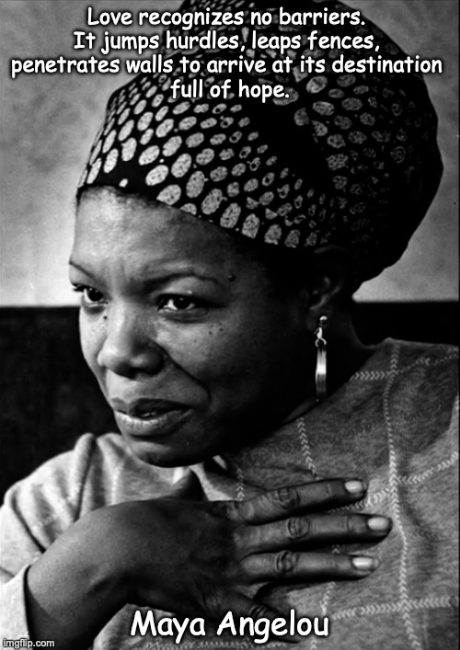
Love recognizes no barriers. It jumps hurdles, leaps fences, penetrates walls to arrive at its destination full of hope.
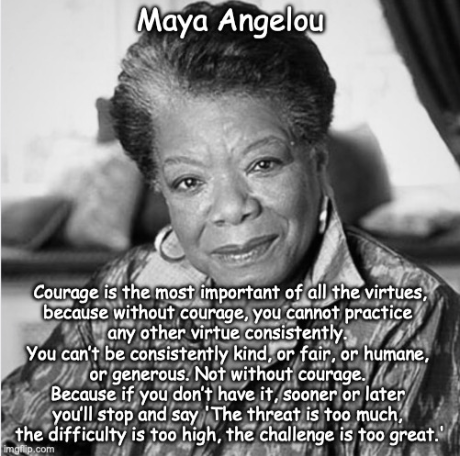
Courage is the most important of all the virtues, because without courage, you cannot practice any other virtue consistently. You can’t be consistently kind, or fair, or humane, or generous. Not without courage. Because if you don’t have it, sooner or later you’ll stop and say ‘The threat is too much, the difficulty is too high, the challenge is too great.’
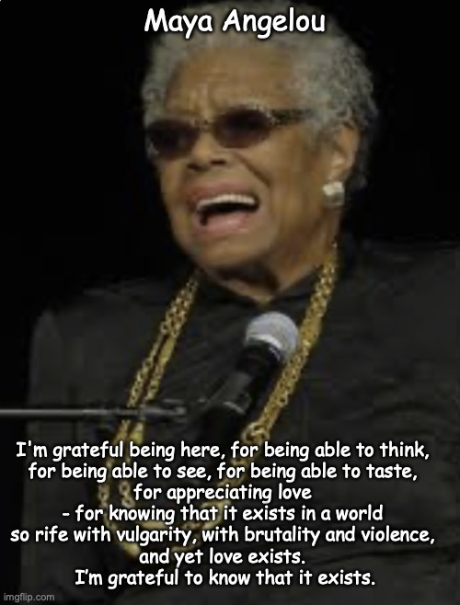
I’m grateful being here, for being able to think, for being able to see, for being able to taste, for appreciating love – for knowing that it exists in a world so rife with vulgarity, with brutality and violence, and yet love exists. I’m grateful to know that it exists.
Hope for the best, be prepared for the worse. Life is shocking, but you must never appear to be shocked. For no matter how bad it is, it could be worse and no matter how good it is, it good be better.
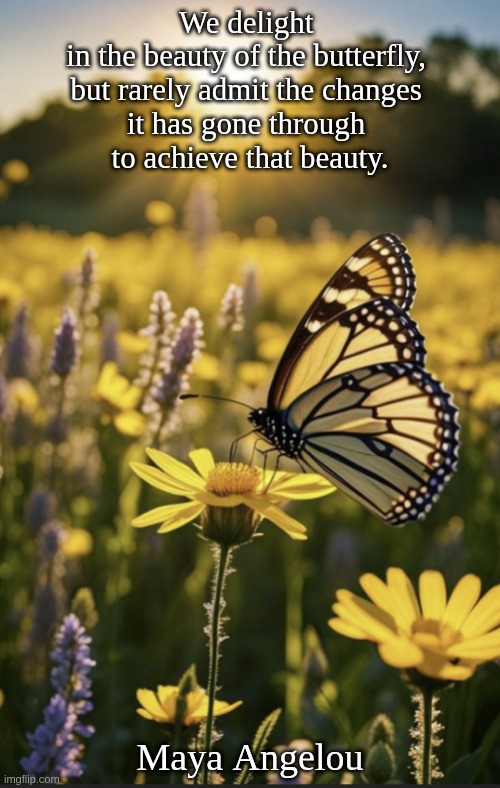
We delight in the beauty of the butterfly, but rarely admit the changes it has gone through to achieve that beauty.