(Ober-Ramstadt near Darmstadt, 1 July 1742 – Göttingen, 24 February 1799).
German writer, satirist and the first German professor of experimental physics. Like Voltaire, he showed a great admiration for England.
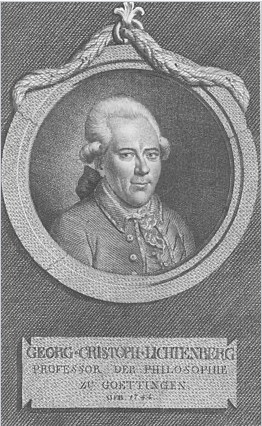
Georg Christoph Lichtenberg. Photo: wikipedia.org
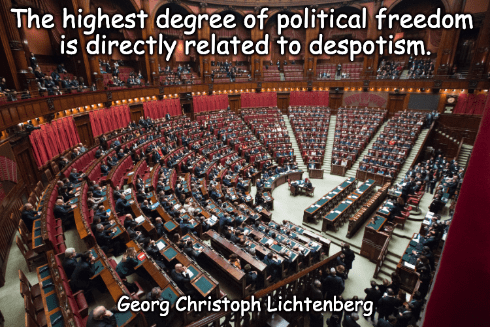
The highest degree of political freedom is directly related to despotism.
Photo by Marco Oriolesi
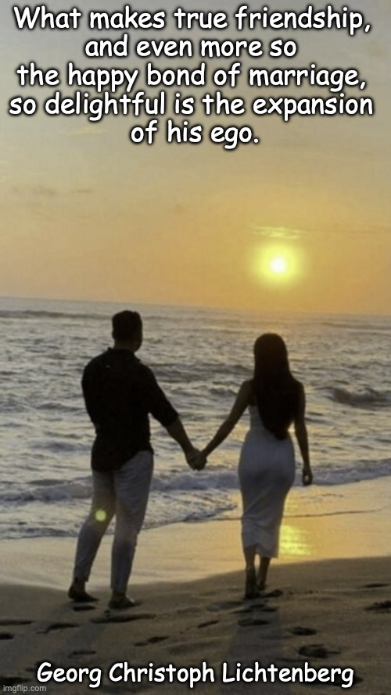
What makes true friendship, and even more so the happy bond of marriage, so delightful is the expansion of his ego.
Photo: Marsh Harrison
I don’t know if it will get better if things are changing. But things have to change if it is to get better.
Photo: Christine Sponchia
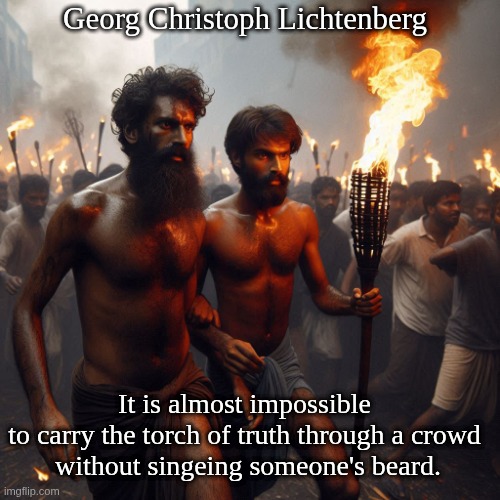
It is almost impossible to carry the torch of truth through a crowd without singeing someone’s beard.
Image: Peter van Geest – AI
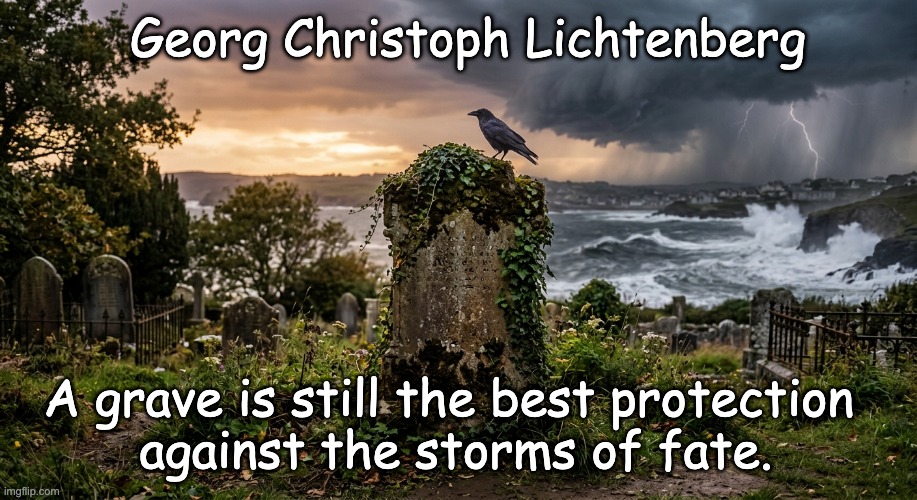
A grave is still the best protection against the storms of fate.
Image: Peter van Geest AI. 📖 Meaning: This quote is a rather ‘pessimistic’ or ‘fatalistic’ statement about human existence. The core message: Life is unpredictable and full of setbacks, suffering, and ‘storms’ (misfortune, illness, grief). The ‘solution’: The only place where one is ‘absolutely’ safe from this misery is death (the grave). The nuance: It is often not seen as an encouragement to suicide, but rather as a melancholic realization that total peace and security are unattainable during life. In death, fate can no longer touch you. 🖋️ Author: The statement is attributed to Georg Christoph Lichtenberg (1742–1799). Lichtenberg was an important German scientist (physicist), satirist, and philosopher during the Enlightenment. Source: The quote comes from his famous ‘Sudelbücher’ (Notebooks). 💬🕯️ Original, German: “Ein Grab ist doch doch immer noch die beste Befestigung gegen de Stürme des Schicksals.” What are the Sudelbücher? From a young age, Lichtenberg kept notebooks in which he wrote down thoughts, observations, aphorisms, and quotes. These books were not published until after his death and are regarded as a treasure trove of sharp, ironic, and sometimes melancholic insights. This specific quote is one of his most famous aphorisms.
Door Pieter
Mensenmens, zoon, echtgenoot, vader, opa.
Spiritueel, echter niet religieus.
Ik hou van golf, wandelen, lezen en de natuur in veel opzichten.
Onderzoeker, nieuwsgierig, geen fan van de mainstream media (MSM).