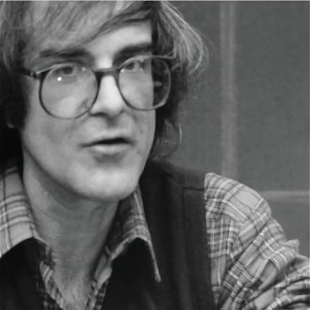
Alexander Louis Theroux:
(born 1939)
American novelist and poet. He is known for his novel Darconville’s Cat (1981), which was selected by Anthony Burgess for his book-length essay Ninety-Nine Novels: The Best in English Since 1939 – A Personal Choice in 1984 and by Larry McCaffery for his 20th Century’s Greatest Hits list.
September―it was the most beautiful of words, he’d always felt, evoking orange-flowers, swallows, and regret.
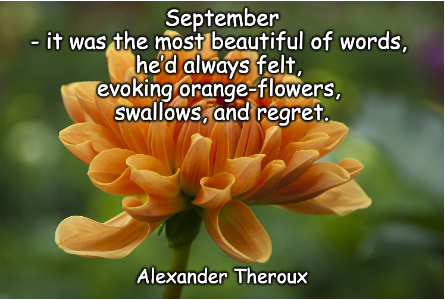
The sentence treats “September” as beautiful not only for its sound, but for the feelings and images it suggests:
– Orange-flowers:
— autumnal colour, fading warmth, beauty at the edge of decay; the expression may also suggest fragrant orange blossoms.
– Swallows:
— birds gathering or migrating as summer ends, traditionally associated with departure and seasonal change.
– Regret:
— the melancholy of endings: summer passing, time moving on, and things lost or left behind.
Thus, September represents a mixture of ‘beauty, transition, departure, and wistfulness’. The phrase captures the bittersweet quality of early autumn: lovely precisely because it signals that something is ending.
📖 Origin and author:
The line is by Alexander Theroux and comes from his novel “Darconville’s Cat”, first published in 1981:
> “September—it was the most beautiful of words, he’d always felt, evoking orange-flowers, swallows, and regret.”
It is a literary sentence rather than a traditional proverb or anonymous saying. Page numbers vary by edition. Alexander Theroux is an American novelist and the brother of writer Paul Theroux.
✍️ Style:
The line is characteristic of Theroux’s ornate, highly associative prose. “September” becomes almost an incantation—a word whose sound calls up colours, movement, memory, and sadness.
