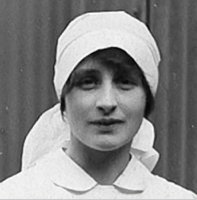
(Newcastle-under-Lyme, 29 December 1893 – Wimbledon (London), 29 March 1970).
British writer, feminist and pacifist. She was best known as the author of the 1933 biographical book Testament of Youth. This book is about her experiences during World War I and the beginning of her path to pacifism.
Vera Brittain. Photo: wikipedia.org
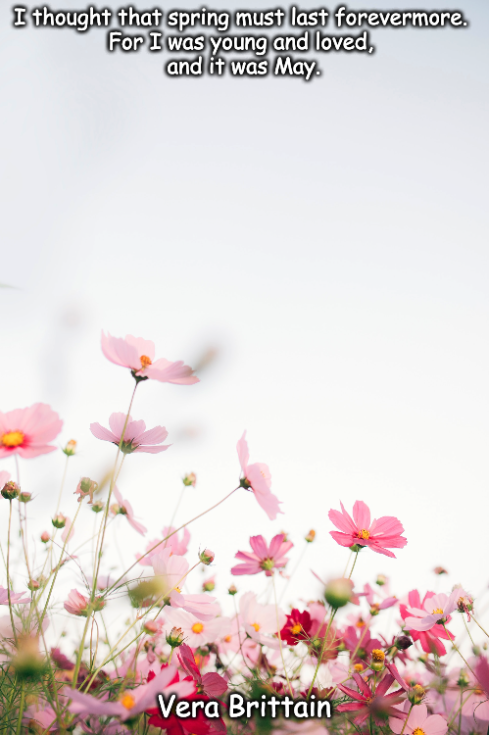
I thought that spring must last forevermore. For I was young and loved, and it was May.
Photo: Tomoko Uji. Meaning 📖 🌸: The quote: initially expresses a feeling of: youthful innocence, love and happiness, the idea that beautiful things can last forever, spring and May as symbols of blossoming, hope, and vitality. 🔎 Deeper meaning:The line only takes on its full significance in the context of the entire poem: it begins with an almost ‘idyllic memory’, then shifts to ‘grief, loss, and disillusionment’,the return of May emphasizes that: nature returns, but ’the lost happiness does not’. 🕯️ Core:The meaning is therefore not only romantic but also tragic: happiness used to seem eternal, later it turns out that ‘youth, love, and peace are fleeting’.🕰️ Origin: This is ‘not a traditional saying or proverb’, but a ‘literary quote’ from a poem by Vera Brittain. 📚 Origin:The line comes from a poem that: was written from Oxford, first appeared in “The Oxford Magazine” on May 5, 1916, was later included in: “Verses of a V.A.D.” (1918), also listed as “Poems of a V.A.D.” (1918) in some secondary sources. “Poems of the War and After” (1934), later also in “Because You Died: Poetry and Prose of the First World War and After” (Virago Press, 2008). 🪖 Context:The origin is therefore clearly connected to: the First World War, personal loss, Brittain’s war experience as a V.A.D. (‘Voluntary Aid Detachment nurse’). The passage reads: “I thought that Spring must last for evermore, For I was young and loved, and it was May. Now it is May again…” It is precisely that shift to “Now it is May again…” that makes the contrast between the past and the future so poignant. 👤 Author:Vera Brittain (1893–1970) ℹ️ She was: an English writer, poet, and memorialist, known for her work on ‘war, loss, and memory’. Although the quote is sometimes cited in isolation as if it were a piece of general wisdom, it is in reality: a ‘line from a poem’, written by Vera Brittain, within a clear ‘war and mourning context’.
Door Pieter
Mensenmens, zoon, echtgenoot, vader, opa.
Spiritueel, echter niet religieus.
Ik hou van golf, wandelen, lezen en de natuur in veel opzichten.
Onderzoeker, nieuwsgierig, geen fan van de mainstream media (MSM).