Adelbert von Chamisso:
(30 January 1781 – 21 August 1838).
German poet, writer and botanist. He was commonly known in French as Adelbert de Chamisso (or Chamissot) de Boncourt, a name referring to the family estate at Boncourt.
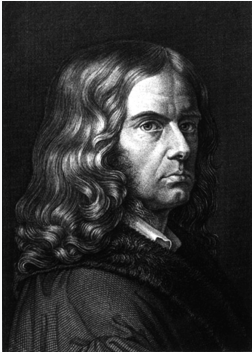
The present time is wrong, life lies.

The phrase “The present is false, life lies” expresses a romantic-pessimistic worldview: The present moment, as it presents itself, does not correspond to the truth—it deceives, it is mere illusion. Lived existence itself, with its hopes and apparent certainties, cheats people out of the true, deeper truth. This is a typical motif of Romanticism: Visible, everyday reality is contrasted with the true, often unattainable truth as inadequate or deceptive—related to the romantic world-weariness and the longing for something that cannot be fulfilled in real life.
Origin: Despite research, I could not find a definitive work reference (specific poem, year of composition or publication) for this exact phrase. Quotation collections (zitate.eu, woxikon, bestenzitate.com) list it without source information—unlike some other Chamisso quotations, where, for example, the source is cited. The source is cited as “Frauen-Liebe und -Leben” (1830) or “Nachtwächterlied” (1826). It is therefore possible that the sentence originates from one of his shorter poems or aphorisms, without the freely accessible online sources documenting the exact title. For a definitive source, a critical edition of his works (e.g., at Zeno.org or Project Gutenberg, where Chamisso’s poems are listed with their year of composition and first publication) would be necessary.
Author:
The quotation is consistently attributed to Adelbert von Chamisso (1781–1838). Chamisso, whose real name was Louis Charles Adélaïde de Chamissot, was a German-French poet and natural scientist of the Romantic era. His family fled France during the French Revolution; he himself felt torn between two cultures throughout his life (“a Frenchman in Germany and a German in France”). This experience of loss of home, melancholy and alienation fits well with the disillusioned tone of the quote, even if the exact location of the work has not yet been definitively proven.
