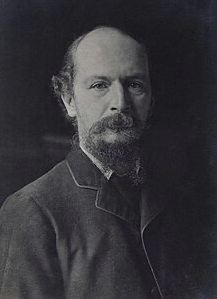
Algernon Charles Swinburne:
(5 April 1837 – 10 April 1909).
English poet, playwright, novelist and critic.
He wrote many plays – all tragedies – and collections of poetry such as Poems and Ballads, and contributed to the Eleventh Edition of the Encyclopædia Britannica.
In the mute August afternoon, they trembled to some undertune of music in the silver air.
The lines describe a ‘silent, still August afternoon’, probably in a natural setting such as an orchard or garden. The “they” refers to things in the scene — likely leaves, fruit, or flowers — that seem to ’tremble slightly’, even though the air is quiet.
Phrase by phrase:
– “mute August afternoon”
→ a silent, heavy, late-summer afternoon.
– “trembled to some undertune”
→ they seemed to move or quiver as if responding to a faint, hidden music.
– “music in the silver air”
→ the air is imagined as bright, shimmering, and full of a subtle harmony.
✨ Overall Sense:
Swinburne is evoking the magical stillness of late summer: everything appears quiet, yet nature seems secretly alive, vibrating with an almost inaudible music.
In simpler words:
> ‘On a silent August afternoon, the scene seemed so delicate and alive that even the still air felt musical.’
📚 Origin & Author:
– Author: Algernon Charles Swinburne
– Poem: “August”
– Collection: Poems and Ballads_
– Date: 1866
– Literary period/style: Victorian, Aesthetic/Pre-Raphaelite-influenced poetry
It is not really a “saying” or proverb, but a ‘poetic quotation’.
That August time, it was a delight to watch the red moons wane to white.
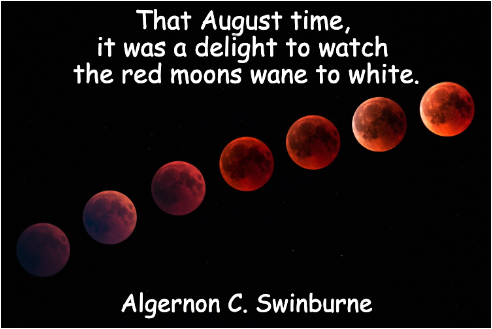
The lines are usually printed as verse:
>“That August time it was delight
> To watch the red moons wane to white.”
So this version — “it was ‘a’ delight…” — is a slight prose-like alteration. Swinburne’s original is “it was delight.”
🌕 Meaning:
The phrase is ‘not really a proverb or common saying’; it is a poetic image.
Likely meaning in context:
– “August time” suggests late summer:
warmth, ripeness, fruit, harvest, sensual beauty.
– “red moons” most likely refers metaphorically to ‘round red apples or fruits’, compared to moons.
– “wane to white” suggests the red outer surface diminishing and revealing whiteness — as if the “moons” are changing phase, like the moon waning.
Broader poetic sense:
– It evokes the pleasure of watching beauty change.
– It carries Swinburne’s typical themes of:
– ripeness 🍎
– sensual delight
– transience
– beauty passing into paleness or decline 🌙
🖋️ Origin and author:
– Author: Algernon Charles Swinburne
– Poem: “August”
– Collection: “Poems and Ballads”, First Series
– Publication date: 1866
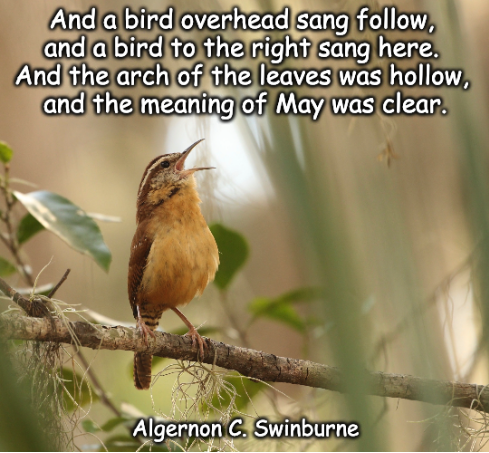
And a bird overhead sang follow, and a bird to the right sang here. And the arch of the leaves was hollow, and the meaning of May was clear.
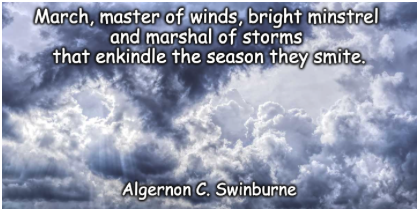
March, master of winds, bright minstrel and marshal of storms that enkindle the season they smite.