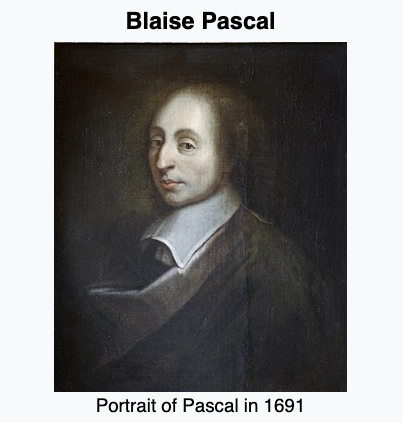
(Clermont-Ferrand, 19 June 1623 – Paris, 19 August 1662). French mathematician and physicist, Christian philosopher, theologian and apologist. Pascal was a Catholic who also had a great influence on Protestantism.
Photo: wikipedia.org
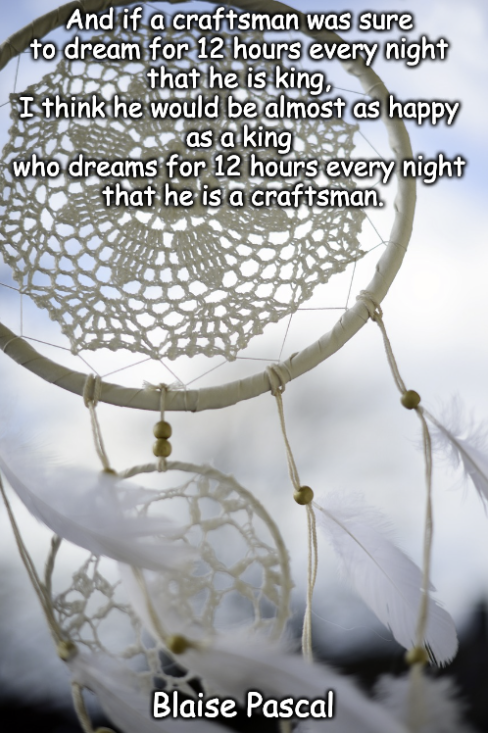
And if a craftsman was sure to dream for 12 hours every night that he is king, I think he would be almost as happy as a king who dreams for 12 hours every night that he is a craftsman.
Photo: Anke Sundermeier
Truth is so obscure in these times, and falsehood so established, that, unless we love the truth, we cannot know it.
Photo by unknown
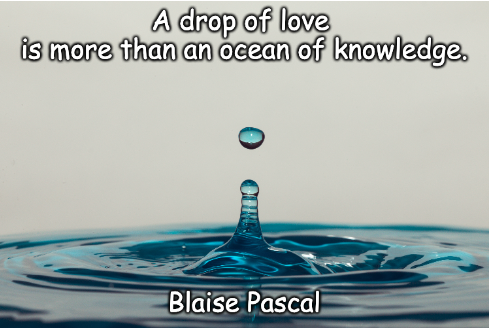
A drop of love is more than an ocean of knowledge.
Photo by Cesar Couto
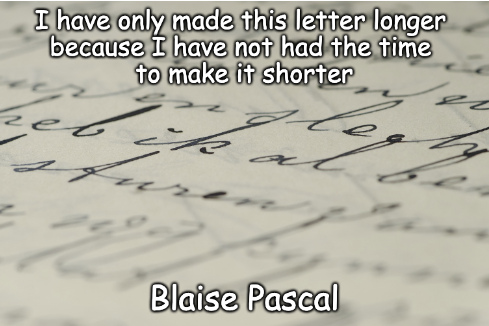
I have only made this letter longer because I have not had the time to make it shorter
Photo: Andrys Stienstra
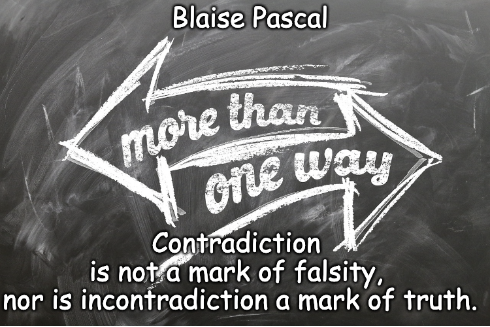
Contradiction is not a mark of falsity, nor is incontradiction a mark of truth.
Photo: Gerd Altmann
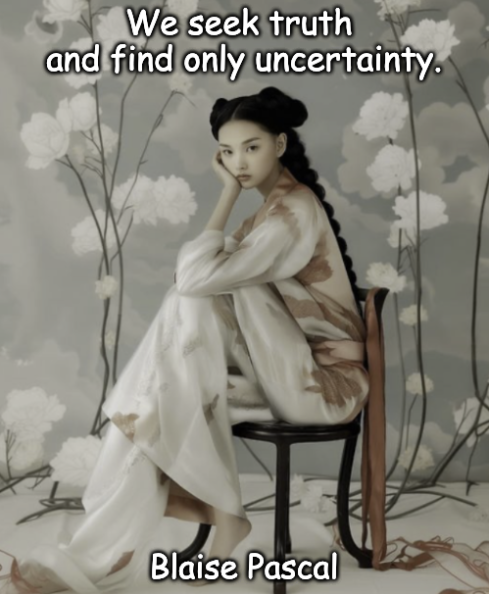
We seek truth and find only uncertainty.
Photo: nostalgisamerica
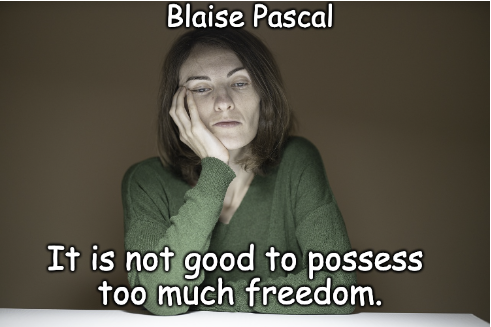
It is not good to possess too much freedom.
Photo: Engin Akyurt
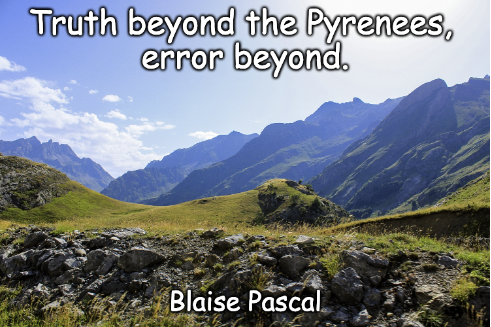
Truth beyond the Pyrenees, error beyond.
Photo: armennang- Franse Pyreneeën
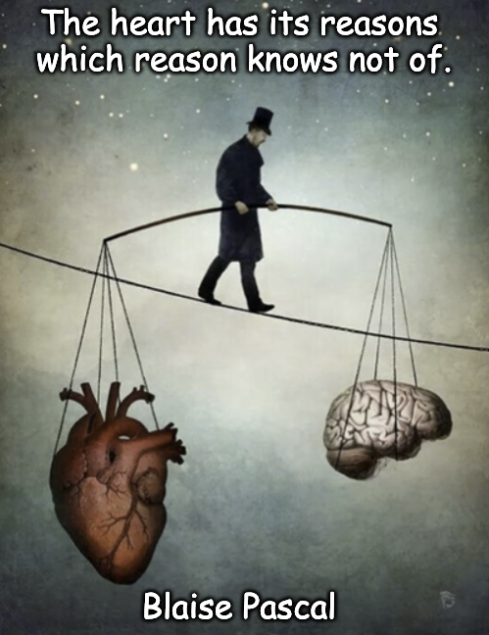
The heart has its reasons which reason knows not of.
Photo: Sabine Rondissime
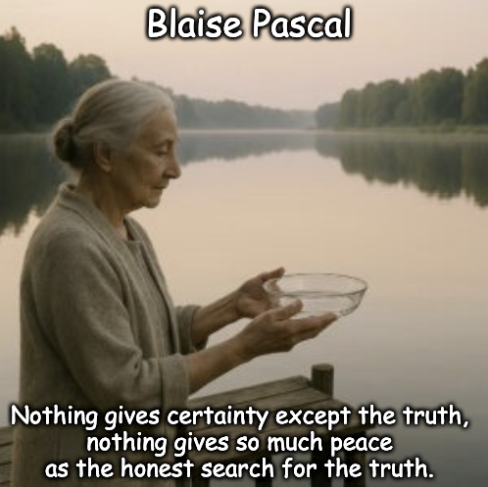
Image Peter van Geest AI. Meaning: The truth provides stability, and sincerely seeking it brings inner peace – an idea that aligns with religious and philosophical beliefs about the importance of honesty, humility, and the pursuit of insight.
Image: Peter van Geest AI. Meaning: The truth provides stability, and sincerely seeking it brings inner peace – an idea that aligns with religious and philosophical beliefs about the importance of honesty, humility, and the pursuit of insight.
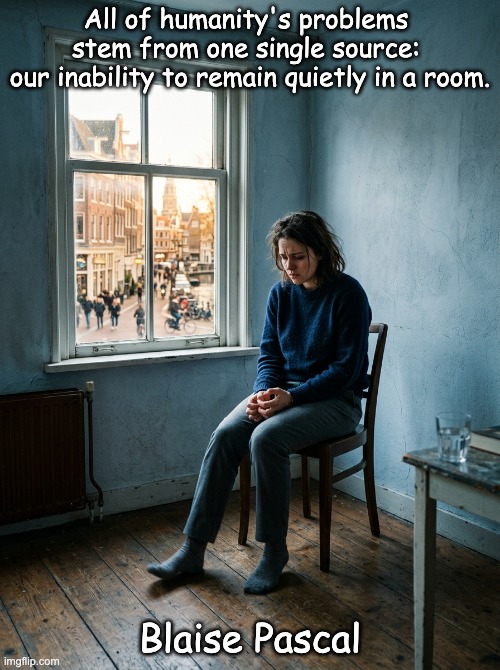
All of humanity’s problems stem from one single source: our inability to remain quietly in a room.
Image: Peter van Geest AI. Meaning: Pascal argues that human restlessness is not a random phenomenon, but a deep flight from an uncomfortable truth. We want to be happy and immortal, but that is impossible, and we find it difficult to accept. Man is therefore diligently searching for distraction. The problem is that this distraction is always only temporary—it is nothing more than the illusion of happiness. At first glance, the statement seems to suggest that people are simply too busy and too restless. But Pascal goes deeper: the real root cause lies “in the fact that, due to our weak and mortal condition, we are naturally unhappy, and so miserable indeed that, if we think about it carefully, nothing can comfort us.” Hence, people exhaust themselves trying to find distraction in play, socializing, wars, or top positions. Restlessness is therefore not a cause, but a ‘consequence’—a flight from the awareness of our own finitude. As long as we keep busy, we do not have to dwell on it. In doing so, Pascal outlines a paradox familiar to us all: once inside, we want to go outside; outside, we cannot wait to be home again. That restlessness is in our nature — it is not due to the room or the furnishings, but to us, to human nature. Origin: The original statement in French reads: “tout le malheur des hommes vient de ne savoir pas se tenir en repos dans une chambre” and comes from the “Pensées” (Thoughts), written around 1654. However, the work was not published until eight years after Pascal’s death, in 1670. The full passage reads: “When I set myself to thinking about all the fuss of men, and about the troubles and dangers to which they expose themselves, I made the discovery that all the misery of men springs from one cause, namely that they cannot sit quietly in a room for a single moment.”Author: This saying is by Blaise Pascal (1623–1662), the French mathematician, physicist, inventor, and philosopher. He was one of the first thinkers on boredom and distraction, and in his work, he provides a sharp analysis of the human condition. Pascal laid the foundation for probability calculations, established the basis for integral theory, and discovered Pascal’s Law, named after him. Due to a remarkable dream he had when he was 31, his intellectual interests changed: he abandoned his scientific pursuits and turned his attention to theology and philosophy. His most famous work is “Thoughts,” which was published eight years after his death.
Door Pieter
Mensenmens, zoon, echtgenoot, vader, opa.
Spiritueel, echter niet religieus.
Ik hou van golf, wandelen, lezen en de natuur in veel opzichten.
Onderzoeker, nieuwsgierig, geen fan van de mainstream media (MSM).