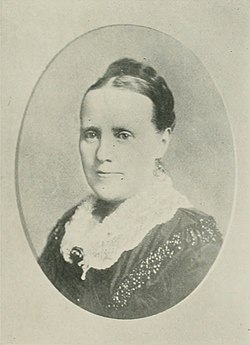
Rosanna Eleanor Leprohon:
(January 12, 1829 – September 20, 1879).
Born Rosanna Eleanor Mullins.
Canadian writer and poet.
She was “one of the first English-Canadian writers to depict French Canada in a way that earned the praise of, and resulted in her novels being read by, both anglophone and francophone Canadians.”
Oh! Gladly do we welcome thee, fair pleasant month of May. The month which we’ve eager longed to see through many a wintry day.
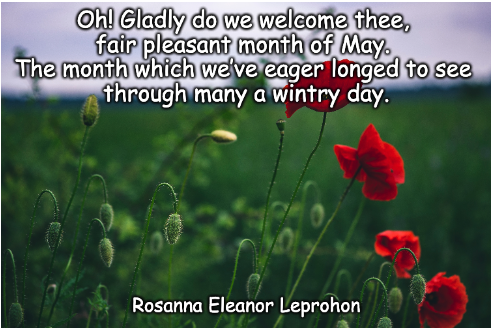
The quote means ‘more than just a joyful welcome to spring’.
Core of the meaning:
– At first glance, it appears to be a poem about:
– the arrival of ‘May’
– the end of ‘winter’
– ‘flowers’, tenderness, and new life
– But in the full context of the poem “A Welcome to the Month of Mary”, the deeper meaning is primarily ‘religious’.
Religious layer:
– May is welcomed here as the ‘Month of Mary’
– The poetess therefore rejoices ‘not only because of nature’
– She mentions a ‘higher and nobler reason’ for her joy:
– May is dedicated to ‘Mary’
– Mary is the Mother of God
– Mary is venerated as the ‘Queen of Heaven’.
The poem essentially says:
> ‘We welcome May not only because spring returns, but especially because this month is dedicated to Mary.’ 🕰️ Origin:
The full poem is titled:
> “A Welcome to the Month of Mary”
This clearly places it in the tradition of:
– 19th-century religious poetry*
– Catholic Marian devotion
– texts written for or inspired by the ‘Marian month’ of May.
Cultural and religious background:
Within the Catholic tradition, May has long been:
– the ‘month of Mary’
– a period of:
– prayer
– veneration
– hymns
– floral tributes to Mary
As a result, the poem fits into a broader devotional tradition in which:
– the beauty of spring is linked to
– purity
– sublimity
– heavenly honor
Source:
– The title and attribution are mentioned on “Poetry Nook,” among others
– But Poetry Nook is a ‘secondary source’
– For complete certainty, a ‘primary source’ would be needed, such as:
– an old collection
– a magazine publication
– a scan in Google Books, HathiTrust, or Internet Archive
✍️ Author: The most likely author is:
> Rosanna Eleanor Leprohon (1829–1879)
This is plausible because she:
– was a 19th-century Canadian writer
– wrote in a ‘religious and sentimental style’
– fits well with a poem about:
– Mary
– devotion
– sublime, solemn monthly poetry.
Fair flowers are springing beneath thy genial ray, and thousand happy birds are singing, all welcome to thee, May!
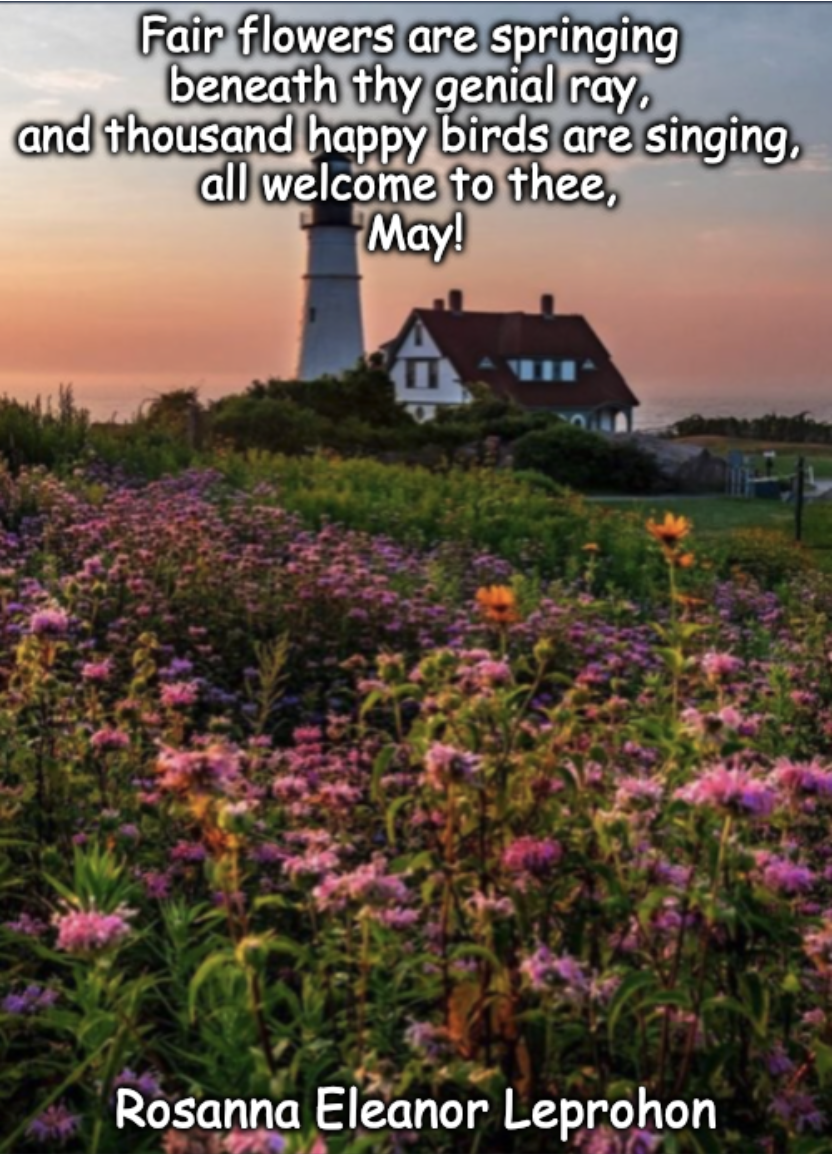
Photo by Kathy Chassis Photography. Meaning 🌷 🌼:
The sentence is a ‘lyrical greeting to the month of May’:
> “Beautiful flowers bloom under your brilliant ray, and a thousand happy birds sing, all welcome to you, May!”
– “May” is presented as a ‘person’ being welcomed.
– Her “ray” refers to the ‘sunny, gentle, life-giving warmth’ of spring.
– Because of that warmth:
– ‘flowers open’
– “birds sing”
– ‘nature comes alive’
In older literary contexts, the English word “genial” means more like:
– ‘friendly’
– ‘gentle’
– ‘beneficial’
– ‘life-giving’
🖋️ Author: 👩🏫 Rosanna Eleanor Leprohon.
Rosanna Eleanor Leprohon was:
– a 19th-century Canadian author
– born as Rosanna Eleanor Mullins
– later known as ‘Mrs. Leprohon’.
She wrote:
– poetry
– novels
– religious and sentimental literature
The style of this line also suits her well:
– Victorian
– nature lyric
– personification of the seasons
– pious/sensitive tone
📚 Origin: The line appears to originate from an ‘English-language poem about the month of May’. The English form is usually rendered approximately as:
> “Fair flowers bloom beneath thy genial ray,
and a thousand happy birds sing all welcome to thee, May!”
Note:
– ‘slightly different versions’ often circulate online
– spelling and punctuation may vary
– the ‘exact first place of publication’ is not always immediately visible on popular citation sites. So the safest phrasing is:
> The line is generally attributed to Rosanna Eleanor Leprohon, but the exact bibliographic source still deserves verification in a printed edition or reliable digital archive source. This poetic line about the month of May is generally attributed to Rosanna Eleanor Leprohon. It is not a proverb, but a literary verse that celebrates spring and the life-giving power of May.
