Publilius Syrus:
(fl. 85–43 BC).
Was a Latin writer, best known for his sententiae.
He was a Roman Syrian from Antioch who was brought as a slave to Roman Italy. Syrus was brought to Rome on the same ship that brought a certain Manilius Antiochus, astronomer, and Staberius Eros the grammarian. By his wit and talent, Syrus won the favour of his master, who granted him manumission and educated him.
He became a member of the Publilia gens. Publilius’ name, due to the palatalization of ‘l’ between two ‘i’s in the Early Middle Ages, is often presented by manuscripts (and some printed editions) in corrupt form as ‘Publius’, Publius being a very common Roman praenomen.
That patient is not like to recover who makes the doctor his heir.
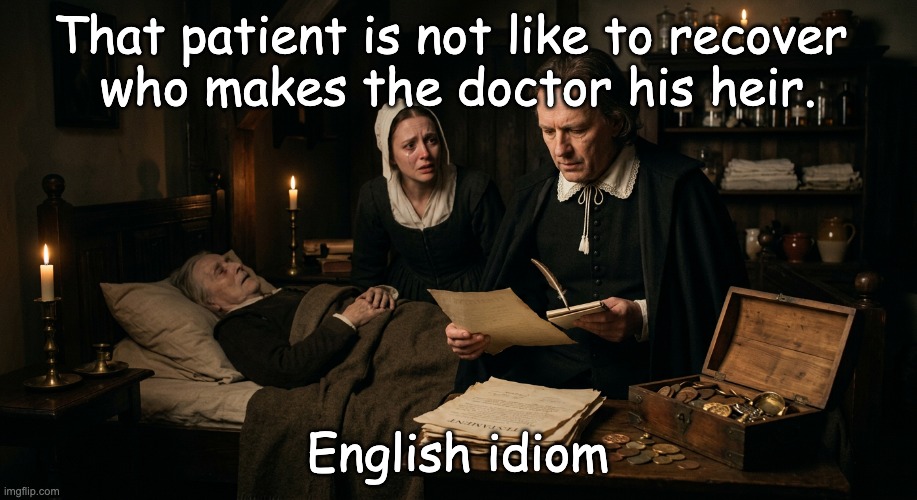
The proverb means: A patient who makes the doctor his heir is essentially signaling that he expects death, not recovery.
Therefore, it implies: Such a patient is not likely to recover, because making a will for the doctor suggests the person believes they won’t live long.
🌍 Origin:
It originates from Latin Roman moral/proverb tradition (short sententious sayings), where health and fate were often discussed through warnings and ethical maxims.
The Latin wording is:
“Parum sibi consulit aegrotus qui medicum heredem facit .”
(“does little for himself… who makes the doctor his heir”).
✍️ Author: Publius Syrus (1st century BC),
a Roman author known for moral sayings/epigrams (sententiae) that later became proverbial.
