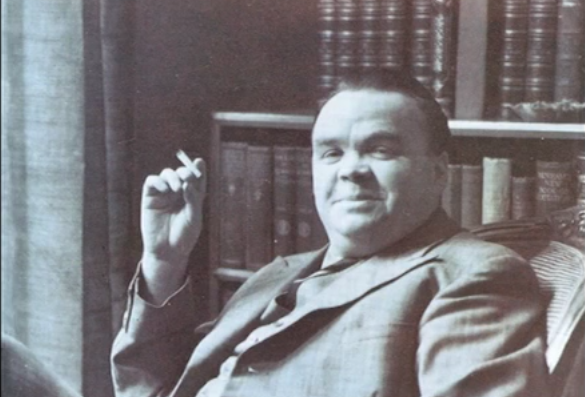
Cyril Vernon Connolly:
(Coventry, 10 September 1903 – London, 26 November 1974). English intellectual, literary critic and writer, also writing under the pseudonym Palinurus.
Connolly was the son of a military man and studied at Eton (where he became friends with George Orwell) and the University of Oxford. At a young age, he became a literary contributor to leading English newspapers. He quickly developed into one of the most renowned literary critics of his time. In 1940, he founded the renowned literary magazine Horizon. After the Second World War, he was literary editor of the Sunday Times for many years. Connolly was married three times.
Fallen leaves lying on the grass in the November sun bring more happiness than the daffodils.
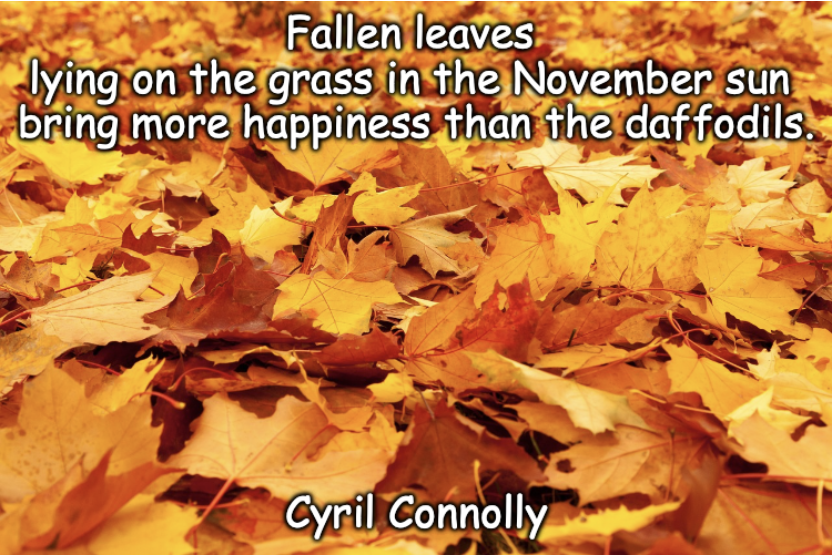
The sentence contrasts two kinds of beauty:
– ‘Daffodils’ represent spring, youth, renewal, and obvious cheerfulness.
– ‘Fallen leaves in November sunlight’ represent autumn, ageing, transience, and approaching death.
Connolly suggests that the quiet, melancholy beauty of things passing away can bring a ‘deeper and more reflective happiness’ than the bright optimism conventionally associated with spring. It expresses an appreciation of maturity, impermanence, and beauty touched by sadness.
There may also be a faint literary echo of Wordsworth’s famous daffodils, although the sentence is not necessarily a direct response to his poem.
✍️ Author and origin:
The quotation is generally and correctly attributed to Cyril Connolly:
> “Fallen leaves lying on the grass in the November sun bring more happiness than the daffodils.”
It comes from Connolly’s “The Unquiet Grave: A Word Cycle”, first published in 1944.
The book appeared under his pseudonym “Palinurus.” It is an aphoristic, autobiographical collection of reflections on literature, love, ageing, failure, and mortality rather than a conventional narrative.
Page numbers vary between editions, so the most reliable citation is:
> Cyril Connolly, “The Unquiet Grave: A Word Cycle” (1944).
