Jane Hirshfield:
(born February 24, 1953)
American poet, essayist, and translator, known as ‘one of American poetry’s central spokespersons for the biosphere’ and recognized as ‘among the modern masters,’ ‘writing some of the most important poetry in the world today.’ A 2019 elected member of the American Academy of Arts & Sciences, her books include numerous award-winning collections of her own poems, collections of essays, and edited and co-translated volumes of world writers from the deep past. Widely published in global newspapers and literary journals, her work has been translated into over fifteen languages.

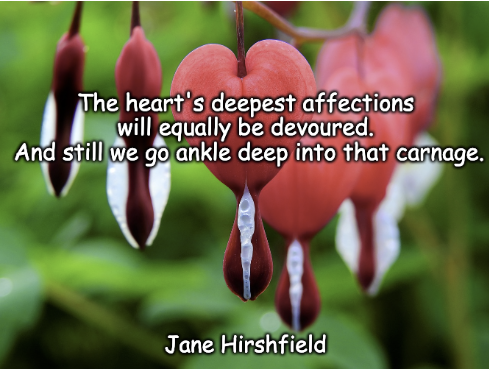
The heart’s deepest affections will equally be devoured. And still we go ankle deep into that carnage.
The heat of autumn is different from the heat of summer. Some let apples ripen, others turn them into cider.

Even without confirmed authorship, the text carries clear symbolic meaning:
– 🍎 Same conditions, different outcomes: — autumn heat (like summer heat) is external circumstance, but what happens to the apples depends on ‘process’, not just exposure.
– 🕰️ Ripening vs. transformation:
— “letting apples ripen” = patience, acceptance, natural unfolding. “Turning into cider” = active change, fermentation, something new created from pressure.
– 🌗 A metaphor for human response to hardship/change:
— the “heat” (stress, time, difficulty) is constant, but people respond to it differently: some endure and mature slowly, others convert the experience into something transformed entirely.
🔍 Possible Explanations:
– Misattribution:
— a common fate for lyrical, nature-themed aphorisms.
– Paraphrase/translation drift:
— someone may have loosely adapted an idea from her work (she often writes about seasons, ripening, transformation).
– Obscure or uncollected source:
— possibly a talk, interview, or minor publication not widely indexed.
⚠️ On Authorship: — Important Caveat
I want to be upfront:
‘I cannot confirm with confidence’ that this line comes from Jane Hirshfield’s published work.
– It doesn’t match passages I recognize from her well-known collections (“Come, Thief”, “The Beauty”, “Ledger”, “Given Sugar, Given Salt”).
– This kind of short, aphoristic, nature-based quote circulates widely on social media and quote-aggregator sites — often ‘without verified sourcing’.
– A common pattern online is “quote drift”:
poetic-sounding lines get attached to famous poets (Hirshfield, Rilke, Mary Oliver, Rumi, etc.) simply because the ‘style’ feels like a match — not because of documented origin.
