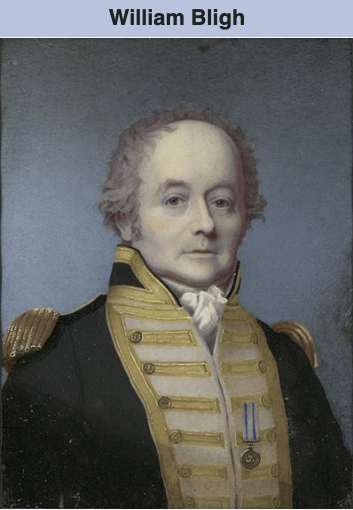
William Bligh:
(St Tudy near Bodmin, Corwall, England, 9 September 1754 – London, 7 December 1817).
Best known for being the captain of the Bounty, the ship on which the infamous mutiny broke out in 1789.
On the night of the first of September, we observed for the first time the signs of the natives being in the neighborhood. Fires were seen on the low land near Cape Frederick Henry, and at daylight, we saw the natives with our glasses.
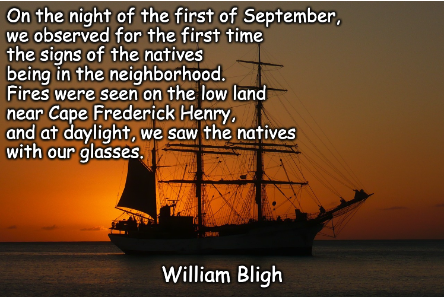
– On the night of 1 September 1788, Bligh and his crew first noticed evidence that Indigenous people were nearby.
– They saw ‘fires’ on low-lying land near “Cape Frederick Henry”.
– At daylight, they used “glasses” — meaning ‘spyglasses/telescopes’, not spectacles — to observe the people.
In modern wording:
> “On the night of September 1, we first saw signs that Aboriginal people were nearby. We saw their fires near Cape Frederick Henry, and the next morning we could see them through our telescopes.”
🌍 Historical Context:
– Place:
Near “Cape Frederick Henry / Adventure Bay”, Tasmania
– Date:
September 1788
– Ship:
HMS “Bounty”
– Voyage purpose:
To sail to Tahiti, collect breadfruit plants, and transport them to the West Indies.
– People described:
Aboriginal Tasmanians, today often referred to as ‘Palawa / Pakana’ people.
The word “natives” reflects 18th-century colonial language and is now considered outdated or inappropriate unless quoted in historical context.
✍️ Author and Origin:
Author: William Bligh
– British naval officer and commander of HMS “Bounty”.
Source:
– “A Voyage to the South Sea”
– Full title:
“A Voyage to the South Sea, undertaken by command of His Majesty, for the purpose of conveying the bread-fruit tree to the West Indies, in His Majesty’s ship the Bounty”.
– Published: London, 1792
🧭 Important Note:
This is not really a “saying” or proverb. It is a ‘historical journal-style observation’ from Bligh’s account of the “Bounty” voyage, recording one of the crew’s first sightings of Aboriginal Tasmanians during that stop.
