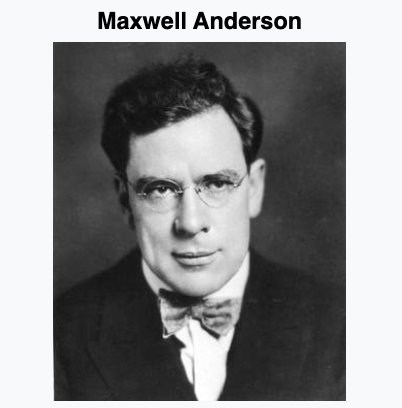
James Maxwell Anderson:
(Atlantic (Pennsylvania), 15 December 1888 – Stamford (Connecticut), 28 February 1959).
American playwright, author, poet, journalist and songwriter. He was a founding member of The Playwrights Company.
For it’s a long, long while from May to December. But the days grow short when you reach September.
– The line contrasts ’time spanning many months’ (“a long, long while from May to December”) with the ‘seasonal reality’ that:
– September comes late enough that the days are noticeably shorter.
– In everyday terms, it suggests:
– ‘As time goes on, things start to feel like they’re speeding up or slipping away’, especially as you head toward colder months.
🎭 It’s also commonly interpreted as a reflection on ‘life passing quickly’ and the ‘inevitability of change’.
📜 Origin:
– This line is from the ‘play “The Bad Seed” by Maxwell Anderson’.
✍️ Author: Maxwell Anderson (1888–1959)
🧾 The exact line (as commonly quoted)
> “For it’s a long, long while from May to December. But the days grow short when you reach September.”
🎼 Note (Why you might have heard it elsewhere):
– While the line is originally from Anderson’s work, it is very famous because it appears in the song: “September Song” (lyrics adapted from the themes/wording of Anderson’s line).
But the days grow short when you reach September.
The phrase “But the days get shorter when you reach September” is a poetic way of saying:
– ‘As you get older, time seems to go faster.’
– ‘In the later stages of life, you realize that you have less time left.’
– ‘“September” symbolically represents the autumn of life’ — no longer youth or the height of summer, but a period of maturity, melancholy, and finitude.
So it is not just literally about shorter days in September, but especially ‘metaphorically about growing older and the preciousness of remaining time’.
Origin 🎭:
The line comes from the song “September Song” from the Broadway musical “Knickerbocker Holiday” from 1938.
The famous English line reads:
> “Oh, it’s a long, long while from May to December,
> But the days grow short when you reach September.”
Author ✍️: Maxwell Anderson
– Text/lyrics: Maxwell Anderson
– Music: Kurt Weill
– Musical: “Knickerbocker Holiday”
– Year: 1938
So if you quote the ‘words’, you can mention Maxwell Anderson. If you refer to the song as a whole, it is more correct to say:
> From “September Song”, lyrics by Maxwell Anderson, music by Kurt Weill.
Cultural significance 🎶:
The song was originally sung by Walter Huston and later became famous through many performances, including by:
– Frank Sinatra
– Ella Fitzgerald
– Willie Nelson
– Sarah Vaughan
As a result, the line has almost become a proverbial expression about ‘old age, transience, and appreciating the time that remains’.
