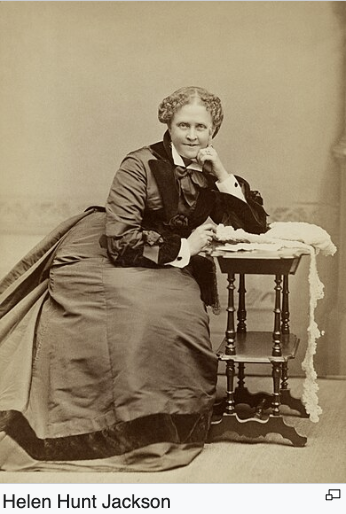
Helen Maria Hunt Jackson:
Born as Helen Fiske.
(Amherst, 18 October 1830 – San Francisco, 12 August 1885).
American writer and activist for the indigenous people of the United States. Jackson described the ill effects of policies towards Native Americans in A Century of Dishonor (1881). In her novel Ramona (1884), Jackson outlined the hard life of a girl of mixed Scottish-Indian origin in Southern California in the post-Mexican-American War period.
November woods are bare and still. November days are clear and bright. Each noon burns up the morning’s chill, the morning’s snow is gone by night. November woods are bare and still. November days are bright and good. Life’s noon burns up life’s morning chill. Life’s night rests on feet which have long stood.

By all these lovely tokens, September days are here. With summer’s best of weather and autumn’s best of cheer.
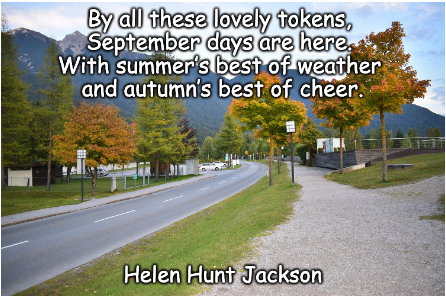
The lines describe ‘September as a pleasant meeting point between summer and autumn:
– “Lovely tokens”:
means the beautiful signs of the changing season—ripening fruit, goldenrod, asters, grapes, butterflies, and browning corn.
– “Summer’s best of weather”:
refers to the lingering warmth and sunshine.
– “Autumn’s best of cheer”:
suggests the color, abundance, harvest, and refreshing spirit of fall.
The quotation celebrates September not as an ending, but as a season combining the finest qualities of both summer and autumn.
✍️ Author and origin:
The quotation is correctly attributed to Helen Hunt Jackson (1830–1885), an American poet, novelist, and advocate for Native American rights.
It is the final stanza of her poem: “September”:
> By all these lovely tokens
> September days are here,
> With summer’s best of weather,
> And autumn’s best of cheer.
The preceding stanzas list the “tokens” of September:
yellow goldenrod, ripening corn and apples, blue gentians, milkweed silk, asters, grapes, and yellow butterflies.
📚 Context:
This is ‘a poetic quotation rather than an old proverb or anonymous saying’. It comes from Jackson’s nineteenth-century nature poetry and reflects her close observation of seasonal changes. The poem has appeared in collections of her work, including posthumous editions of her poems.
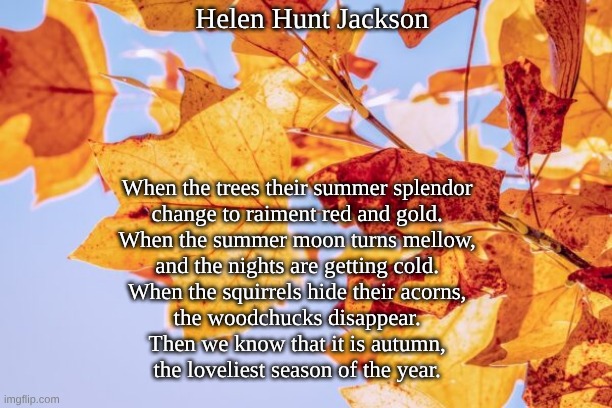
When the trees their summer splendor change to raiment red and gold. When the summer moon turns mellow, and the nights are getting cold. When the squirrels hide their acorns, the woodchucks disappear. Then we know that it is autumn, the loveliest season of the year.