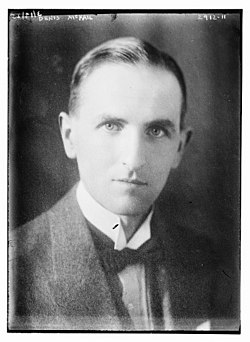
Denis George Mackail:
(3 June 1892 – 4 August 1971).
English fiction writer. His work was popular in his time, but much of his work has been forgotten. However, Greenery Street, a 1925 novel of early married life in upper middle-class London, was republished in 2002.
Caught in the doldrums of August, we may have regretted the departing summer.

– ‘In late August’, when summer feels hot, still, slow, and a little weary,
– we may feel ‘melancholy or regretful’ that summer is ending,
– even though the season is already slipping away toward autumn.
Key words:
– “Doldrums”:
= a state of stagnation, low energy, boredom, or depression.
– Originally a ‘sailing term’ for windless equatorial regions where ships could be stuck for days.
– “Departing summer”:
= summer coming to an end.
– “Regretted”:
here means ‘felt sorrow about’ or ‘lamented’, not necessarily “felt guilty.”
So the line captures a ‘late-summer mood’:
listlessness, heat, and sadness at the approach of autumn.
Origin ⚓:
The expression is ‘not an old proverb’ or traditional saying. It appears to be a ‘literary quotation’, using the older nautical metaphor of the “doldrums”.
The word “doldrums” became common in English in the 19th century for:
– the calm, windless sea regions near the equator, and later
– any dull, stagnant, dispirited period.
“August doldrums” is now also a common phrase for the slow, languid end of summer.
Author: Denis Mackail 📚
— more fully Denis George Mackail 1892–1971, an English novelist and biographer.
However, the exact source — the specific book, essay, or page — is often ‘not given’ in quotation collections. So the safest wording is:
> The line is generally attributed to Denis Mackail, but it is best treated as a literary quotation rather than a well-documented proverb unless a primary source is located.
In plain modern English ✨:
> “In the slow, heavy, low-spirited days of August, we may feel sad that summer is ending.”
