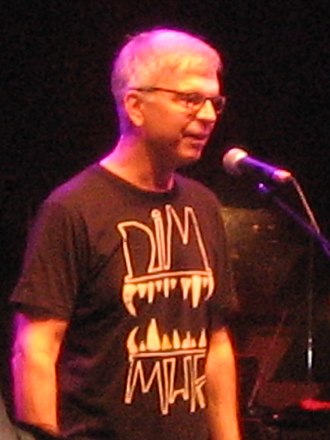
Anthony Visconti:
(Brooklyn, New York, 24 April 1944).
American musician and music producer.
In his early days, he sometimes played in the background. His best-known work is his collaboration with David Bowie, with whom he worked from 1969 until Bowie’s death in 2016. He also produced Moody Blues, T. Rex, Mary Hopkin, Thin Lizzy, Ralph McTell, Sparks, Hugh Cornwell, Gentle Giant, Boomtown Rats, Hazel O’Connor, Zaine Griff, Adam Ant, The Stranglers, Richard Barone, Manic Street Preachers, Kristeen Young and Morrissey.
In August, most of Europe goes on holiday.
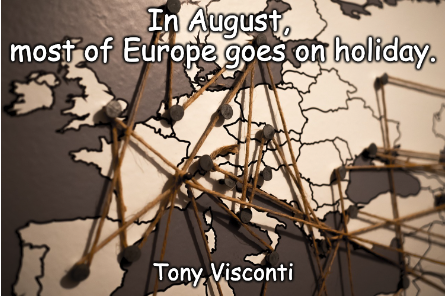
– August is the main vacation month in many European countries.
– Work, business, politics, media, and everyday services often slow down.
– Many offices, factories, restaurants, and shops may close or operate with reduced staff.
– It is often said as a practical warning:
‘don’t expect normal speed or availability in Europe in August.’
It is not really an “idiom” in the figurative sense; it is more of a ‘cultural observation’ or ‘common saying’.
🌍 Why August?
Several European traditions and practical factors explain it:
– School holidays are usually in July and August.
– Many workers take their main annual leave in August.
– In countries such as France, Italy, Spain, and Portugal, August is strongly associated with summer holidays.
– In Italy, ‘Ferragosto’ on ’15 August’ is a major holiday period.
– Historically, some factories and businesses had an ‘annual August shutdown’.
So the phrase is partly literal, though obviously exaggerated: not ‘everyone’ in Europe is away.
🕰️ Origin:
There is no clear single origin for the phrase. It likely developed from a long-standing reality of European summer culture, especially after paid holidays became common in the 20th century.
Comparable expressions include:
– “France shuts down in August.”
– “Italy closes for Ferragosto.”
– “Europe is on vacation in August.”
These are common in business, journalism, travel writing, and expat commentary.
✍️ Author : Tony Visconti?
Tony Visconti, the American record producer known for working with David Bowie, T. Rex, and others, may have used a version of the phrase in an interview, memoir, or documentary context.
However:
– There is ‘no strong evidence that Tony Visconti coined the saying’.
– The phrase predates or exists independently of any one author.
– If Visconti wrote or said it, he was probably using a common observation, not creating an original idiom.
