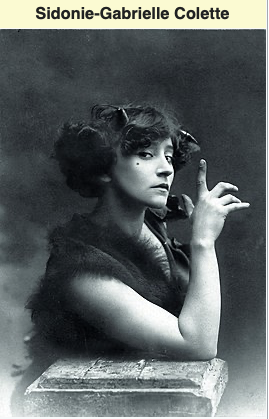
Sidonie-Gabrielle Colette:
(Saint-Sauveur-en-Puisaye, 28 January 1873 – Paris, 3 August 1954). French writer. She wrote under her surname Colette, with no first name or initials.
Those late August mornings smelt of autumn from daybreak ’till the hour when the sun-baked earth allowed the cool sea breezes to drive back the then less heavy aroma of threshed wheat, open furrows, and reeking manure.
The sentence is a ‘sensory description of late August’, when summer is beginning to turn into autumn:
– “smelt of autumn from daybreak”
→ even early in the morning, the air already carries signs of the coming autumn.
– “sun-baked earth”
→ as the day warms, the ground releases stronger rural smells.
– “cool sea breezes”
→ the setting is near the coast; the sea air eventually pushes back the heavy land smells.
– “threshed wheat, open furrows, and reeking manure”
→ smells of harvest, ploughed fields, and farm work.
🌾 Deeper meaning:
It evokes a ’threshold moment’:
the end of summer and the approach of autumn. If read in context, it also suggests ‘ripening, change, and maturity’—themes often associated with Colette’s writing, especially adolescence and sensual awakening.
✍️ Author: Sidonie-Gabrielle Colette, usually published simply as ‘Colette’.
– Full name: Sidonie-Gabrielle Colette
– Dates: 1873–1954
– Nationality: French
– Known for: “Gigi”, “Chéri”, “The Vagabond”, “The Ripening Seed”.
📚 Origin / Source:
The quotation is from Colette’s novel:
“Le Blé en herbe”
Often translated into English as:
– “The Ripening Seed”
– sometimes “Green Wheat”.
It was first published in 1923.
The French title literally means something like “wheat still green” or “wheat in the blade,” which fits the novel’s themes of youth, growth, and sexual/emotional awakening.
January—the month of empty pockets!