Claude McKay:
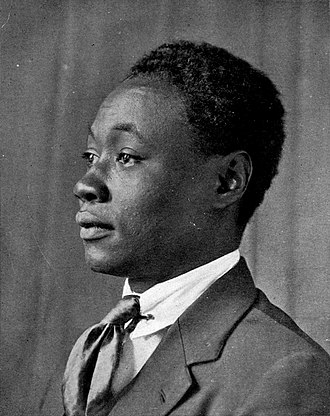
(Claredon, 15 September 1890 – Chicago, 22 May 1948). Jamaican-American writer and poet. In 1912, he moved from Jamaica to the United States for higher education. There, McKay became actively involved in political activism, inspired by the work of W.E.B. Du Bois. In 1914, he settled in New York, where he wrote the famous poem If We Must Die in 1919 in response to racist tensions following World War I.
When June comes dancing o’er the death of May, with scarlet roses tinting her green breast, and mating thrushes ushering in her day, and Earth on tiptoe for her golden guest, I always see the evening when we met.
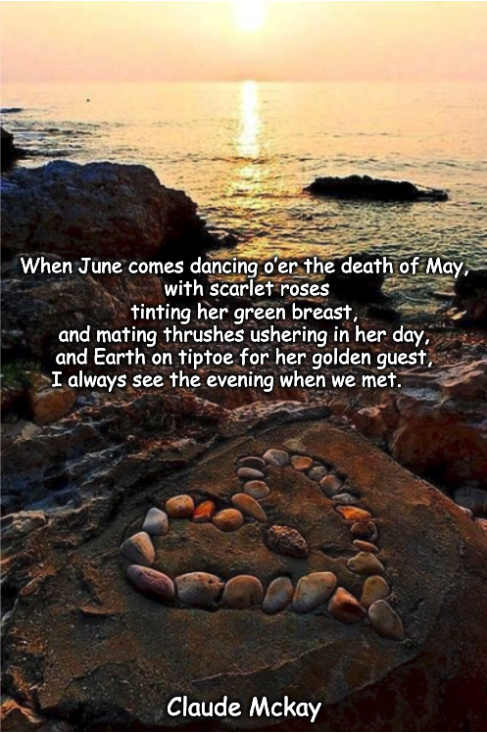
“A Memory of June” is a love elegy driven by seasonal memory — June’s arrival each year involuntarily resurrects a single, perfect, fleeting night of passion. A few layers worth noting:
– “June comes dancing o’er the death of May” personifies early summer as a triumphant, life-giving figure stepping over the dying of the previous month — a classic ‘memento mori’ paired with renewal.
– “Earth on tiptoe for her golden guest” — the whole natural world is breathlessly anticipating June’s warmth and light, mirroring how the speaker is suspended in longing.
– “A love so fugitive and so complete” — the closing paradox is the emotional core: the love was total and perfect ‘because’ it was only one night, never to be repeated. Its completeness and its fleetingness are inseparable.
– Scholars have also noted themes of same-sex desire running through the poem, adding another layer of tenderness and concealment — a love that could only be expressed obliquely in that era.
Origin:
The poem appeared in “Harlem Shadows” (1922), McKay’s landmark collection, and was also published earlier in the “Cambridge Magazine” (1920) and “Spring in New Hampshire” (1921). It is a three-stanza Shakespearean sonnet. After the opening stanza you quoted, the poem recalls a specific evening — “the first of June baptized in tender rain” — when the speaker and a lover walked home through wet streets, arms locked. The middle stanza evokes a small, fragrant room where “for one night only we were wed,” lying in starlit stillness listening to the rain. The poem closes by returning to the same June imagery, the speaker’s soul breaking free to sing of “a love so fugitive and so complete.”
Author: The poem is by Claude McKay (1889–1948), the Jamaican-American poet and novelist who was a central figure of the Harlem Renaissance. He was a master of the sonnet form, using its classical European structure to carry deeply personal, often transgressive emotional content — a signature tension throughout his work.
