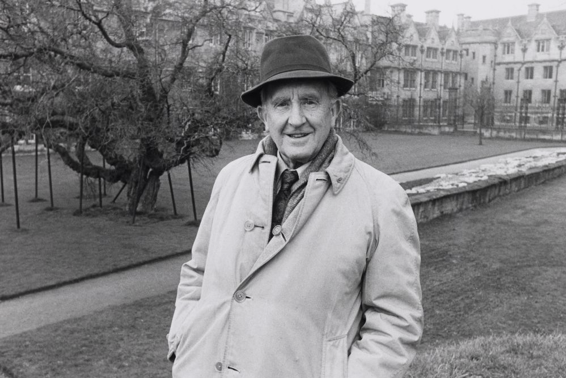
John Ronald Reuel Tolkien:
(Bloemfontein, Orange Free State, South Africa, 3 January 1892 – Bournemouth, United Kingdom, 2 September 1973).
English philologist, poet and professor of English language and literature. He became best known as the author of The Hobbit, The Lord of the Rings and The Silmarillion, making him the father of modern fantasy literature.
Tolkien was professor of Anglo-Saxon language at Oxford University from 1925 to 1945 and professor of English language and literature at Merton College, also part of Oxford University, from 1945 to 1959. He was a close friend of C.S. Lewis, a fellow member of the informal literary discussion group The Inklings. On 28 March 1972, Tolkien was appointed a Commander of the Order of the British Empire by Queen Elizabeth II.
All we have to decide is what to do with the time that is given us.
There is some good in this world, and it’s worth fighting for.
Not all those who wander are lost.
Elvish singing is not a thing to miss, in June under the stars, not if you care for such things.
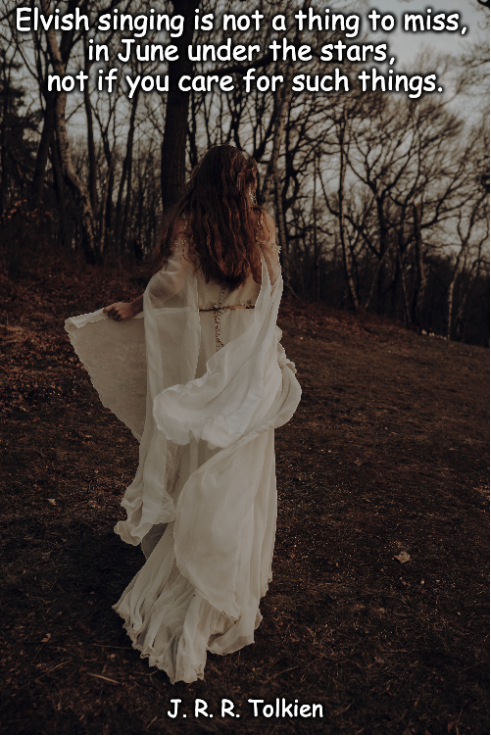
The line is delivered in Tolkien’s warm, conversational narrator voice — as if he’s leaning in and confiding in the reader. It carries a few layers:
– A simple, heartfelt endorsement. Elvish singing in Tolkien’s world is not mere entertainment; it carries ancient power, beauty, and memory. To hear it is a rare privilege.
– The magic of a June night. The specific mention of June under the stars evokes a perfect, almost fleeting moment — midsummer, open sky, enchantment — tying something mythical to a real, sensory experience.
– An invitation, not a command. “Not if you care for such things” is a gentle, conspiratorial qualifier. Tolkien doesn’t insist — he simply notes that anyone with a sense of wonder would not want to miss it. Humble and charming.
Origin:
The quote comes from Chapter 3, “A Short Rest,” of “The Hobbit” (1937), specifically page 32 of the Houghton Mifflin Harcourt edition. In this chapter, Bilbo, Gandalf, and the dwarves arrive at Rivendell, the hidden valley of the Elves, and are greeted by singing as they descend into it. The line is the narrator’s aside to the reader, vouching for the experience through Bilbo’s delight in it. It is spoken in Tolkien’s signature storytelling mode — narrating “The Hobbit” as if recounting a tale aloud.
Author:
J.R.R. Tolkien (1892–1973),
British author, Oxford professor of Anglo-Saxon, and creator of Middle-earth. “The Hobbit” was first published in 1937.
