English botanist and physician, but he became best known for his work on electricity.
Early in his career, he promoted Carl Linnaeus’s system in England.
In 1746, he covered the inside and outside of the Leiden bottle (condenser, invented by Pieter van Musschenbroek) with lead, increasing its capacity. He was also the first to observe a flash of light in the Leiden bottle. He also established that electricity could flow through a vacuum and he observed that there was a positive and a negative component of electricity. Another discovery of his was that electricity could flow but not be created or destroyed.
In 1747, he conducted an experiment to determine the speed of electricity. It was generally believed that electricity was faster than sound. Using a 6.4 km wire, he found that hardly any time difference could be determined at either end of the wire. However, he did establish a degree of resistance. Benjamin Franklin in particular continued to work on the theory surrounding electricity, with Watson as one of his main supporters.
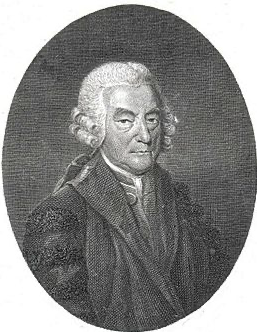
William Watson. Photo: wikipedia.org
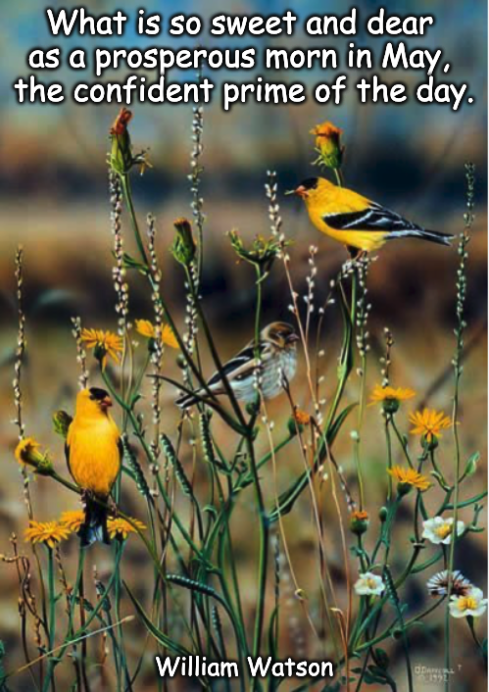
What is so sweet and dear as a prosperous morn in May, the confident prime of the day.
Photo: s-usans-blog. Meaning 📖 : Hymn to the fresh, hopeful beauty of a May morning. Origin: English poetry. Author:William Watson.Original: “What is so sweet and dear / As a prosperous morn in May …”
April, April, laugh thy girlish laughter, And the moment after, Weep thy girlish tears, April.
Image: Peter van Geest AI. Meaning 🤔 : One of the most beautiful descriptions of the capricious month of April, and that is the core of the meaning. The Fickleness of the Weather: The comparison with the “girlish laughter” and the “girlish tears” is a powerful metaphor for the rapid weather changes in the month of April. The sun (the laughter) can be shining one moment, and the next it can suddenly rain (the tears). The Unpredictability: The poem captures the essence of April as an unpredictable and lively month, full of youthful energy and rapid mood swings. It is not heavy or gloomy rain, but rather a short, fleeting shower, just like the “tears” of a young girl in the metaphor. The Personification: By comparing April to a “girl” who laughs and cries, Watson gives the month a human face and makes the experience of the weather more poetic and relatable. 🌸 📜 The Original Poem: “April, April, Laugh thy girlish laughter; Then, the moment after, Weep thy girlish tears!” The author of the poem is the English poet William Watson (1858–1935).The Source of Confusion: The confusion with Angus Wilson arose because Wilson quoted this poem in his novel ‘No Laughing Matter’ (1967). 💡 Conclusion: With this additional information, the puzzle is complete. The quote is a beautiful example of William Watson’s English poetry, which captured the essence of spring and its whims in a timeless way. It is a poem that still captures the imagination.
Door Pieter
Mensenmens, zoon, echtgenoot, vader, opa.
Spiritueel, echter niet religieus.
Ik hou van golf, wandelen, lezen en de natuur in veel opzichten.
Onderzoeker, nieuwsgierig, geen fan van de mainstream media (MSM).