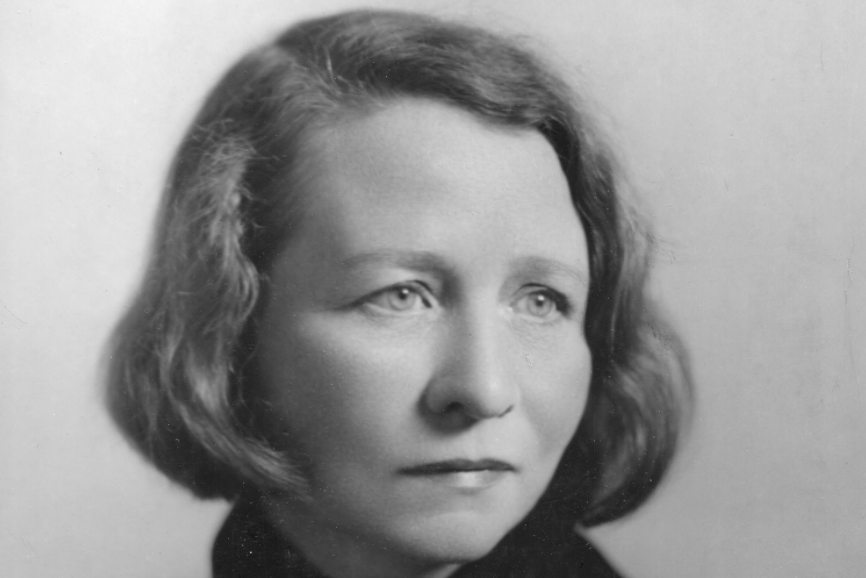
Edna St. Vincent Millay:
(Rockland (Maine), 22 February 1892 – Austerlitz, New York, 19 October 1950).
American poet, playwright and activist. She used the pseudonym Nancy Boyd for her prose work. She received the Pulitzer Prize for poetry in 1923, making her the third woman to be awarded the prize.
April comes like an idiot, babbling and strewing flowers.
April this year, not otherwise than April of a year ago, is full of whispers, full of sighs, dazzling mud, and dingy snow. Hepaticas that pleased you so are here again, and butterflies.
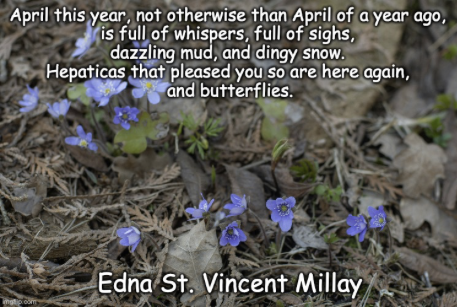 Hepatica nobilis (lever flower). Photo: Natalia Gusakova. Meaning 🌸: This is ‘not a traditional saying’, but a ‘poetic quote’. The core of the poem is: Spring returns, almost exactly like last year. Nature is full again: whispers; sighs; mud; remnants of snow; flowers and butterflies. But the speaker experiences all this through the awareness of ‘loss’ 💔 Possible interpretation: The poem suggests that: nature repeats itself; the seasons continue; beauty returns; but ’the person to whom the poet is speaking is absent’ — likely dead or lost. This gives spring a dual character: on the one hand ‘beautiful and lively’; on the other ‘painful’, because everything returns except the one who used to enjoy it. Specific details: “Hepatica” = the ‘liver flower’, an early spring flower. “dazzling mud and dingy snow” beautifully illustrates that April is not only romantic, but also messy, wet, and murky. That contrast fits with grief: the world is still beautiful, but no longer carefree. ✍️ Author: These lines are by Edna St. Vincent Millay (1892–1950), from the poem “Second April” (1921). 📚 Origin 🌿: The original English lines read:April this year, not otherwise
Than April of a year ago,
Is full of whispers, full of sighs,
Of dazzling mud and dingy snow;
Hepatica, that pleased you so,
Is here again, and butterflies.
