Epictetus:
(50 – c. 130 AD).
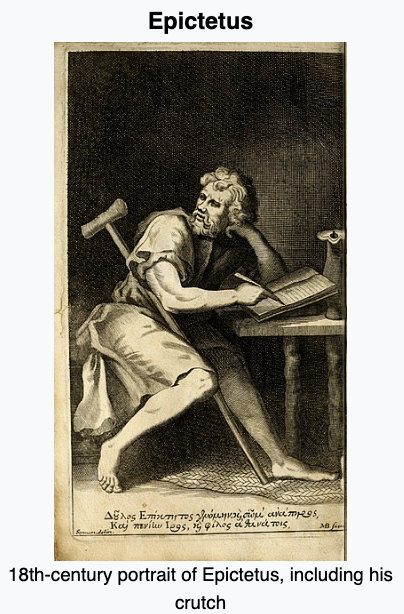
Stoic philosopher and along with Seneca and Marcus Aurelius, among others, is counted among the leading figures in Stoic philosophy from the first centuries AD.
Man is not worried by real problems so much as by his imagined anxieties about real problems.

You are a little soul carrying around a corpse.

Circumstances don’t make the man, they only reveal him to himself.

The idea is that adversity doesn’t manufacture traits you didn’t have — courage, greed, patience, cowardice — it simply strips away the calm surface and shows what was already there. A crisis doesn’t build character; it exposes it. This fits core Stoic doctrine: externals (circumstances) are morally neutral “indifferents,” and what matters is the internal disposition (prohairesis) you bring to them. A hard event is a test that reveals your judgments and habits, not a force that installs new ones.This is a widely circulated quote, but it’s worth being upfront: I couldn’t find a verified citation to it anywhere in Epictetus’s actual surviving works — the “Discourses”, the “Enchiridion”(Handbook), or the “Fragments”. Every source I found (Goodreads, AZQuotes, QuoteFancy, Pinterest, Etsy print shops) just repeats the attribution without pointing to a book, chapter, or translator. That pattern — popular quote sites citing each other rather than a primary text — is the classic signature of a misattributed or paraphrased quote, similar to how quotes get pinned on Einstein, Twain, or Marcus Aurelius long after the fact.
Likely origin:
The line reads like a modern condensation of Stoic ideas rather than a direct translation. It closely echoes sentiments actually found in Epictetus’s teaching — for instance, in the “Discourses” he argues that hardships are like sparring partners sent to test and strengthen you, and that a person’s character is exposed, not created, by difficulty. So the ‘idea’ is authentically Stoic and plausibly Epictetan in spirit, but the tight, aphoristic English wording looks like it was crafted later (likely 20th-century self-help or inspirational-quote culture) and then attached to his name for authority.
So: treat it as “attributed to Epictetus, unverified in his extant texts, but consistent with his philosophy” rather than a confirmed quotation — the same caution you’d apply to most inspirational-poster quotes.
There is only one way to happiness and that is to cease worrying about things which are beyond the power of our will.

It’s not things that upset us but our judgements about things.

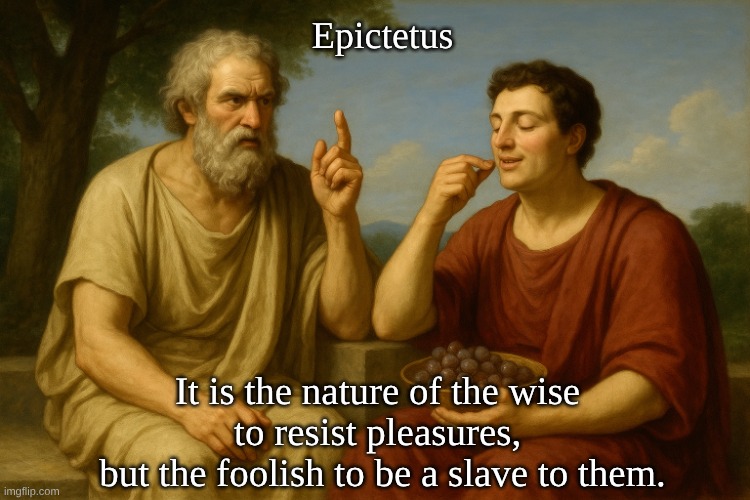
It is the nature of the wise to resist pleasures, but the foolish to be a slave to them.