George Bernard Shaw:
(Portobello, Dublin, 26 July 1856 – Ayot, St Lawrence, 2 November 1950).
Irish playwright, socialist and theatre critic. He was a freethinker, supported the fight for equal rights for women and advocated equal pay for men and women. He was also a staunch vegetarian and opposed to animal testing. He won the Nobel Prize for Literature in 1925 – he accepted the honour but refused the money. In 1939, he received an Oscar for his work on the screenplay of the film Pygmalion.
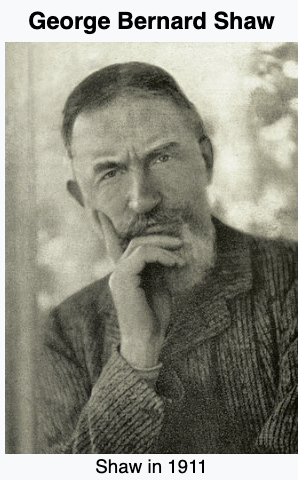
You see things and say, Why? I dream things and say: Why not?
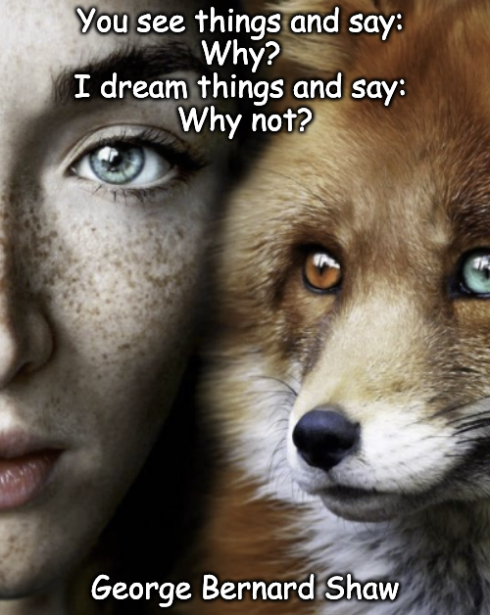
Two percent of the people think, Three percent of the people think they think, and ninety-five percent of the people would rather die than think.
Only on paper has humanity yet achieved glory, beauty, truth, knowledge, virtue, and abiding love.
I can think of no other edifice constructed by man as altruistic as a lighthouse. They were built only to serve.
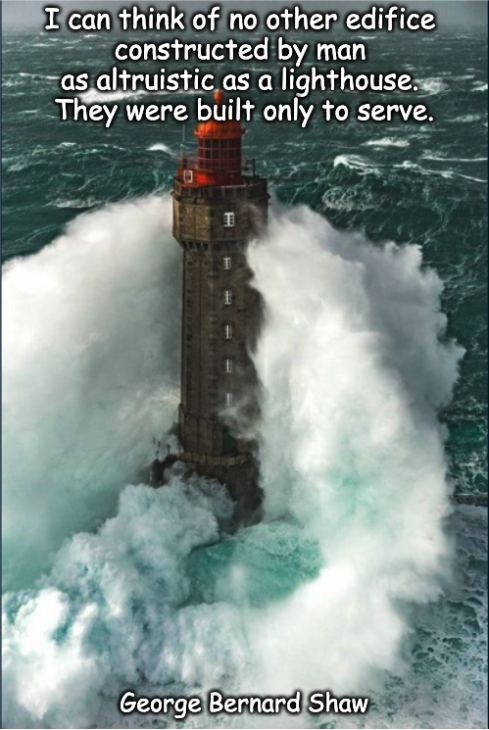
The quote emphasizes that lighthouses are unique structures because their sole purpose is to help others. Unlike most buildings (which are built for profit, habitation, or defense), a lighthouse exists only to warn ships of danger and guide them safely to shore. It serves everyone equally, asking for nothing in return. It represents pure, unwavering altruism.
🏛️ Origin:
The origin of this quote is somewhat disputed and difficult to verify precisely. While it is widely attributed to George Bernard Shaw, there is no definitive record in his published plays, prefaces, or correspondence that confirms he said or wrote this exact sentence.
It is possible that it is a paraphrase of a similar sentiment he expressed, or that it has been misattributed over time, as many elegant quotes are. Some sources also suggest it might be a folk saying or a variation of a quote by other authors like Benjamin Franklin, who also wrote about the noble purpose of lighthouses.
🖋️ Author : Widely attributed to George Bernard Shaw.
As mentioned above, George Bernard Shaw is the most commonly cited author. Shaw (1856–1950) was an Irish playwright, critic, and polemicist who won the Nobel Prize in Literature. He was known for his sharp wit and strong social commentary, and a quote celebrating altruism and public service would certainly fit within his philosophical perspective.
However, without a confirmed primary source, it is best to treat the attribution as “widely attributed to” rather than a confirmed fact.
Life Is Not About Finding Yourself. Life Is About Creating Yourself.
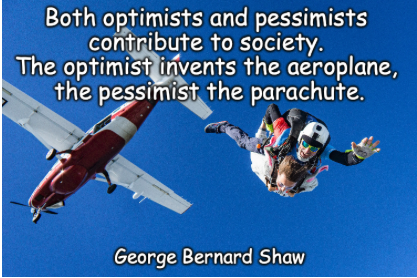
Both optimists and pessimists contribute to society. The optimist invents the aeroplane, the pessimist the parachute.
Liberty means responsibility. That is why most men dread it.
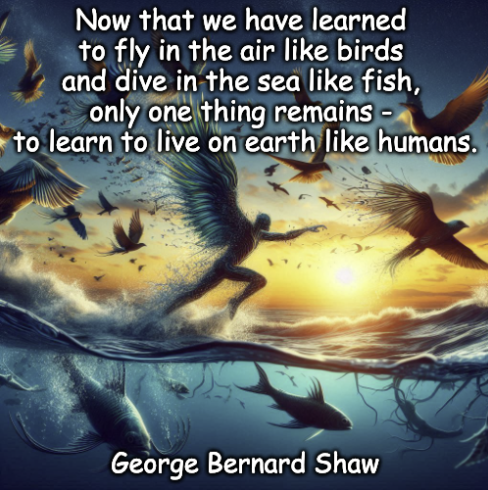
Now that we have learned to fly in the air like birds and dive in the sea like fish, only one thing remains – to learn to live on earth like humans.
Freedom exists only where the people provide the government.
Hatred is the coward’s revenge for being intimidated.
Progress is impossible without change, and those who cannot change their minds cannot change anything.
Liberty is the breath of life to nations.
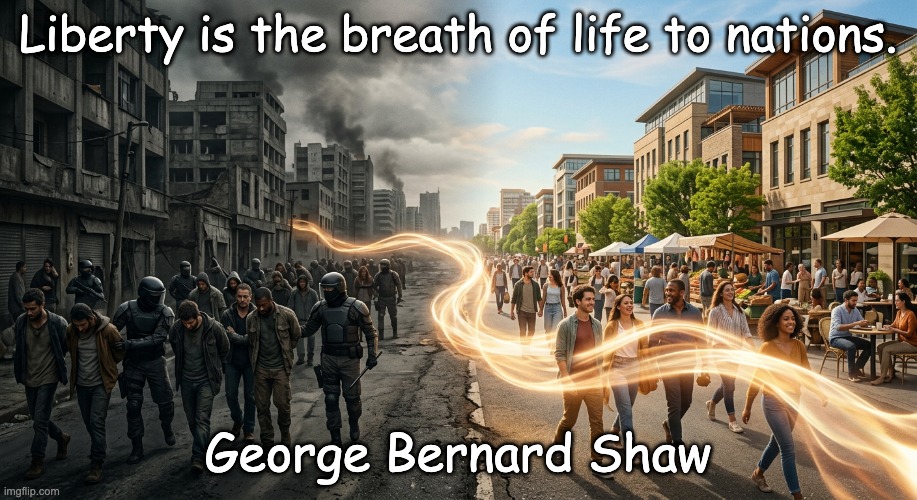
The line compares liberty to oxygen for a political body. Just as a person cannot survive without breathing, a nation cannot remain healthy or alive as a self-governing entity without liberty; it isn’t a luxury or an added benefit but a basic precondition for existence. Take it away, and the nation doesn’t merely weaken, it suffocates. Shaw uses this image to argue that any system of coercive authority, whether over children, citizens, or entire peoples, ultimately kills off what makes a society function.
Origin:
The quote comes from the section “Government by bullies” in Shaw’s 1910 work “Treatise on Parents and Children”. The book itself is a long polemical essay (originally written as a preface and later published as a standalone work) in which Shaw attacks the authoritarian treatment of children at home and in schools. In the “Government by bullies” section, he widens that argument from the family into politics more broadly, framing coercive rule, whether domestic or national, as fundamentally destructive to whatever it governs.
Author: George Bernard Shaw (1856–1950), the Irish playwright, critic, and political essayist, best known for plays like “Pygmalion”, “Man and Superman”, and “Saint Joan”, as well as for his prolific output of prefaces and political writing on subjects ranging from education to socialism.
What is freedom? Leisure. What is leisure? Freedom.
The line is a chiasmus (a mirror image definition): freedom = free time, free time = freedom. The idea is that freedom is not just the absence of limitations; it means having time that is truly yours, free from necessity, work or obligation. And conversely, leisure is not just laziness or entertainment; it is only real free time if it is freely chosen and not imposed (as with unemployment, for example). The two concepts overlap: you are not free if you don’t have your own time, and time for yourself is what freedom consists of in practice.
Origin:
No primary source has surfaced—no play, essay, letter, or speech by Shaw that contains this phrase. It does not appear on the Shaw page of Wikiquote, in the Shaw collection of AZQuotes, or in any scholarly Shaw bibliography, despite Shaw being widely cited. It circulates primarily on human-curated, unsourced citation aggregation sites (in Dutch at citationscollection.com, and in similar unsourced lists elsewhere). This is the typical footprint of a “floating” or orphaned aphorism: a quotable one-liner that wanders through quotation sites, picking up a famous, stylistically plausible name along the way.
Author:
Commonly attributed in these collections of quotes to George Bernard Shaw (“G.B.Shaw”), but I could not verify it as authentically his. Given the complete absence of a documented source in his actual writings, you have to consider the attribution as an unconfirmed/probably false fact rather than an established fact – it is ‘commonly attributed to Shaw’, not ‘of which Shaw is known’.
