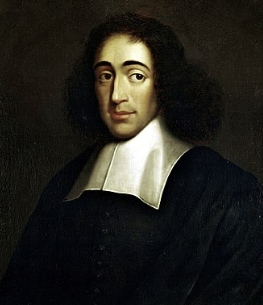
(Amsterdam, 24 November 1632 – The Hague, 21 February 1677). Dutch philosopher, political thinker and exegete of the Golden Age. He is considered one of the founders of rationalism, and one of the inspirers of the Enlightenment. To earn a living, he dragged glasses and lenses for microscopes.
Benedictus de Spinoza (1700). Image: wikipedia.org
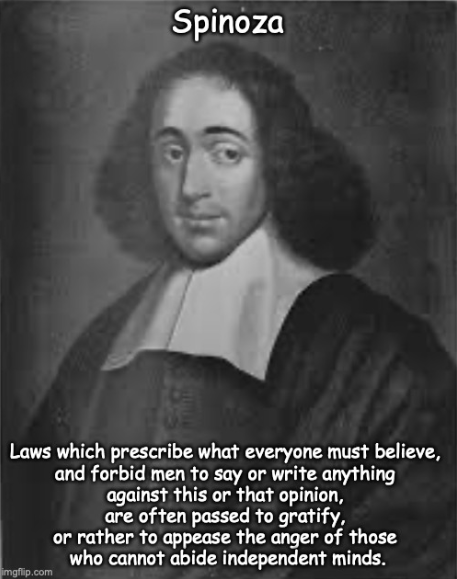
Laws which prescribe what everyone must believe, and forbid men to say or write anything against this or that opinion, are often passed to gratify, or rather to appease the anger of those who cannot abide independent minds.
Spinoza. Anonymous painting Gemeentemuseum The Hague
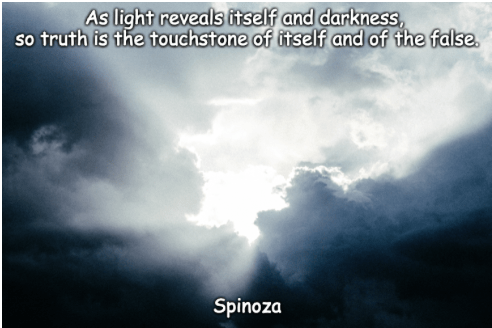
As light reveals itself and darkness, so truth is the touchstone of itself and of the false.
Photo by Jaeyoung Geoffrey Kang
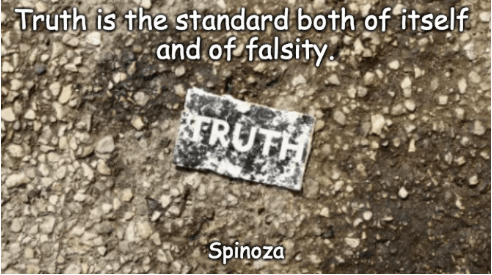
Truth is the standard both of itself and of falsity.
Photo by Michael Carruth
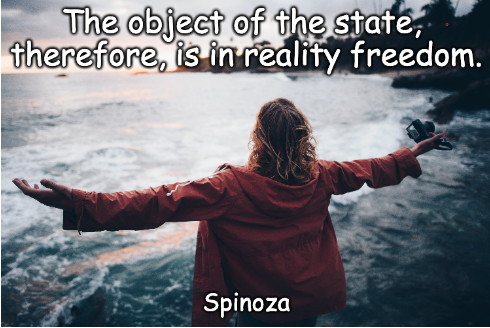
The object of the state, therefore, is in reality freedom.
Photo by Nathan McBride. Remark: That’s different now!
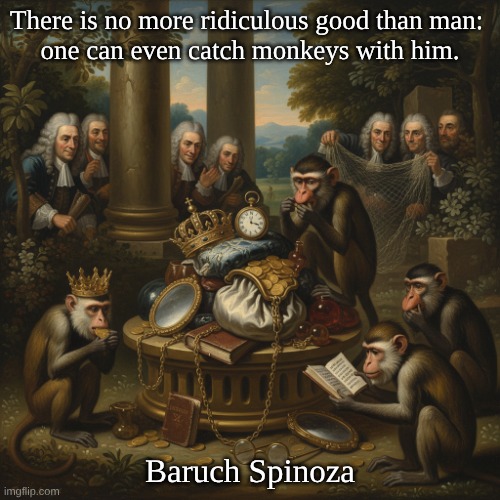
There is no more ridiculous good than man: one can even catch monkeys with him.
Image: Peter van Geest AI. Meaning 🧐: The saying expresses a philosophical and somewhat satirical point about the nature of good and evil, and human desires. “No merrier good than people”: This means something like “there is no funnier, more absurd, or more trivial ‘good’ than people.” It suggests that what people consider ‘good’ may, from a broader perspective, be ridiculous or of little value. It is a relativization of human values. “You can even catch monkeys with them”: This part emphasizes the triviality of human ‘goods’. The things people value (pleasure, status, material things) are so basic and simple that they are comparable to the bait used to catch monkeys. It implies that human desires are not much different from those of animals and that people, despite their perceived superiority, are easily manipulated by these basic ‘goods’. Essentially, it’s a critical observation about human nature, arguing that our ideas of “good” are often trivial and not as lofty as we think, and that we are therefore easily “trapped.” Origin and Author 📜: This profound and somewhat cynical saying comes from the famous Dutch philosopher Baruch Spinoza.Author:Baruch Spinoza (1632-1677) Work: The statement is found in his major work Ethics, Demonstrated According to a Geometric Method (completed 1675, published posthumously 1677). Specifically, it appears in Book III, where Spinoza discusses human emotions and desires. Spinoza uses this observation to support his broader argument that “good” and “evil” are not inherent properties of things, but rather reflections of our own desires, emotions, and judgments. It is a key part of his philosophy on the human condition and the subjectivity of values.
Door Pieter
Mensenmens, zoon, echtgenoot, vader, opa.
Spiritueel, echter niet religieus.
Ik hou van golf, wandelen, lezen en de natuur in veel opzichten.
Onderzoeker, nieuwsgierig, geen fan van de mainstream media (MSM).