Harriet Elizabeth Prescott Spofford:
(April 3, 1835 – August 14, 1921).
American writer of novels, poems and detective stories. One of the United States’s most widely-published authors, her career spanned more than six decades and included many literary genres, such as short stories, poems, novels, literary criticism, biographies, and memoirs. She also wrote articles on household decorative art and travel as well as children’s literature.

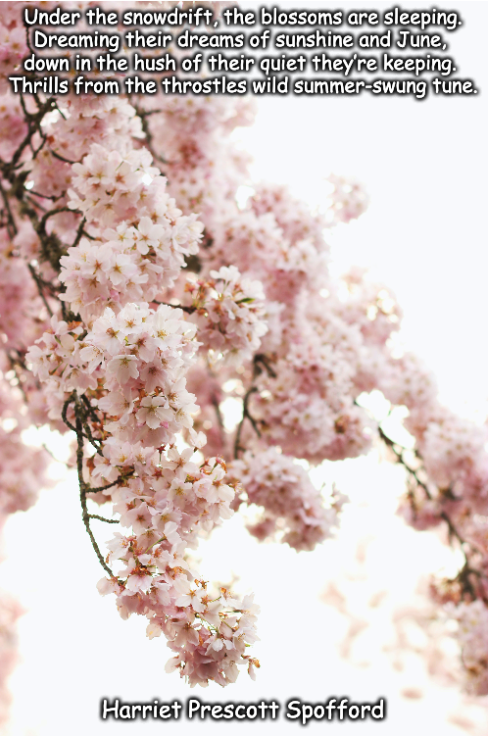
Under the snowdrift, the blossoms are sleeping. Dreaming their dreams of sunshine and June, down in the hush of their quiet they’re keeping. Thrills from the throstles wild summer-swung tune.
A gush of bird song, a patter of dew. A cloud and a rainbow’s warning suddenly sunshine and perfect blue. An April day in the morning.
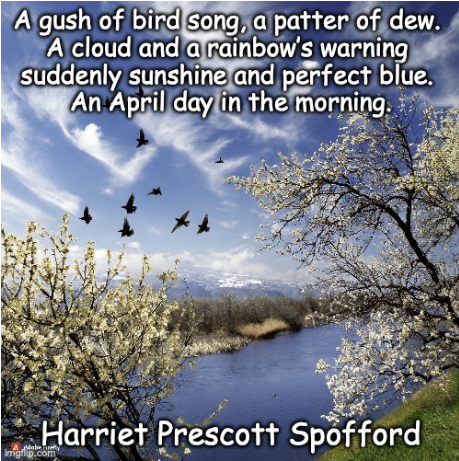
The Unpredictability of April 🌦️: The core of the poem lies in the sudden shift. The “cloud” and the “rainbow’s warning” are classic symbols for the fickleness of April weather. A rainbow often appears just after a shower, when the sun breaks through again, and here it is a harbinger of what is to come. The Change: From Rain to Sun ☀️: The transition to “Suddenly sunshine and perfect blue” is the climax. It describes the moment when the gray clouds give way to a clear, blue sky, which conveys a sense of joy, hope, and renewal. The Conclusion 🌸: The final line, “An April day in the morning,” sums it all up. It is a celebration of the simple yet miraculous everyday beauty of spring. The poem celebrates the fleeting, dynamic beauty of nature in spring and the joyful surprise of a sunny breakout after a shower. 📚 Origin and Author: ✍️: Harriet Prescott Spofford (1835–1921). She was a prolific and popular American author of novels, short stories, and poetry. Her work is known for its vivid descriptions, emotional depth, and often a focus on the role of women in society. Origin and Era 🇺🇸: The poem “April” was first published in her poetry collection “Poems,” which appeared in 1882. This was in the late Victorian era. Poetry from this time often had a strong focus on nature, sentiment, and moral themes. “April” is a beautiful example of her talent to evoke a powerful image and feeling with few words. It is a classic poem that is still appreciated for its timeless description of spring. It reminds us that, even after a cloudy period, the sun can always break through again.
