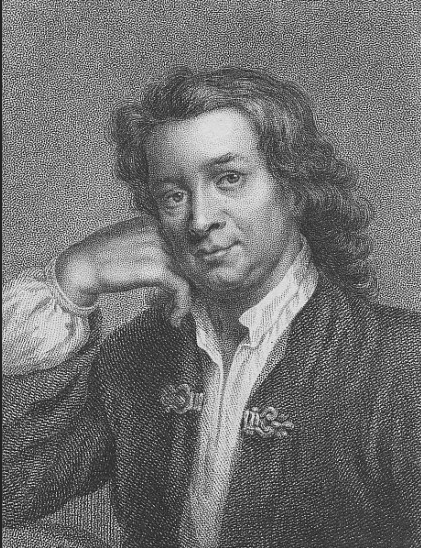
(3 March 1652, Trotton with Chithurst in Sussex – 14 April 1685).
English dramatist of the Restoration period, best known for Venice Preserv’d, or A Plot Discover’d (1682).
No balcony appeared in the famous romantic balcony scene between Romeo and Juliet (Juliet appears at a window in Shakespeare’s Act 2, Scene 2). Otway introduced the balcony in 1679 in his adaptation The History and Fall of Caius Marius.
His best-known play in blank verse, Venice Preserved, would be revived from its first performance in 1682 until the mid-19th century, which can only be said of plays by Shakespeare. With that said, he slept his life in poverty. Otway wrote several grand, dramatic female roles for the actress Elizabeth Barry, with whom he was in love. Towards the end of his life, he developed mental problems.
Thomas Otway. Photo: myartsprints.co
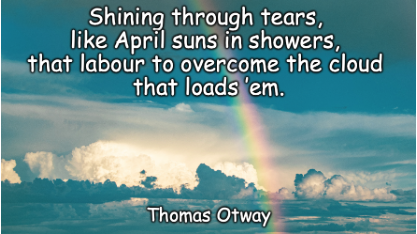
Shining through tears, like April suns in showers, that labour to overcome the cloud that loads ’em.
Photo: Mateus Campos. Meaning 🧠 ✒️ 📖 : This quote is a beautiful example of Baroque, emotional poetry. Its power lies in the imagery. 💧 Tears and Rain (Sorrow): The “rain showers” and the “cloud” symbolize intense sorrow, despair, or adversity. ☀️ The April Sun (Hope and Beauty): The sun, even when weak, represents hope, inner strength, or the enduring beauty of the person suffering. The comparison with ‘April’ is specific: April weather is known for its unpredictability, where sun and rain alternate rapidly. ⚔️ The Struggle (“Striving to overcome”): This is the core of the tragic beauty. The sun (hope/the person) does not give up easily. There is an active, painful effort underway to break through the darkness (the sorrow). It shows resilience, but also the weight of the suffering. In essence: It describes someone who, despite overwhelming grief, still radiates a spark of hope or beauty. It is an image of ’tragic beauty and courageous vulnerability’. 🎭 Origin and Context: 👤 Author:Thomas Otway (1652–1685). Title of the Work: “The Orphan: or, The Unhappy Marriage”. 📅 Year of Publication: 1680. 🎭 Genre: A Restoration tragedy. 🌟 Status: This play was Otway’s first major success and established his reputation as a master of tragedy. The quote is so striking that, as you noted, it has often been included in anthologies of his work and on quote websites (such as A-Z Quotes). 🖋️ Otway’s Style and Tragic Pathos: This quote fits perfectly within the broader context of Otway’s literary style. Master of Pathos: Otway was known for his ability to evoke deep pity and emotion (pathos) in his audience. He focused less on political intrigue and more on the inner, emotional lives of his characters. Emotional Tension: “The Orphan” is a play full of misunderstandings, forbidden love, and betrayal. The quote appears at a moment of ‘deep emotional tension,’ likely spoken by or about a character trapped in an impossible and painful situation. The imagery of the sun fighting through the clouds reflects the character’s internal struggle.
Door Pieter
Mensenmens, zoon, echtgenoot, vader, opa.
Spiritueel, echter niet religieus.
Ik hou van golf, wandelen, lezen en de natuur in veel opzichten.
Onderzoeker, nieuwsgierig, geen fan van de mainstream media (MSM).