Ono no Komachi:
( c. 825 – c. 900).
Japanese waka poet, one of the Rokkasen—the six best waka poets of the early Heian period.
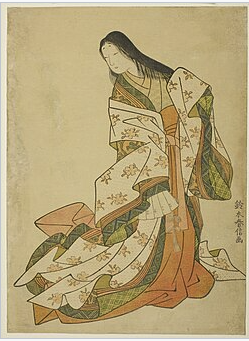
She was renowned for her unusual beauty, and Komachi is today a synonym for feminine beauty in Japan. She also counts among the Thirty-six Poetry Immortals.
Almost nothing of Komachi’s life is known for certain, save for the names of various men with whom she engaged in romantic affairs and whose poetry exchanges with her are preserved in the Kokin Wakashū. She was probably born between 820 and 830, and she was most active in composing poetry around the middle of the ninth century.
How invisibly it changes color in this world, the flower of the human heart.
This profound waka poem captures the delicate and often imperceptible nature of emotional change, particularly regarding love and affection.
– ‘The Flower of the Heart’: The “flower of the human heart” serves as a metaphor for love, passion, and affection. Just like a beautiful flower, these feelings are vibrant, captivating, and capable of blooming.
– ‘Invisible Transformation’: The core of the poem is the idea that this “flower” (human emotion) changes its color—fades, shifts, or withers— without any visible sign or external announcement. The transformation is internal, quiet, and often only recognized after it has already occurred.
– ‘A Worldly Truth’: The phrase “in this world” grounds the sentiment in the reality of human experience. It suggests that this impermanence is a fundamental, unavoidable aspect of life and relationships.
– Transience (‘Mono no Aware’): The poem is a classic expression of ‘mono no aware’, the Japanese aesthetic and philosophical concept that finds beauty in the transience of all things. It is a melancholic acknowledgement that even the most beautiful and powerful emotions are subject to change.
📜 Origin:
The poem originates from Heian-period Japan (794–1185 CE).
– ‘The Original Waka’: It was composed in the ‘waka’ format, a traditional Japanese poetic form consisting of 31 syllables (5-7-5-7-7).
– ‘The Original Japanese Text’:
> 色見えで うつろうものは 世の中の 人の心の 花にぞありける
> ‘Iro miede / utsurou mono wa / yo no naka no / hito no kokoro no / hana ni zo arikeru’
– ‘The Anthologies’: This waka is famously included in the ‘Kokin Wakashū’ (古今和歌集), the “Collection of Japanese Poems of Ancient and Modern Times,” which was completed around 905 CE. It is poem number 797 in that collection. Its inclusion in this prestigious imperial anthology solidified its place in Japanese literary history.
✍️ Author:
The author of this celebrated poem is ‘Ono no Komachi’ (小野 小町).
– ‘A Legendary Figure’: Ono no Komachi (c. 825 – c. 900) was a renowned Heian-period poet and court lady. She is one of the ‘Rokkasen’ (Six Poetic Geniuses) mentioned in the preface to the ‘Kokin Wakashū’.
– ‘Poetic Voice’: Her poetry is characterized by its emotional intensity, use of metaphors (such as flowers, rain, and dreams), and reflections on the fleeting nature of love and youth. This particular poem is considered one of her most representative and powerful works.
– ‘Cultural Icon’: Komachi was legendary not only for her poetic talent but also for her extraordinary beauty. Her name, “Komachi,” became a synonym for feminine beauty in Japan. Numerous plays, stories, and legends have been inspired by her life, often focusing on her beauty and the many suitors she supposedly had, only to end her life in solitude and poverty, a powerful figure of the very impermanence she wrote about.
