Sylvia Plath:
(Boston (Massachusetts), 27 October 1932 – London, 11 February 1963).
American poet, novelist and essayist.
Although best known for her poetry, she also achieved fame with her semi-autobiographical novel The Bell Jar (‘The Glass Bell Jar’), which detailed her struggle with depression. After her suicide, she became an icon to many. Posthumously, she was awarded the Pulitzer Prize for poetry in 1982.
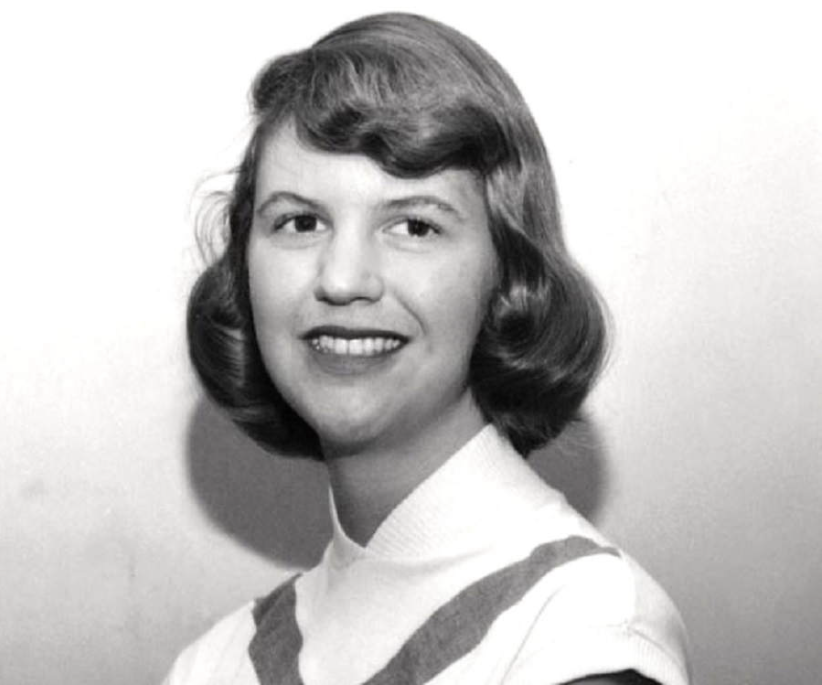
I know pretty much what I like and dislike; but please, don’t ask me who I am.
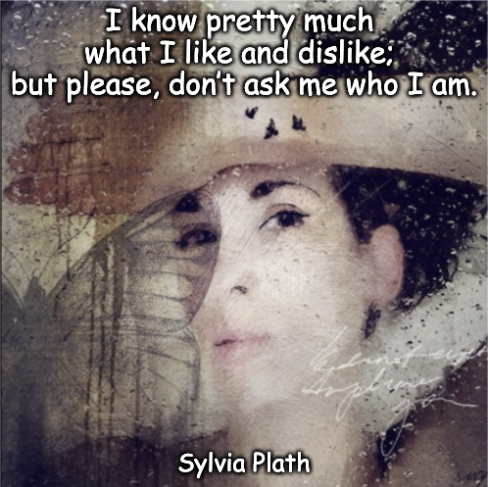
There is a certain unique and strange delight about walking down an empty street alone. There is an off-focus light cast by the moon, and the streetlights are part of the spotlight apparatus on a bare stage set up for you to walk through. You get a feeling of being listened to, so you talk aloud, softly, to see how it sounds.
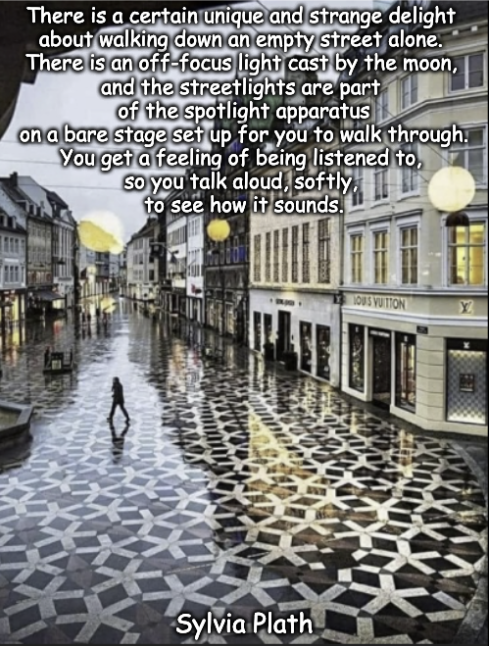
Wind warns November’s done with. The blown leaves make bat-shapes, web-winged and furious.
Girls are not machines that you put kindness coins into until sex falls out.

What I fear most, I think, is the death of the imagination.

Today is the first of August. It is hot, steamy, and wet. It is raining. I am tempted to write a poem.
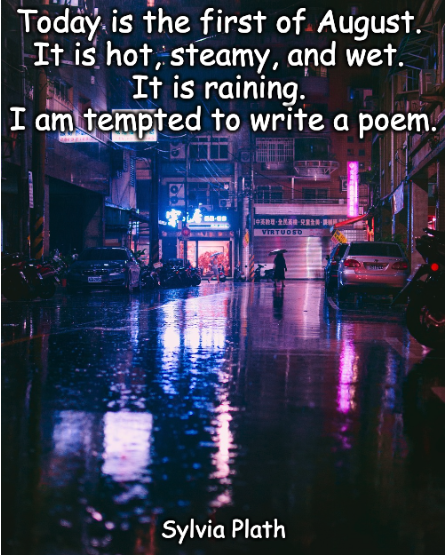
The quote captures a moment of ‘weather, mood, and creative impulse’:
– “the first of August” marks a seasonal moment — deep summer.
– “hot, steamy, and wet” creates a vivid, physical atmosphere.
– “It is raining” adds heaviness, intimacy, and melancholy.
– “I am tempted to write a poem” shows how the sensory world stirs artistic feeling.
In short, Plath is describing how a humid, rainy August day makes her feel drawn toward poetry. It reflects her habit of turning ordinary experience — weather, mood, place — into art.
📚 Origin:
The line comes from “Sylvia Plath’s journals”, specifically from an entry dated “August 1”. It appears in collections such as “The Unabridged Journals of Sylvia Plath”, edited by Karen V. Kukil.
It is ‘not originally a poem’, but a diary/journal observation written in prose.
👤 Author: Sylvia Plath, from her “journal”, and it expresses the connection between ‘weather, emotion, and poetic inspiration.’
📝 In Simple Terms
It means:
> ‘The day feels so intense and atmospheric that it makes the writer want to turn it into poetry.’
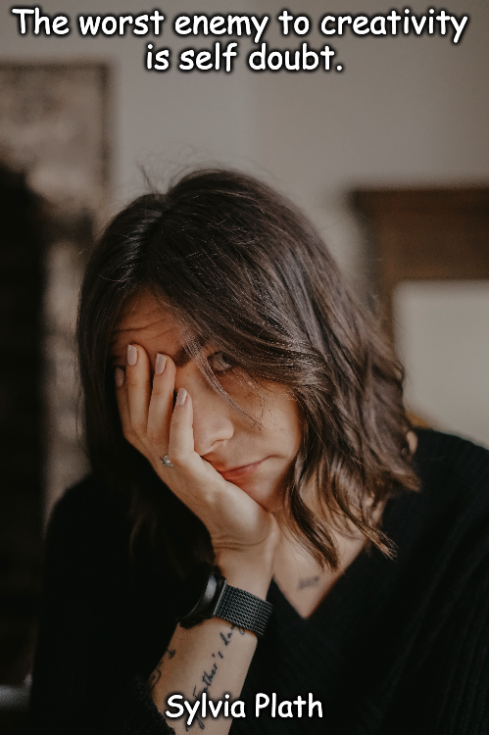
The worst enemy to creativity is self doubt.
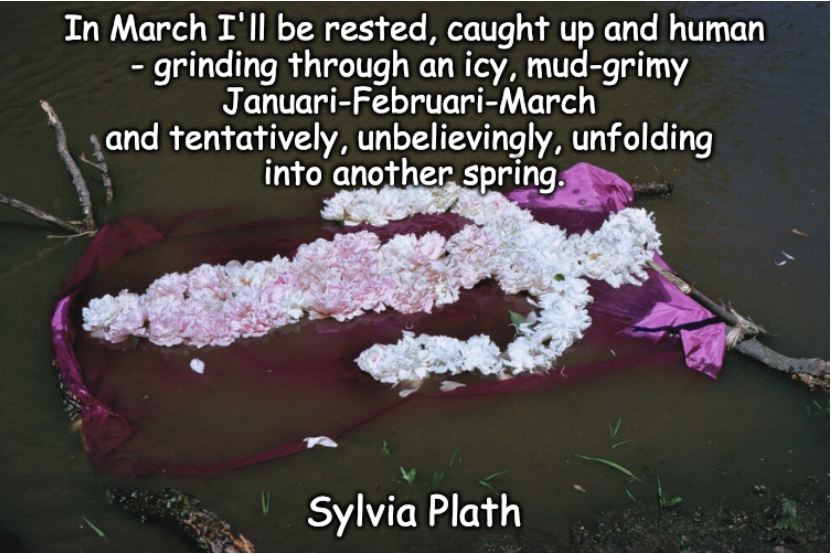
In March I’ll be rested, caught up and human – grinding through an icy, mud-grimy Januari-Februari-March and tentatively, unbelievingly, unfolding into another spring.
August rain—the best of the summer gone, and the new fall not yet born. The odd uneven time.

The quote means that ‘August is an in-between, unsettled time’:
– “The best of the summer gone”
→ the peak of summer has passed.
– “The new fall not yet born”
→ autumn has not fully arrived yet.
– “The odd uneven time”
→ it feels strange, transitional, and emotionally uncertain.
In simple terms:
> ‘August can feel melancholy because one season is fading, but the next has not yet begun.’
It captures a feeling of ’transition, nostalgia, and waiting’.
Origin 📚:
The line comes from “Sylvia Plath’s journals”, commonly cited from:
> “The Unabridged Journals of Sylvia Plath.’
It is a personal literary observation rather than a traditional proverb or folk saying.
Author ✍️: Sylvia Plath.
– Full name: Sylvia Plath
– Born: 1932
– Died: 1963
– Known for: Poetry, journals, and the novel “The Bell Jar”.
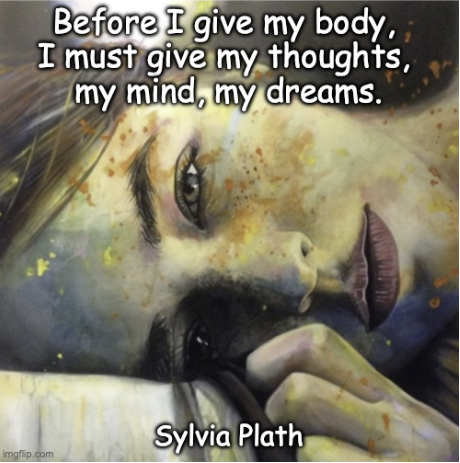
Before I give my body, I must give my thoughts, my mind, my dreams.
It’s comforting to find someone who talks about ideas of life, religion, arts and beauty. I think companionship is very essential in a world with so much superficiality, and little attraction.