Kenneth Grahame:
(Edinburgh (Schotland), 8 maart 1859 – Pangbourne (Berkshire), 6 juli 1932).
Schots schrijver.
Grahame werd geboren in Edinburgh, Schotland. Hij werd beroemd met het klassieke kinderboek “De wind in de wilgen” (The Wind in the Willows, 1908, met illustraties van Ernest Shepard.)

September came in with golden days and silver nights, and the children were allowed to stay up late to see the moon rise.
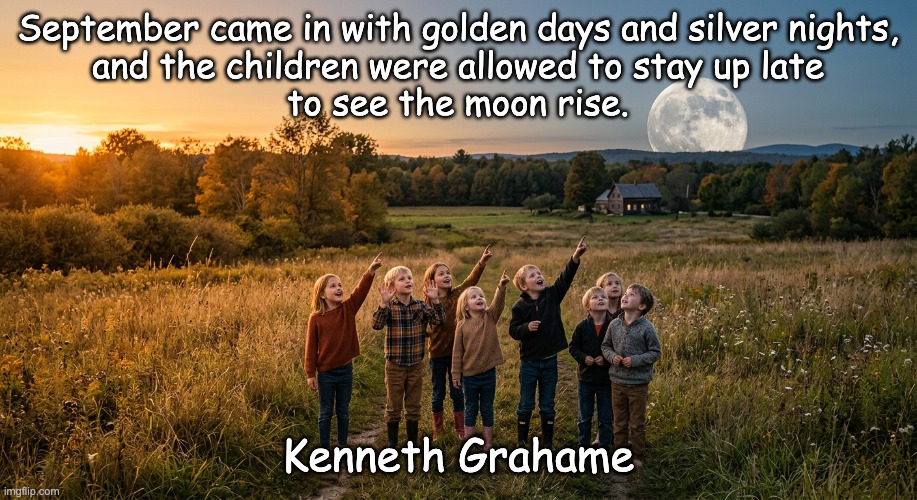
– ‘Golden days’:
Refers to bright, sunny, warm autumn afternoons in September, evoking richness and beauty like gold.
– ‘Silver nights’:
Suggests cool, luminous evenings lit by moonlight, giving a magical, silvery glow.
– ‘Children staying up late’:
Highlights the joy and freedom of extended daylight or pleasant weather allowing kids to enjoy nature (watching the moon rise), symbolizing innocence, seasonal change, and simple pleasures.
– Overall theme:
Nostalgic celebration of September’s transition into autumn, blending nature’s beauty with childhood wonder.
🌍 Origin:
– This poetic saying likely stems from ‘early 20th-century British children’s literature’, capturing Edwardian-era rural life and seasonal folklore.
– It reflects traditions where September’s milder weather encouraged outdoor activities into the evening.
– Not a widespread proverb but a literary phrase popularized in stories about family and nature.
✍️ Author:
– Kenneth Grahame (author of ‘The Wind in the Willows’ and ‘Dream Days’):
– Matches his style of whimsical, nature-focused prose about childhood.
– Appears in similar form in his works evoking golden childhood memories.
– Alternative attributions: Sometimes linked to Edith Nesbit (“The Railway Children”) due to similar September motifs, but Grahame is the strongest match.
🔍 Quick Notes:
– 📚 If from a specific book, it fits pastoral fiction.
– 🌙 Symbolism ties into harvest moons and autumn equinox vibes.
