Felice Leonardo Buscaglia:
(March 31, 1924 – June 12, 1998).
Also known as “Dr. Love”, was an American author, motivational speaker, and a professor in the Department of Special Education at the University of Southern California.

Change is the end result of all true learning.
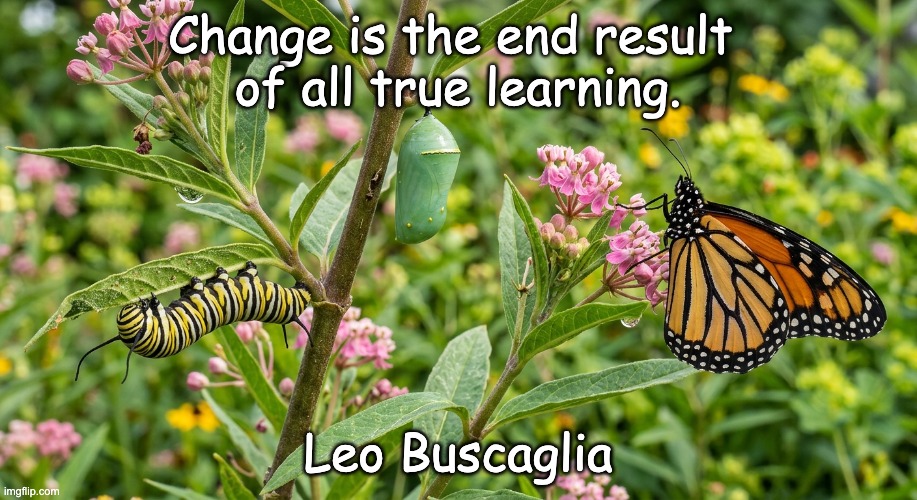
This saying beautifully encapsulates the transformative nature of genuine education. It suggests that if we have truly learned something, it must inevitably lead to a change within us—a shift in perspective, a modification of behavior, or the acquisition of new skills. True learning isn’t just about accumulating facts; it’s about integration and application that results in growth and evolution. If there is no change, perhaps only information was gathered, not true wisdom.
🕰️ Origin:
The exact origin of this specific phrasing is often debated, which is common with many widely attributed quotes. It has been popularized over decades and has become a staple in educational philosophy.
✍️ Author:
While there isn’t a single, universally confirmed author for this precise wording, it is most frequently attributed to the renowned American author and speaker Leo Buscaglia. He was known for his insightful teachings on love, education, and human connection, and this sentiment perfectly aligns with his philosophy of holistic learning and personal growth.
Love is life. And if you miss love, you miss life.
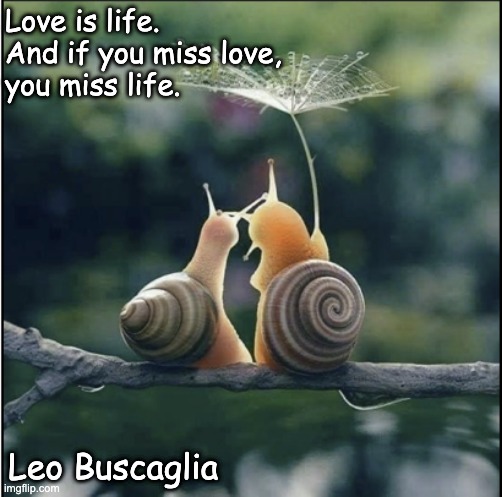
The saying suggests that love—romantic love, friendship, family affection, compassion, and connection—is essential to living fully. Without experiencing or giving love, a person may exist, but misses a central part of what makes life meaningful.
Author and origin:
The quotation is ‘commonly attributed to Leo Buscaglia’ (1924–1998), an American author, professor, and motivational speaker known as “Dr. Love.”
– The wording is widely reproduced under his name.
– However, most quotation collections provide ‘no precise book, page, lecture, or date’, so its exact first appearance is uncertain.
– It reflects the central message of Buscaglia’s books and lectures, especially works such as “Love” (1972) and “Living, Loving & Learning” (1982), but it should not be assigned to a particular book without a verifiable primary citation.
