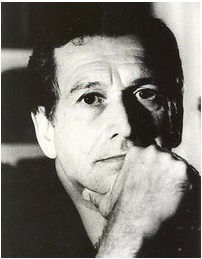
Fernando Sabino:
(October 12, 1923 – October 11, 2004) was a Brazilian novelist and journalist.
Sabino was born in Belo Horizonte, Minas Gerais, and lived there until he was twenty, after which he moved to Rio de Janeiro. Sabino wrote fifty books, as well as countless short stories and essays. His first book was published in 1941, when he was only eighteen years old. With his 1956 novel “A Time to Meet,” which tells the story of three friends in Belo Horizonte, Sabino gained national and international fame. The book was inspired by Sabino’s own life story. Sabino also had commercial success with the films “The Great Insane” and “The Naked Man.” Friendship was one of the most important things in Sabino’s life. His circle of friends included Hélio Pellegrino, Otto Lara Resende, Paulo Mendes Campos, Rubem Braga, Clarice Lispector, Vinicius de Moraes, Carlos Drummond de Andrade, Mário de Andrade, and Manuel Bandeira. In the last ten years of his life, Sabino avoided public life. Many of his close friends had preceded him in death. Two years before his passing, Sabino was diagnosed with cancer. After a long illness, he died at his home in Rio de Janeiro, one day before his 81st birthday.
“everything will be ok in the end, if it’s not ok, it’s not the end.”
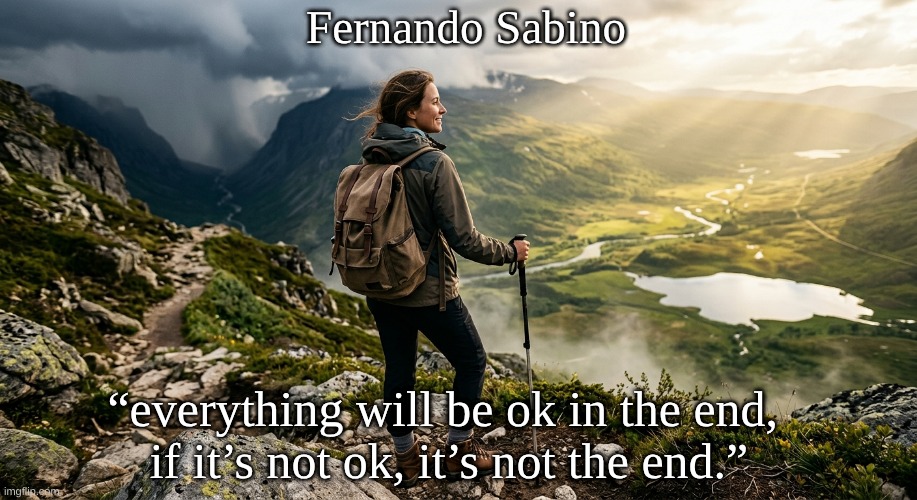
Many people attribute this quote to John Lennon, but there is no concrete indication that he ever said or wrote it. It is one of many quotes wrongly attributed to celebrities. Other Candidates: There are several other names associated with this quote, including:
Fernando Sabino: A Brazilian writer. The earliest mention of this quote is found in his 1988 book “O tabuleiro de damas” (The Checkerboard). The original Portuguese text reads: “No fim, tudo dá certo. Se não deu, ainda não chegou ao fim.”
Paulo Coelho: Also a Brazilian writer, known for “The Alchemist”. The quote is sometimes attributed to him, but it is more likely that he took it from Sabino or another source. Anonymous: Many people believe that the quote is folk wisdom and has no specific author. Conclusion: While we will probably never know for certain the exact origins of this quote, the message of hope and resilience remains powerful and inspiring. It’s a reminder that, even in the darkest of times, there is always a light at the end of the tunnel.
