Salomon or Solomon:
(c. 972-932 B.C.E.)
Son and successor of King David and thus the third and last king of the United Kingdom of Israel. According to the Talmud, he was one of the 48 prophets.
Solomon built the Temple of Solomon in Jerusalem and was a very wise, wealthy, and powerful king. However, after he turned away from the God YHWH through idolatry, his reign ended in conflict, which led to a division of his kingdom immediately after his death (1 Kings 11-12). After his death, his kingdom was divided into the northern Kingdom of Israel and the southern Kingdom of Judah, with his patrilineal descendants ruling over the latter.
Solomon is the subject of many later references and legends, but there is no (archaeological) evidence for the existence of Solomon or the United Kingdom of Israel.

A useless and wicked man walks about with crooked speech. He winks with his eye, signals with his foot, and motions with his fingers. With a perverted heart, he is always scheming evil and spreading contentions.

The lips of the righteous know what is pleasing, but the mouth of the wicked is full of deceit.

Whoever gives to the poor will lack nothing, But the one who closes his eyes to them will receive many curses.
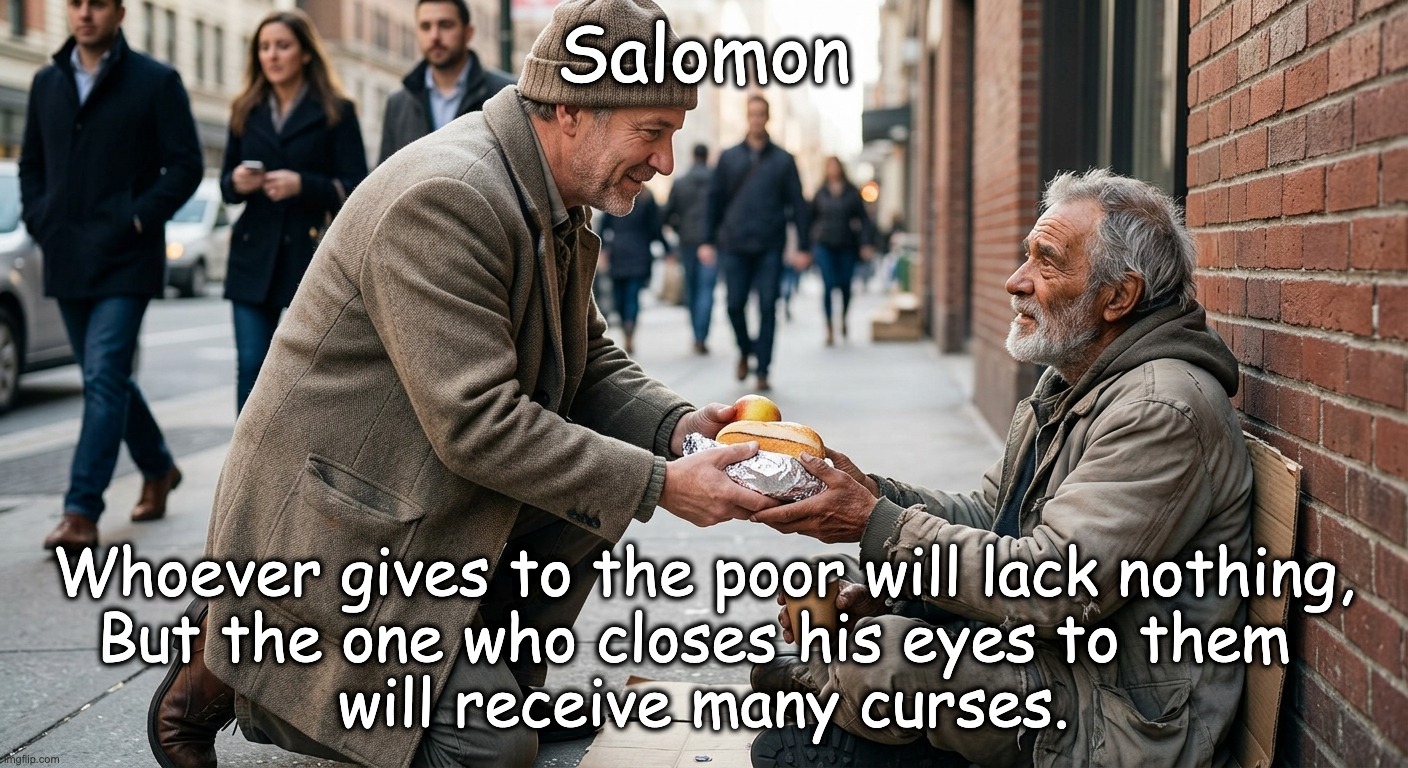
This saying sends a powerful message about generosity and the unexpected rewards it can bring. It suggests that when you are willing to help others, especially those who are less fortunate, you will somehow be blessed yourself. This can translate into material abundance, as well as emotional fulfillment, a sense of purpose, and a stronger connection to your community. It reminds us that sharing what we have not only benefits others, but also enriches ourselves.
Origin:
The origin of this saying is deeply rooted in religious and spiritual traditions. It finds its basis in the Bible, specifically in the book of Proverbs (Proverbs 28:27). This book, attributed to King Solomon, is known for its wisdom and moral lessons. The passage emphasizes the importance of compassion and the positive consequences that come from helping the poor.
Author:
Although the saying cannot be directly attributed to one specific author, it is traditionally associated with King Solomon, the alleged author of the Book of Proverbs. Solomon was known for his wisdom and righteousness, and his teachings have inspired countless people throughout the ages. The saying reflects his belief in the power of generosity and divine providence.
Relevance in the modern world:
Even in today’s society, this saying retains its relevance. It reminds us that we can all play a role in creating a more just and compassionate world. Whether it’s donating to charity, volunteering or simply lending a helping hand to someone in need, every act of kindness counts. The saying encourages us to look beyond our own needs and strive for a world where everyone has the opportunity to thrive.
Conclusion:
“He who gives to the poor will lack nothing” is a timeless saying that inspires us to be generous and believe in the power of compassion. It reminds us that sharing what we have not only benefits others, but also enriches ourselves. Let’s take this wisdom to heart and strive for a world where everyone has the opportunity to thrive.
