Hubert Reeves:
(July 13, 1932 – October 13, 2023) .
French-Canadian astrophysicist and popularizer of science.
Reeves was born in Montreal on July 13, 1932, and as a child lived in Léry.
Reeves attended Collège Jean-de-Brébeuf, a prestigious French-language college in Montreal. He obtained a BSc degree in physics from the Université de Montréal in 1953, an MSc degree from McGill University in 1956 with a thesis entitled “Formation of Positronium in Hydrogen and Helium” and a PhD degree at Cornell University in 1960.
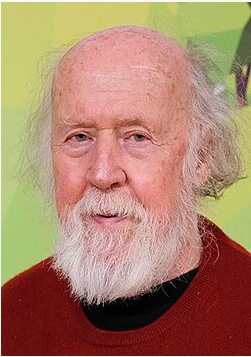
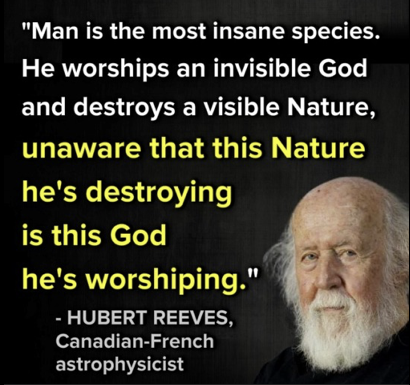
Man is the most insane species. He worships an invisible God and destroys a visible nature. Unaware that this nature he’s destroying is this God he’s worshipping.
– Humans often claim to worship a divine being they cannot see.
– At the same time, they exploit and destroy the natural world they can see.
– The irony is that ‘nature may be the clearest expression of the divine’ — the “God” people are searching for.
– Therefore, destroying nature is, in a spiritual sense, destroying what is sacred.
It is not necessarily a formal religious statement. It is more of a ‘poetic ecological warning’.
🌿 Philosophical background:
The idea resembles ‘pantheism’ or ‘ecospirituality:
– ‘Pantheism:
God and nature are identical or deeply inseparable.
– A famous related idea comes from Spinoza: “Deus sive Natura” — “God or Nature.”
– The quote suggests that if people truly revered creation, they would protect forests, rivers, animals, oceans, and ecosystems.
👤 Was it Hubert Reeves?
✅ Common attribution:
The quote is very often credited to Hubert Reeves:
– Hubert Reeves
– Born: 1932
– Died: 2023
– Canadian-French astrophysicist
– Known for popular science writing and environmental activism
– Wrote about the cosmos, life, ecology, and humanity’s responsibility toward Earth
A French version often appears as:
> “L’homme est l’espèce la plus folle : il vénère un Dieu invisible et détruit une Nature visible, sans savoir que cette Nature qu’il détruit est ce Dieu qu’il vénère.”
⚠️ But is the attribution certain?
Not completely.
The quote is widely shared online with Hubert Reeves’s name, but it is usually given ‘without a precise source’ — no book title, page number, lecture date, or interview reference.
So for careful use, it is better to say:
> “Attributed to Hubert Reeves.”
