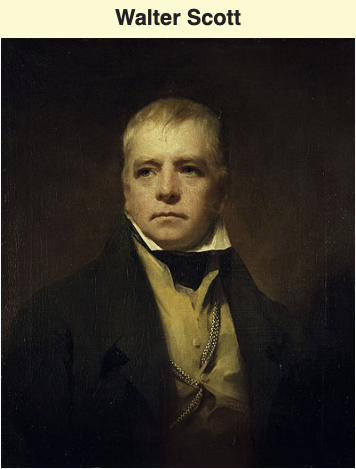
Walter Scott:
(Edinburgh, 14 August 1771 – Abbotsford House, Abbotsford, 21 September 1832).
Scottish poet and writer, best known for his historical novels. With Waverley (1814), the first of a series that included Ivanhoe, he wrote the first historical novel.
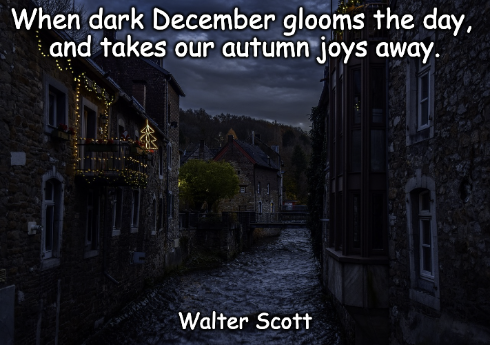
When dark December glooms the day, and takes our autumn joys away.
November’s sky is chill and drear, November’s leaf is red and sear.
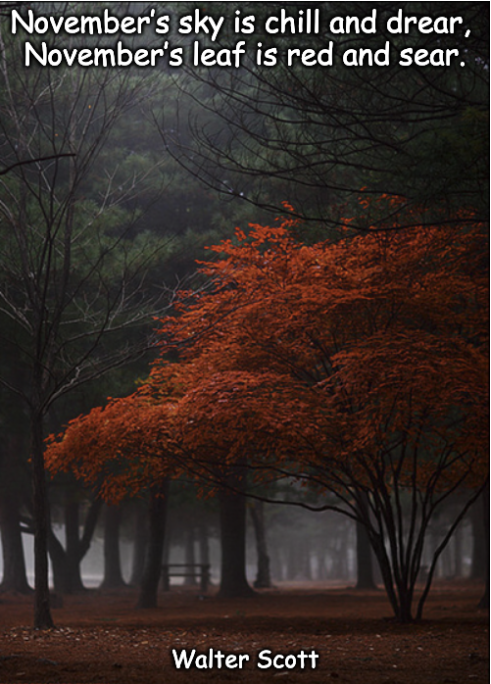
In modern English:
– November’s sky is ‘cold and gloomy’.
– Its leaves are ‘red and withered’.
Here, “drear” means bleak or depressing, while “sear” is an older poetic word meaning dried up or withered. “Leaf” is used collectively for autumn foliage.
✍️ Author and origin:
The lines are by Sir Walter Scott (1771–1832).
They open the “Introduction to Canto I” of his narrative poem:
> “Marmion: A Tale of Flodden Field” (published in 1808)
The introductory epistle is addressed to Scott’s friend William Stewart Rose and is associated with ‘Ashestiel in Ettrick Forest’, Scotland.
It was composed in November 1806.
🍂 Effect:
The rhyming pair “drear / sear” creates a concise picture of late autumn:
cold skies, fading colour, and the approach of winter. It is a poetic couplet rather than a proverb or anonymous saying.
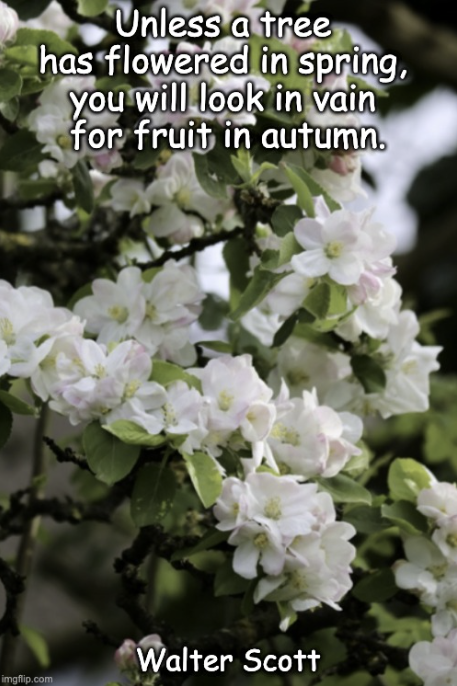
Unless a tree has flowered in spring, you will look in vain for fruit in autumn.