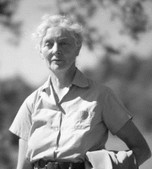
Anne Bosworth Greene
(1878-1961)
Author and artist. Born in England, although lived most of her life in America. She lived on a farm in Vermont, where she kept horses and Shetland ponies. She wrote an autobiographical account of the time she spent a winter alone there, and also two children’s stories about a Shetland, no doubt influenced by her experience with her own Shelties. She also wrote travel books, various essays and a dog story, as well as painting landscapes.
November at its best—with a sort of delightful menace in the air.
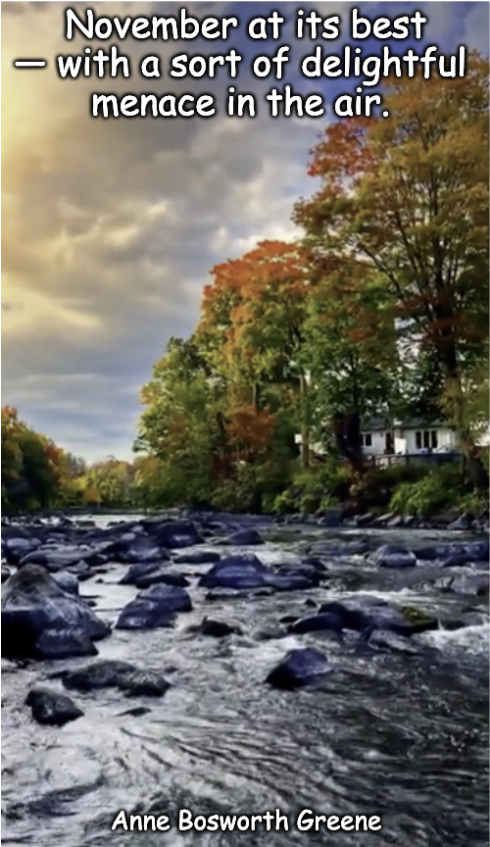
This line captures the ‘paradoxical beauty of late autumn’:
– “November at its best”:
— suggests the month has a distinct charm, even though November is often considered dull or bleak.
– “Delightful menace”:
— an oxymoron pairing pleasure with threat:
– 🌤️ Delight:
→ the crisp air, stark beauty, clarifying light of late autumn
– ⚡ ‘Menace’:
→ an undertone of foreboding — the looming arrival of winter’s harshness, darkness, and cold
Interpretation:
The sentence expresses that feeling of being ‘invigorated and slightly unsettled at once’ — nature on the cusp of change, where beauty and quiet threat coexist in the same breath. It’s the sensation of a season that feels alive precisely ‘because’ it’s edged with the knowledge of what’s coming.
📚 Origin:
– The quote appears to originate from the writing of Anne Bosworth Greene, an American author known for ‘nature and rural life writing’, often set in ‘Vermont’.
– It likely comes from one of her ‘nature essays or memoirs’ (possibly “The Lone Winter”, 1923, or a similar seasonal reflection piece), where she chronicles rural New England life through the changing seasons.
> ⚠️ Note on verification:
‘I do not have fully confirmed bibliographic details (exact book/page) for this specific line’.
✍️ Author: Anne Bosworth Greene
– American writer, active in the early 20th century
– Focused on ‘rural/farm life, nature, and the Vermont landscape’.
– Her prose style is typically ‘lyrical and observational’, rooted in direct sensory experience of seasonal and agricultural life, rather than urban or psychological themes.
