Publius Ovidius Naso:
(Sulmone die 20 Martii 43 a.C.n. (a.d. XII. Kal. Apr.)
natus; mortuus Tomis inter annos 16 et 18 fuit poeta Romanus.
Qui potissimus propter corpus poëmatum, quae sunt Heroides, Amores, Ars amatoria distichi elegiaci, magister habetur atque iuxta Vergilium et Horatium inter tres canonicos litterarum Latinarum poetas numeratur.
Quintilianus Ovidium quidem putabat Tibullo et Propertio lasciviorem esse. Poësis Ovidiana, quae ubique Antiquitate Posteriore et Medio Aevo simulata est, etiam hodie perennem thesaurum mythologiae classicae suppeditat.
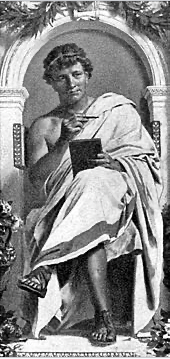
Nec frondem in silvic cemit.
Exit in immensum fecunda licentia vaturn, obligat historica nec sua verba fide.

Fertilior seges est alienes semper in agris.
An nescis longas regibus esse manus?

“An nescis longas regibus esse manus?”
– Literal:
“Or do you not know that kings have long hands?”
– Idiomatic:
“Do you not know that the power of kings reaches far?”
The sentence means that rulers can exercise their authority, influence, or vengeance even at a great distance—similar to the English expression “the long arm of the law.”
🏛️ Origin and author:
The line is traditionally attributed to Publius Ovidius Naso (Ovid), the Roman poet:
> Ovid, “Heroides” 17.166
It occurs in “Helen’s letter to Paris”, where she warns him about the far-reaching power and retaliation of kings.
🔎 Grammar:
– “an” — “or,” introducing a rhetorical question
– “nescis” — “do you not know?”
– “longas manus” — “long hands”
– “regibus” — dative of possession: “kings have”
– “esse” — “to be,” used in indirect statement after “nescis”
Thus, more exactly:
> “Or do you not know that kings possess long-reaching hands?”
The exact wording is Ovidian, although the broader idea that rulers have “long hands” was already proverbial in the ancient world.
