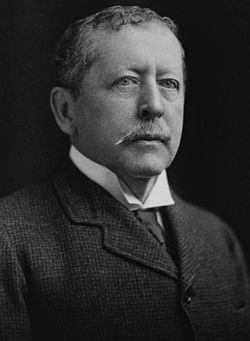
Thomas Bailey Aldrich:
(November 11, 1836 – March 19, 1907).
American writer, poet, critic, and editor.
He is notable for his long editorship of The Atlantic Monthly, during which he published writers including Charles W. Chesnutt. He was also known for his semi-autobiographical book The Story of a Bad Boy, which established the “bad boy’s book” subgenre in nineteenth-century American literature, and for his poetry.
October turned my maple’s leaves to gold. The most are gone now; here and there one lingers. Soon these will slip from out the twigs’ weak hold. Like coins between a dying miser’s fingers.
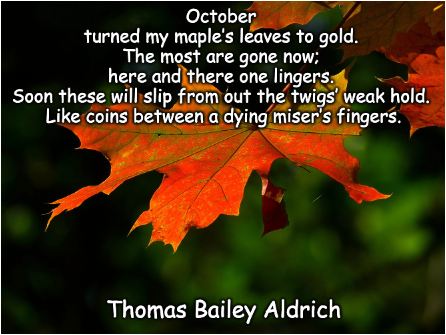
This poem is a ‘character study contrasting two opposing temperaments’ through vivid imagery, built as a sonnet with two movements:
Part One — The Autumn/Miser Imagery:
> “October turned my maple’s leaves to gold. The most are gone now; here and there one lingers. Soon these will slip from out the twigs’ weak hold, Like coins between a dying miser’s fingers.”
– The ‘gold leaves’ represent something beautiful but fleeting
– The ‘dying miser clutching coins’ is the central metaphor: desperate, futile clinging to what cannot be kept
– This establishes a mood of ‘anxious attachment’ and fear of loss
Part Two — The Explicit Contrast:
> “This one sits shivering in Fortune’s smile, Taking his joy with bated, doubtful breath. This other, gnawed by hunger, all the while Laughs in the teeth of Death…”
😟 The Pessimist / 😄 The Optimist:
Shivers ‘even when Fortune smiles’ on him /
Laughs ‘even in the face of Death’
Takes joy with “bated, doubtful breath” /
Embraces suffering with defiance
Clutches at fleeting things, like the miser /
Releases fear entirely
Fear-driven, even in abundance /
Courage-driven, even in deprivation
🔑 Core Insight:
The miser/autumn imagery isn’t just about mortality in the abstract — it specifically ‘illustrates the pessimist’s psychology’. Like the dying miser who cannot release his coins even as death nears, the pessimist cannot enjoy present blessings because he’s consumed by fear of future loss. This is contrasted with the optimist, who transcends even death through sheer spirit.
💡 Thematic Takeaway:
Aldrich argues that ‘happiness is a matter of disposition, not circumstance’:
– One person, blessed by fortune, still suffers (fear-driven)
– Another, cursed by hardship, transcends suffering (spirit-driven)
🔍 Origin:
– Title: “Pessimist and Optimist”
– Form: Appears to be a ‘sonnet’, using the classic volta (turn) between octave and sestet to shift from scene-setting imagery to direct philosophical contrast
– Style: Consistent with Aldrich’s broader body of work — formal structure, nature imagery deployed in service of moral/psychological reflection
✍️ Author: Thomas Bailey Aldrich (1836–1907)
– American poet, novelist, and editor
– Served as editor of “The Atlantic Monthly” (1881–1890)
– Known for polished, formally controlled verse often exploring themes of time, mortality, and human nature
– This poem fits his characteristic blend of ‘vivid natural imagery’ with ;concise moral insight’.
Hebe’s here, May is here! The air is fresh and sunny, and the miser-bees are busy hoarding golden honey.
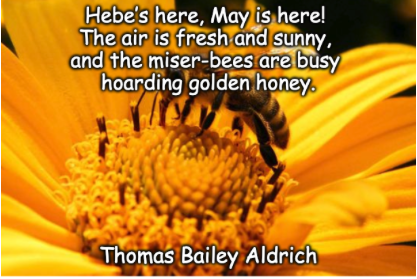
The Dutch sentence is a ‘poetic translation/paraphrase’ of an English spring verse and means approximately:
> ‘May has arrived; the air is clear and fresh, and the bees are diligently gathering honey.”
Core meaning:
– 🌞 “the air is fresh and sunny”: evokes a feeling of spring, new beginnings and joie de vivre
– 🐝 “the worker bees are busy”: image of diligence, order and natural activity
– 🍯 “golden honey”: symbol of wealth, sweetness and the fruit of labor
Extra nuance: The English original states:
> “Hebe’s here, May is here!”
In it, “Hebe” refers to the figure from Greek mythology associated with ‘youth and freshness’. That strengthens the spring image even more.
Origin: It is a short, untitled English poem. Original opening lines:
> “Hebe’s here, May is here!
> The air is fresh and sunny;
> And the miser-bees are busy
> Hoarding golden honey.”
What that means for the origin:
– ❌ not folk wisdom or old proverb
– ✅ a ‘literary quote’
– ✅ taken from a ‘short English poem without a separate title’
– ✅ often indicated by the first line: “Hebe’s here, May is here!”
Author: ✍️ Thomas Bailey Aldrich (1836–1907):
– 🇺🇸 American poet, writer and editor
– known for:
– lyrical, elegant poetry
– nature descriptions
– short seasonal verses
