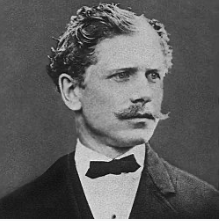
Ambrose Gwinnett Bierce:
(June 24, 1842 – c. 1914).
American short story writer, journalist, poet, and American Civil War veteran. His book The Devil’s Dictionary was named one of “The 100 Greatest Masterpieces of American Literature” by the American Revolution Bicentennial Administration. His story “An Occurrence at Owl Creek Bridge” has been described as “one of the most famous and frequently anthologized stories in American literature”, and his book Tales of Soldiers and Civilians (also published as In the Midst of Life) was named by the Grolier Club one of the 100 most influential American books printed before 1900.
November is the eleventh twelfth of a weariness.

April fool: The March fool with another month added to his folly.

✍️ The Author: Ambrose Bierce. Ambrose Gwinnett Bierce (1842 – circa 1914) was an American satirist, critic, short story writer, and journalist. His Style: He was known for his witty, often bitter and cynical writing style. Because of his pessimistic view of humanity, he was nicknamed “Bitter Bierce”. 📖 The Origin: The Devil’s Dictionary: This specific quote comes from his most famous work: The Devil’s Dictionary. This is not a real dictionary, but a collection of satirical and cynical definitions of everyday words. Bierce originally wrote these definitions over a period of thirty years (starting in 1881) for newspapers and magazines. Book Form: The definitions were eventually compiled and published in book form, first as The Cynic’s Word Book in 1906, and later expanded as The Devil’s Dictionary in 1911. The Quote: Under the letter ‘A’ is the definition for “April fool”, as quoted above. It is a perfect example of Bierce’s characteristic humor: sharp, concise, and a bit misanthropic.
Clarinet. An instrument of torture operated by a person with cotton in his ears. There are two instruments worse than a clarinet – two clarinets.

Beggar: someone who relied on the help of friends.