(Kesswil, 26 July 1875 – Küsnacht, 6 June 1961).
Swiss psychiatrist and psychologist.
He was the founder of analytical psychology.
Carl Jung. Photo: wikipedia.org
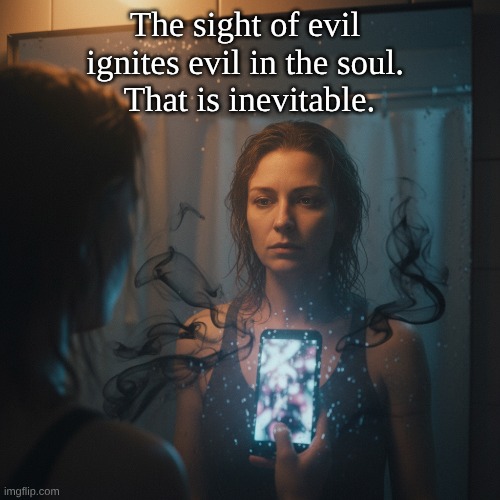
It is quite within the bounds of possibility for a man to recognize evil of his nature, but it is a rare and shattering experience for him to gaze into the face of absolute evil.
Photo: Nikola Johnny Mirkovic
Where your fear is, there your task is.
Photo: thankyoufor. Meaning: This saying carries a deep psychological truth. It suggests that our deepest fears are not simply obstacles to be avoided, but rather pointers to our greatest opportunities for growth and self-development. Confrontation: What we fear most often holds the key to what we most need to learn or achieve. Growth: By facing and engaging with our fears (the ’task’), we can transform ourselves and become stronger. Potential: Fear often points to unexplored territory within ourselves, to talents and possibilities that are not yet fully developed. Shadow side: The saying is reminiscent of Jung’s concept of the ‘shadow’—those parts of ourselves that we suppress or deny. Fear can be a way in which these shadow parts draw our attention. Origin and Author: This saying is almost unanimously attributed to the famous Swiss psychiatrist and psychologist Carl Gustav Jung.No Direct Quote: Although the exact phrasing “Where your fear is, there is your task” is likely a paraphrase, the underlying thought can be found time and again in Jung’s work. He often emphasized the importance of facing our shadow and integrating unconscious aspects of ourselves to reach a state of ‘individuation’ (wholeness). The Shadow and the Self: Jung believed that our greatest fears often have to do with those aspects of ourselves that we would rather not face. By confronting these fears, we can integrate these ‘shadow sides’ and become a more complete and authentic version of ourselves. Individuation: For Jung, this process of self-realization and achieving inner wholeness was the ultimate goal of human development. Confronting fear is an undeniable part of this path. In summary:“Where your fear is, there is your task” is a powerful reminder that our fears are not endpoints, but starting points for growth. It encourages us to be brave and to embrace our fears as signposts to our true potential. And yes, these profound insights are rooted in the groundbreaking psychology of Carl Gustav Jung. 😉
Without this playing with fantasy, no creative work has ever yet come to birth. The debt we owe to the play of the imagination is incalculable.
Photo by RF._.studio
Loneliness does not come from having no people about one, but from being unable to communicate the things that seem important to oneself, or from holding certain views which others find inadmissible.
Photo by Adrien Delforge
You can only heal the wounds of others if you have them yourself.
Photo: Mohamed Nohassi. Meaning: The quote touches upon one of the central ideas in depth psychology: anyone who has personally experienced pain, loss, or trauma can empathize with the suffering of another. One’s own wounds are not a weakness, but a source of wisdom and empathy. You do not have to have completely overcome your own pain — but you must have ‘acknowledged’ it. Jung phrased it this way: “it is his own pain that sets the standard for his ability to heal.” Origin: The idea goes back much further than Jung himself. The concept dates back to ancient Greek times. In Greek mythology, Chiron was the wisest of the centaurs. He was wounded by an arrow from Heracles, dipped in the blood of the Hydra. Because the wound was incurable, he wandered on — but while he suffered himself, he healed others. Chiron was the prototypical wounded healer.His deep, pain-colored voice could say: “I know how it feels.” He could soothe deep wounds with the kindness of someone who had experienced them firsthand. Plato, too, wrote that the most skilled physicians are those who have been sick themselves, and the Persian poet Rumi said: “The wound is the place where the light enters.” Jung gave this ancient insight a psychological foundation. In the 1950s, Jung formally integrated the wounded healer into his analytical psychology, arguing that a therapist’s own psychological wounds were not only acceptable but could even be essential for effective treatment. Author: The saying is attributed to Carl Gustav Jung, the Swiss psychiatrist (1875–1961). In German, the original reads: “Man kann die Wunden anderer nur heilen, wenn man selber welche hat.” The term “wounded healer” was coined by Jung. The idea posits that an analyst is driven to treat patients because the analyst is “wounded” himself. A small side note: Jung did not write this as a standalone saying — it is rather a condensation of a larger idea that runs through his entire work. In “Fundamental Questions of Psychotherapy” (1951), Jung suggested that illness was sometimes the best training for a doctor, and that only a wounded doctor could treat truly effectively. The precise work from which the well-known formulation originates has not always been accurately transmitted in the quotation tradition — as is the case with many Jung quotations — but the thought itself is unmistakably his.
To confront a person with his shadow is to show him his own light.
Photo:Matteo Vistocco. Meaning 🧠: The statement refers to a core idea from ‘Jungian psychology’: – the “shadow” is the part of the personality that someone represses, denies, or does not want to see; – these can be not only negative traits, but also: – strength, – creativity, – emotions, – spontaneity, – desires. Core of the statement: – Whoever is confronted with their “shadow” also gains insight into their ‘inner possibilities’. – By making the ‘dark’ sides conscious, one can grow in: – self-knowledge, – wholeness, – authenticity, – consciousness. 👉 The “light” here symbolically represents a person’s ‘conscious potential’ and inner truth. 📚 Origin: German: „Einen Menschen mit seinem Schatten zu konfrontieren heißt, ihm sein Licht zu zeigen.” The statement fits ‘substantively perfectly’ with Jung’s thinking on: – the “shadow”, – the ‘unconscious‘, – ‘individuation’, – the integration of repressed parts of the personality. However, from a textual critical perspective, there is a nuance: – the exact wording is ‘difficult or impossible to verify’ in Jung’s published work; – there is therefore ‘no generally confirmed primary source’ known in which Jung writes exactly this sentence in this way; – therefore, the statement is likely considered: – an ‘attributed quote’, – or a ‘paraphrase’ of his ideas. 👤 Author: The statement is frequently attributed to Carl Gustav Jung (1875–1961), the Swiss psychiatrist and founder of ‘analytical psychology’.
One is not enlightened by imagining all sorts of images of light, but by becoming aware of one’s own inner darkness.
Photo: Nik Shuliahin. Meaning 📖🧠:By this, Jung means approximately the following: Not: pretending that you are merely “light,” “purity,” “positivity,” or “spirituality”; improving yourself by merely imagining beautiful, lofty ideals; denying your dark sides. Rather: becoming aware of: repressed fears 😨, jealousy 😒, aggression 😠, shame 😔, guilt 😓, pain and trauma 🩹; facing what you normally prefer not to see; integrating that “shadow side” instead of denying it. 🌑 Jungian explanation: the “shadow”: The ‘shadow’ = those parts of yourself that you reject, hide, or keep unconscious. According to Jung, you mature psychologically ‘not’ by identifying solely with the “higher” or “good,” but by also acknowledging the difficult, painful, and uncomfortable aspects of yourself. In short: ‘Enlightenment’ is not: “I am pure light.” ‘Enlightenment’ is: “I also see my darkness, and take responsibility for it.” ✨ Simple paraphrase: ‘A person does not grow by merely chasing beautiful ideals, but by honestly looking at his own hidden pain, mistakes, and dark sides.’ Or shorter: ‘True inner growth begins where self-deception ends.’👤 Author:Carl Gustav Jung. The most famous English formulation reads: “One does not become enlightened by imagining figures of light, but by making the darkness conscious.”🧭 Origin: The statement appears in Jung’s work “Alchemical Studies / Psychology and Alchemy context”, but the best-known source is: C.G. Jung, “The Collected Works, vol. 13: Alchemical Studies”. The passage has become known primarily through the English edition of his collected works. Probable German formulation: “Man wird nicht erleuchtet, indem man sich Lichtgestalten vorstellt, sondern indem man sich die Dunkelheit bewusst macht.” Note: ‘Light variants’ of this formulation exist.
There is no change from darkness to light, from stillness to motion, without emotion.
Photo: Dyu Ha. Meaning 🧠 📖 : Emotion sets ‘inner change in motion’. Without feeling, being moved, or inner tension, there is often ‘no true awareness’. The transition: from “darkness to light” = from unconsciousness to insight, from “stagnation to movement” = from passivity to development / action. Simply put: You do not truly change through ‘rational thinking’ alone. Growth often only occurs when something ’touches you emotionally’: pain, love, fear, desire, grief, crisis. Jung therefore means that ‘emotion is a motor of consciousness and transformation’.🏛️ Origin: 📚 Probable source: This quote comes from the work of C.G. Jung and is usually traced back to: “Psychological Aspects of the Mother Archetype”, included in: “The Archetypes and the Collective Unconscious”, “Collected Works of C.G. Jung, Volume 9, Part 1”. 0. The often-quoted passage is: “Emotion is the chief source of consciousness. There is no change from darkness to light or from inertia to movement without emotion.” 🔍 Deeper interpretation: From a Jungian perspective, this also means: “Darkness” = the unconscious, repressed, unknown within yourself, “Light” = consciousness, insight, integration, “Stagnation” = psychic blockage, being stuck, “Movement” = development, individuation, inner growth, “Emotion” = psychic energy that sets something in motion. Jung therefore did not view emotions as a disruptive byproduct, but as ‘signals and forces’ that indicate where true psychic change is possible.
If we want to change something in the child, we must first examine it and see if it is not something better to change in ourselves.
Photo: Xavier Mouton Photographie. Meaning 📖 🧠: The saying means that before we want to correct or change something in a child, we must first take an honest look at ourselves. The core of the idea: What bothers us about a child can sometimes also reveal something about: our own expectations, insecurities, fears, and unresolved issues. In other words: ‘parenting requires self-reflection’. Jung points out the danger of ‘projection’ here: adults sometimes unconsciously project their own inner conflicts onto the child. Briefly summarized: Before we want to improve a child, we must first investigate whether the problem does not (also) lie within ourselves. 📚 Origin: The quote is usually traced back to a text by Jung on personality development and upbringing. Source: The quote appears in “The Integration of the Personality” (1939/1940), p. 285. The texts in question were later also included in: “Collected Works of C.G. Jung”, Vol. 17: “The Development of Personality” (1954). Original wording: In German, the statement reads:„Wenn wir an einem Kind etwas ändern wollen, sollten wir zuerst prüfen, ob es sich nicht um etwas handelt, das wir an uns selbst ändern müssen.” The ’thought is authentically Jung’, but the precise wording may vary by edition or translation. 👤 Author:Carl Gustav Jung (1875–1961). Swiss psychiatrist and psychologist. Founder of ‘analytical psychology’. Why this quote is typically Jung: It fits well with his central ideas regarding: projection, self-examination, personality development, and the influence of the educator on the child.
We are born at a given moment, in a given place and, like vintage years of wine, we have the qualities of the year and the season of which we are born. Astrology does not lay claim to anything more.
Photo: Vedrana Filipovic. Meaning 📖 🤔: This quote offers a down-to-earth and metaphorical explanation for the basics of astrology. It attempts to remove the mystique surrounding astrology by comparing it to an everyday and accepted phenomenon. The Metaphor of the Vintages 🍷: Just as the taste, quality and characteristics of a wine are determined by the specific weather conditions, soil conditions and harvest time of a given year (the “vintage”), this quote suggests that people are also “marked” by the energetic or symbolic qualities of the moment and place of their birth. The Claim of Astrology ✨: According to this view, astrology is not a matter of “divination” or supernatural predictions. Instead, it is simply an attempt to catalog and interpret the specific “qualities of the moment” (the spirit of the times, the astronomical configurations) and how these influence the nature of everything born in that moment. Relation to Causality 🔗: It does not necessarily imply that the planets directly “influence” us through some unknown force. Rather, it suggests a kind of synchrony—that things born at the same time share similar qualities. 🧑Author:Carl Gustav Jung, the famous Swiss psychiatrist and the founder of analytical psychology. Jung had a deep and lifelong interest in esoteric subjects, including alchemy, Gnosticism and astrology. He saw these fields as projection systems for the human psyche and the collective unconscious. 📚 Origin and Context: Although often attributed to Jung, it is important to note that exact quotations are sometimes difficult to trace in his vast collection of works (the “Collected Works”). The Concept of Synchronity 🕰️: The fundamental idea behind this quote—that moments in time have a certain quality that is reflected in everything that arises in that moment—is at the heart of Jung’s concept of “synchrony.” He defined synchrony as a “meaningful coincidence” of events that are not causally linked. Correspondence ✉️: It is very likely that a variation of this quote appears in one of the many letters Jung wrote, or in recordings of his seminars. Jung corresponded extensively about astrology with figures such as the physicist Wolfgang Pauli and the astrologer B.V. Raman. His view on Astrology 🔬: For Jung, astrology was valuable, not as a deterministic system for predicting fate, but as a tool for psychological insight. He saw horoscopes as a symbolic representation of a person’s psychological makeup, just as the I Ching or dreams could be. In the context of his work on synchrony, this argument is often used to explain how non-causal relationships can exist. Just as one can say, “It’s winter now,” and expect whatever is currently living outside to exhibit wintry qualities (cold, at rest, etc.), without “time” or “winter” being the direct cause of that calm, so astrology argues that astronomical time has a “quality” that is reflected in newborns.
There is no coming consciousness without pain.
Photo: Fa Barboza. Meaning 🧠 📖 : True awareness and inner growth usually cannot occur without suffering, crisis, or confrontation. Specifically, Jung means: – self-knowledge often hurts – personal development requires confrontation with: – repressed feelings – inner conflicts – illusions about oneself and others – one’s own shadow side – psychological maturation often arises precisely ’through difficulties’, not around them. In simpler words: – ‘no deep growth without discomfort’ – ‘no awareness without confrontation’ – ‘no individuation without pain’.📚 Origin: The statement is ‘not a loose internet quote’, but actually comes from the work of Carl Gustav Jung. Source: – C.G. Jung, “Collected Works”, volume 17 – essay: “Marriage as a Psychological Relationship” – paragraph 331. Original context: Jung writes there: “Rarely, or perhaps never, does a marriage develop into an individual relationship smoothly and without crises; there is no coming to consciousness without pain.” Important nuance:The well-known short quote: “There is no coming to consciousness without pain.” It is often ‘quoted in isolation’, but originally appeared in a passage about: – marriage – relationship crises – personal maturation within a relationship. The Dutch phrasing “There is no budding consciousness without pain” is likely a ‘free, somewhat more literary translation’. 👤 Author:Carl Gustav Jung. ✅
One looks back with appreciation to the brilliant teachers, but with gratitude to those who touched human feelings. The curriculum is so much necessary raw material, but warmth is the vital element for the growing plant and for the soul of the child.
Photo: Diego PH. Meaning 🌟: This beautiful quote is about the essence of good education and the profound influence a teacher can have on a child. Here are the key points:Appreciation vs. Gratitude: We have respect and appreciation for teachers who are brilliant in their field and impart knowledge to us. This is a rational, intellectual response. The Power of Emotional Connection: But we feel the deepest gratitude for teachers who have touched our ‘human feelings’. They have not only taught us facts but also seen us as a person, supported us, and encouraged us. This is an emotional, heart-oriented response. The Comparison with the Plant:The Curriculum (the raw material): Is necessary, just as soil and water are needed for a plant. It is the foundation, the structure of what needs to be learned. Heat (the vital element): Is just as essential as sunlight and heat for the growth of a plant. Without this heat, the plant (the child) might survive, but it cannot ‘bloom’. The Soul of the Child: The “warmth” of the teacher (empathy, kindness, understanding) is what nourishes the child’s soul and helps it grow and develop into a balanced and happy person. In short: Knowledge is important, but the human connection and emotional support of a teacher are even more important for a child’s overall development. It is the warmth that makes the soul grow. ❤️ 🧐 Origin and Author: This quote is generally attributed to the famous Swiss psychiatrist and psychoanalyst Carl Gustav Jung. Carl Jung (1875–1961) was the founder of analytical psychology. He introduced concepts such as the collective unconscious, archetypes, and introversion/extraversion. The Context: Although the exact source of this specific quote is sometimes difficult to trace back to a specific book or lecture (which is often the case with well-known quotes), the message fits perfectly within Jung’s broader vision of the human psyche and development. He often emphasized the importance of the individual, the search for meaning, and the role of emotions and the unconscious. Although some sources may render the exact wording slightly differently, the core message and the attribution to Jung are very widely accepted. It expresses a profound psychological and pedagogical insight in a poetic way. 🧠✨
The meeting of two personalities is like the contact of two chemical substances: if there is any reaction, both are transformed.
Photo: Linkedin Sales Solutions. Meaning 📝 🕯️: This quote uses a powerful metaphor from chemistry to describe the profound impact of human interaction. The core message: ⚡️ Interaction: When two people meet and form a meaningful connection, it is a dynamic process, not a passive event. 💥 Transformation: Just like in a chemical reaction where new compounds are formed and the original substances fundamentally change, both individuals are influenced and changed by their encounter. 🔄 Mutual: The change is rarely one-way traffic. Both ‘personalities’ are transformed by the experience. ✒️ Author: 🧑💼 Carl Gustav Jung (1875–1961). He was an influential Swiss psychiatrist and the founder of analytical psychology. Jung was known for his in-depth exploration of the human psyche, dreams, archetypes, and the processes of personal growth. 📚 Origin: This quote can be found in one of Jung’s most important works. The Source Material: 📖 Title: “Mysterium Coniunctionis”. 📅 Year: Originally published in German in 1955-1956.🇩🇪 Original German Text: “Die Begegnung zweier Persönlichkeiten ist wie die Berührung zweier Chemier Stoffe: wenn es a Reaktion gibt, were both transformed.”
the sole purpose of human existence is to kindle a light in the darkness of mere being.
Photo by Erika Fletcher
Knowledge rests not upon truth alone, but upon error also.
Photo: Michael Dziedzic. Meaning 📜: This quote suggests that our understanding of the world is shaped not only by the truth we discover, but also by the mistakes we make and the misunderstandings we have. It emphasizes the importance of learning from our mistakes and the role that error plays in the development of our knowledge and understanding. 📚 Origin: This quote comes from the autobiographical work “Erinnerungen, Träume, Gedanken” (Memories, Dreams, Thoughts, 1962). This work was compiled in collaboration with Aniela Jaffé shortly before and after the author’s death. 🧠 Author:Carl Gustav Jung. Carl Gustav Jung was a Swiss psychiatrist and psychotherapist who founded analytical psychology. He is considered one of the most important figures in the history of psychology, and his work has had a lasting influence on many fields, including psychology, religion, literature, and art.
A man who has not passed through the inferno of his passions has never overcome them.
Photo: Acton Crawford. Meaning 🔍: This saying emphasizes that true personal growth and emotional mastery do not stem from avoiding or suppressing our deepest desires and emotions, but rather from directly confronting them. The ‘inferno’: The intense, sometimes overwhelming, and chaotic nature of our passions. Think of passion, anger, jealousy, or deep desires. ‘Going through’: Experiencing, accepting, and understanding these feelings, rather than denying them. It is a process of purification (cleansing). ‘Overcoming’: True mastery. You are no longer blindly driven by your instincts, but have integrated them into your personality. You are in control. In short: You can only truly defeat your inner demons once you have looked them in the eye. 🔥. 🕰️ Origin and Author: This quote is generally attributed to the famous Swiss psychiatrist and psychoanalyst: 👨⚕️ Carl Gustav Jung. ✍️ Original Text: The quote was originally written in German and reads: “Kein Mensch kann seine eigene Finsternis bezwingen, der nicht zuvor durch ihre Feuer gegangen ist.” Translated, this is roughly: “No man can control his own darkness who has not first gone through his fires.” 📚 Context: This idea is a cornerstone of Jung’s work on the ‘process of individuation’ (the path to self-realization) and the integration of the ‘shadow’ (the unconscious, often negative aspects of ourselves). He believed that one had to go through a period of psychological crisis (’the inferno’) to become whole.
Where love rules, there is no will to power; and where power predominates, there love is lacking. The one is the shadow of the other.
Photo: Elias Maurer. Meaning 🤔 📖 : Love: When love is central to a person’s life or to a society, there is no desire to dominate or control others. Love fosters connection, understanding, and compassion, rather than coercion or manipulation. Power: When the drive for power prevails, true love is lacking. Power can lead to selfishness, exploitation, and the disregard of the needs of others. The pursuit of power is often at odds with the values of love. Shadow: The quote suggests that power is the shadow side of love, and vice versa. They are mutually exclusive and cannot be fully present at the same time. Where one is, the other is absent. 🕰️ Origin: This quote is attributed to Carl Gustav Jung, a Swiss psychiatrist and psychotherapist. He was a founder of analytical psychology and wrote extensively about the human mind and the dynamics between the conscious and the unconscious. 🖋️ Author:Carl Gustav Jung (1875-1961). Carl Gustav Jung was an influential figure in psychology and contributed to our understanding of the human psyche. His work encompasses concepts such as the collective unconscious, archetypes, introversion and extraversion, and the shadow. The quote highlights the tension between love and power, a theme Jung frequently explored in his work. It invites us to reflect on the role of these forces in our own lives and in society as a whole.
The healthy man does not torture others – generally it is the tortured who turn into torturers.
Photo: Alex Mihu. Meaning 📖 🧠: The quote “The healthy man does not torture others – generally speaking, it is the tortured who become torturers” expresses the idea that ‘cruelty often stems from inner damage’. Core of the meaning: – A ‘mentally healthy person’ generally does not have the tendency to intentionally torment or humiliate others. – People who have themselves experienced ‘suffering, abuse, humiliation, or trauma’ may sometimes later take out that pain on others. – The quote therefore points to a ‘circle of violence and trauma’: – becoming a victim – not processing the pain – developing perpetrator-like or violent behavior oneself Important nuance: – ‘It does not’ mean that every abused person later becomes an abuser themselves. – Nor does it remove the ‘responsibility of the perpetrator’. – The statement primarily aims to clarify that ‘destructive behavior often has its origin in psychological injury’.🏛️ Origin: This is ‘neither a traditional English proverb’ nor an old folk saying. It is more likely a ‘modern psychological quote or aphorism’. – The statement comes from the realm of 20th-century psychology, not from folk wisdom. – The phrasing aligns strongly with themes such as: – trauma – projection – repetition of violence – the psychological consequences of suffering In short: ’the origin probably lies in Jung’s psychological world of thought, not in an old saying or proverb tradition’. 👤 Author: The statement is attributed to Carl Gustav Jung, and that attribution is ‘plausible and well-defensible’. – The quote is included in ‘Oxford Reference’ within a collection of statements by Jung. – That makes the attribution ‘more reliable’ than if it were to appear only on general quotation sites. However, a nuance is required: – It is plausible that Jung formulated the ’thought’. – The ‘English version’ is likely ‘not literally his own formulation’, but a translation or paraphrase. – As with many well-known quotes, it is wise to distinguish between: – the author of the thought → Jung – the exact English wording → likely translated later.
We cannot change anything until we accept it. Condemnation does not liberate, it oppresses.
Photo by Marcos Paulo Prado
Even a happy life cannot be without a measure of darkness.
Photo; Hasseeb Jamil. Meaning 📖: The quote “Even the happiest life is unthinkable without a certain amount of darkness” emphasizes that complete happiness is impossible without shadows. Life inevitably contains suffering, adversity, or “darkness” (such as pain, sadness, or chaos), which are essential for balance, growth, and appreciating light/positive aspects. Without contrast, there is no depth—a philosophical idea about the duality of existence. ✍️ Origin and author:Author:Carl Gustav Jung (1875–1961), the Swiss psychologist and founder of analytical psychology. This comes from his work Herinnerings, dromen, bedenkingen (originally Erinnerungen, Träume, Gedanken, 1961, published posthumously). Exact context: The sentence appears in a reflection on life and the shadow in the psyche. Jung wrote: “Even the happiest life is unthinkable without a measure of darkness…”. It illustrates his concept of the shadow—the repressed, dark part of the personality that must be integrated for wholeness (individuation). Evidence and sources: Direct quotation from Jung’s autobiographical work (English ed.: Vintage Books, 1989, p. 72). Often cited in Jungian literature, e.g., Man and His Symbols (1964) and secondary sources such as The Portable Jung (1971). Confirmed online via reliable archives: Jung’s Collected Works (Vol. 18) and citation sites such as Wikiquote (with primary references). 🔍 Additional insights:Philosophical link: Fits with Jung’s archetypes and the idea that light and darkness (anima/animus, persona/shadow) are inextricably linked—inspired by alchemy, mythology, and Eastern wisdom (e.g., yin-yang). Modern relevance: Often cited in therapy, self-help, and mental health literature to advocate for acceptance of imperfection. Variants: In English: “Even the merriest life needs a certain measure of darkness.” Not an old saying, pure Jung.
Knowing your own darkness is the best method for dealing with the darkness of other people.
Photo: Jez Timms. Meaning: This quote is deeply rooted in Jung’s concept of the “shadow” — one of his central concepts. It refers to that part of our personality that we repress, deny, or refuse to acknowledge: our flaws, weaknesses, and dark impulses. The core message is threefold: 1.‘Self-knowledge as a prerequisite for empathy’ Those who know and accept their own inner darkness—envy, anger, fear, moral weakness—can recognize it in others without judging them. They know: I am not so different. 2.‘Preventing projection’ The best political, social, and spiritual work we can do is to withdraw the projection of our shadow onto others. Those who do not know their own shadow project it onto others—and see in the other person the evil they do not recognize in themselves. 3.‘Tolerance through Honesty’ What irritates us about others can lead us to a better understanding of ourselves—a related thought of Jung’s: Our reaction to others is often a reflection of ourselves. Context: This quote fits seamlessly into Jung’s life’s work: Jung founded analytical psychology as a perspective for exploring the universe of the unconscious and making conscious what is hidden within us. For Jung, the path to genuine compassion never leads through naivety or self-righteousness—but through honest, often uncomfortable, self-encounter. In short: ‘He who has encountered himself in the darkness judges less and understands more.’ Author:Carl Gustav Jung (1875–1961). This quote comes from the Swiss psychiatrist and founder of analytical psychology. Jung was born in Kesswil in 1875, studied medicine in Basel, and specialized in psychiatry. In 1913, he broke with Sigmund Freud, whereupon he developed his own approach—analytical psychology.
Children are brought up by what the adult is, not by what he says.
Photo: Juliane Liebermann. 📌 Meaning: Children learn primarily by example, not by words alone. Authenticity and consistency of adults are crucial for upbringing. Implicit learning (imitation, atmosphere, attitude) often outweighs explicit instruction. 🧩 Origin and author:Attribution: usually attributed to Carl Gustav Jung (1875–1961). Likely original language: German. Often cited German form: “Kinder werden durch das erzogen, was der Erwachsene ist, nicht durch das, was er sagt.” Variants circulate such as: “Kinder werden durch das erzogen, was der Erwachsene ist, nicht durch sein Gerede.” Primary source status: Unclear. The quotation circulates widely in secondary sources and quotation collections, but a clear citation in Jung’s Gecollectte Werke is rarely convincingly given. Conclusion: The attribution to Jung is widespread and plausible, but a hard, verifiable primary source is not consistently cited. 🔎 Context and related ideas: Theme aligns with Jung’s emphasis on integration and authenticity: who you are (persona vs. self) has an effect on others, especially children. Related statement: Ralph Waldo Emerson is often quoted (though not always with a primary source) as saying, “What you are speaks so loudly that I cannot hear what you say.” The idea is related in content: power of example > words. 🌍 Language variants: German (common paraphrase): “Kinder werden durch das erzogen, was der Erwachsene ist, nicht durch das, was er sagt.” English (common translation): “Children are educated by what the grown-up is, not by what he says.”Summary: Meaning: Parenting is primarily a function of who you are and what you do. Author:Probably Carl Gustav Jung, but no conclusive primary source references. Usage: Useful as a guiding principle in parenting, education, and leadership.
Dreams are part of nature, which harbors no intention to deceive.
Photo by Faris Mohammed
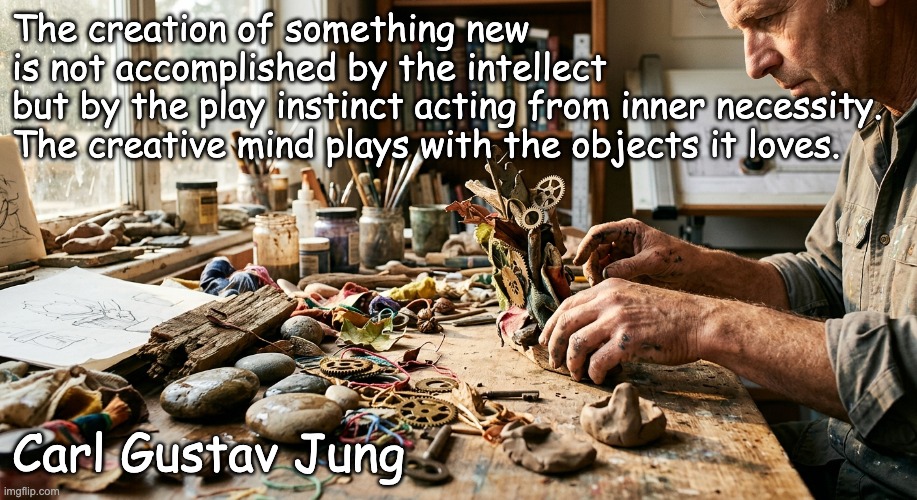
The creation of something new is not accomplished by the intellect but by the play instinct acting from inner necessity. The creative mind plays with the objects it loves.
Photo by Florian Klauer
Where there is power there is no love, where there is love there is no power.
Photo: Annie Spratt. Meaning 💡: This quote is a fundamental insight into Jung’s analytical psychology. It describes the dynamics between two powerful human drives. Here are the key points of its meaning: Incompatible Opposites:Jung states that Love and the ‘Will to Power’ (Machtswille) are psychologically opposites. They cannot be dominant simultaneously in a situation or relationship. Love (Eros): Represents connection, empathy, vulnerability, and the desire for unity. Where love reigns, there is no need to control or dominate. Will to Power: Represents control, dominance, ego affirmation, and the imposition of one’s will. Where power takes precedence, the other becomes an object to control, which excludes true connection (love). The Shadow Side: The third sentence, “Das eine ist der Schatten des andern”(“The one is the shadow of the other”), is crucial. In Jungian psychology, the ‘Shadow’ is the part of our personality that we suppress, deny, or do not want to see. This means that in a relationship based purely on power, love is the repressed ‘shadow’ (the desire for connection that is denied). Conversely, in a relationship that presents itself exclusively as loving, the will to power (unconscious manipulation or control) can be the hidden shadow side. The Dynamics: The quote is not a moral judgment, but a psychological observation. It shows that where one drive takes the upper hand, the other necessarily recedes into the background (the shadow). 📜 The Quote: 🇩🇪 The Original Text (German): “Wo die Liebe herrscht, da gibt es keinen Machtwillen, und wo die Macht den Vorrang hat, da fehlt die Liebe. Das eine ist der Schatten des andern.”Author:Carl Gustav Jung (C.G. Jung). Original Source: ‘Über die Psychologie des Unbewussten’ (1917). Included in: ‘Gesammelte Werke’, Volume 7. English translation: ‘Two Essays on Analytical Psychology’, paragraph 78.
Your visions will only become clear when you look into your own heart. Those who look outside dream: those who look inside awaken.
Photo: Camilo Jimenez. Meaning💡:This quote summarizes a core principle of Jung’s psychology: the process of individuation (becoming your true self). 1.The Historical Context: Jung wrote this letter during a turbulent period in his life and world history (World War I). He had just finished his military service and was in a phase of deep inner exploration (which later resulted in his “Red Book”). His advice to Fanny Bowditch reflects his own conviction that true clarity does not come from external sources, but from within. 2.“He who looks outward, dreams” 😴 By this, Jung means that people who seek their happiness, answers, or the blame for their problems exclusively in the outside world live in a kind of ‘sleep state’. They are guided by external expectations, projections, and illusions. They do not see the world as it is, but as their unconscious projects it outward (discordant, incoherent). 3.“He who looks within, awakens” 😳 This is the call to self-reflection and introspection. ‘Awakening’ means becoming aware of your own inner world. It requires examining your own unconscious, including your shadow sides, desires, and fears (“looking into your own heart”). Only through this inner confrontation can one achieve true unity, wholeness, and clarity (“vision”). Here is the full passage in English, as written by Carl Jung, : “I realize that under the circumstances you have described you feel the need to see clearly. But ‘your vision will become clear only when you can look into your own heart.’ Without, everything seems discordant; only within does it coalesce into unity. ‘Who looks outside dreams; who looks inside awakes.’ “Your visions only become clear when you look into your own heart. […] He who looks outside dreams; “Whoever looks inward awakens.”🕵️♂️ Author:Carl Gustav Jung (1875–1961), the Swiss psychiatrist and founder of analytical psychology. Source:A letter written by Jung on October 22, 1916. Recipient: Fanny Bowditch, an American woman who later became his patient. Publication: The letter is included in “C.G. Jung Letters, Volume 1: 1906-1950”, edited by Gerhard Adler and Aniela Jaffé (published in 1973).Do not fear chaos, for in chaos the new is born.
Photo: Steve Johnson. Meaning:‘Disorder and permanence are not the end, but the breeding ground for renewal.’ Whoever fears chaos and has a flight away misses the opportunity for growth. Whoever embraces it can create something new through it — within themselves or in the world around them. Origin: The saying you mention (“Do not be afraid of chaos, for in chaos the new is born”) circulates widely online, but is ‘not demonstrably of Jungian origin’, and is likely a colloquial summary of paraphrase. Friedrich Nietzsche is the best source of inspiration: The idea of chaos is nothing more than a word, as it were, by Friedrich Nietzsche in his work “Also sprach Zarathustra” (1883). In German, Nietzsche wrote: “Ich sage euch: man muß noch Chaos in sich haben, um einen tanzenden Stern gebären zu können” — in English: “I tell you: men must still have chaos within themselves to be able to give birth to a dancing star.” Say that it is the same as before. The message: inner disorder, tension, and restlessness are the fertile ground for great creative power. The Dionysian can break and destroy, but is also a creative force — the raw material that sets us in motion and enables us to give birth to “dancing stars”: ideals worth pursuing. Carl Gustav Jung: Related but different. Jung did indeed write about chaos, but formulated it differently. His famous statement reads: “In all chaos there is a cosmos, in all disorder a secret order” — taken from “The Archetypes and the Collective Unconscious” (1981). Jung implies that even in apparent disorder a hidden order lurks — deeper psychological, and less about the birth of the new than about the recognizability of a shaky underlying structure. Greek mythology: The oldest layer. In Greek mythology, Chaos (‘χάος’, void) is the Nothingness from which the first enjoyment arose. From this vast, grinding disorder arose order in the form of Night, Darkness, Attractive, Underworld, and Earth. The idea that creation arises from chaos is therefore ancient. Conclusion: whose is it? The exact wording “We don’t fear chaos, for in chaos the new is born” is usually certainly ‘not a literal quote from Jung or Nietzsche’, but a popular summary attributed to them — and to Jung in particular — as problematic on social media and quote websites. The ‘ideas’ can be traced back most strongly to Nietzsche (“Also sprach Zarathustra”), with a related thought in Jung. Misattribution of this type of statement to well-known philosophers is a very common phenomenon.
The word happiness would lose its meaning if it did not have its counterpart in sadness.
Photo: Marl Clevenger. Meaning 🔍 🧠: This statement fits seamlessly with Jung’s broader psychological theories. It emphasizes the need for ‘duality’ and the ‘unity of opposites’.No Light without Dark: Jung states that we can only understand and appreciate concepts such as ‘happiness’ because we know its opposite. Without the experience of sadness, happiness would be a meaningless, flat state. 🌗 Embracing the ‘Shadow’: In Jungian psychology it is important to accept not only the positive, ‘bright’ sides of life and the psyche, but also the ‘shadow sides’ (sadness, pain, fear). True wholeness (individuation) comes from integrating both. 👤 Realistic Happiness: It warns against an unrealistic pursuit of constant positivity. A full life inevitably includes difficult periods. 📅 Origin and Context:Original English text: “Even a happy life cannot be without a measure of darkness, and the word ‘happy’ would lose its meaning if it were not balanced by sadness.”Author:Carl Gustav Jung (Swiss psychiatrist and psychologist) 🇨🇭Date: July 1960. Occasion: An interview on the occasion of Jung’s upcoming 85th birthday. 🎂Interviewer: The English journalist Gordon Young. 🎤 Original Publication: An article entitled “The Art of Living”.Context of the question: Jung responded to the question of what factors determine human happiness. He qualified the search for happiness by pointing out the necessity of sadness. 🙏 Later Collected in: The book “C.G. Jung Speaking” (1977), compiled by William McGuire and R.F.C. Hull. 📚. 💡 Conclusion: Crucial historical context. It shows that Jung, even in his old age (85), held fast to his fundamental insight that human life is a balance between opposing forces, and that accepting this balance is essential for psychological well-being.
That’s why people love plays, movies, or preachers that move them to tears because they enjoy their own emotion.
Photo: Vlah Dumitru.Meaning and Psychological Context 🧐:
The quote concerns the nature of emotional catharsis and the often unconscious motives behind our experiences. It suggests the following:The Pleasure of the Emotion Itself: We do not go to a sad film or listen to a passionate sermon merely to hear the story or understand the message. The deeper desire is to ‘feel a strong emotion’. 🎭 The Object is Merely the Occasion: The play, the film, or the preacher functions as a ‘container’ or an instrument. They offer us a safe and controlled environment to experience emotions that we might suppress in real life or that are simply not that intense. Catharsis or Release: Crying or the feeling of being moved is experienced as a form of pleasure or relief. It is the liberation of pent-up feelings. Self-reflection and the Ego: On a deeper level, the quote suggests that we ‘enjoy’ our own emotional reaction. It affirms our liveliness, our humanity, and our ‘self’. It is less about the event on the scene and more about how ‘we’ feel in response to it. This can be seen as a form of psychological narcissism or simply the need to feel deeply connected to the world. In short, it is about the ‘instrumental value of emotions’. We seek out experiences that move us emotionally, not only for the experience itself, but for the feeling it evokes in us and the release it offers. 🕵️♂️ Author: This is one of those quotes that are very often attributed to Carl Gustav Jung, but the reality is a bit more complicated. ✅ It appears that this is ‘not a direct, literal quote’ from Carl Jung. The Source of Confusion: It is a very apt summary of Jungian concepts, but research in his collected works (the ‘Collected Works’) yields no exact match for this phrase. The Change of Meaning: A possible source for this thought can be found in Jung’s work, but it has a slightly different, more specific context. In his discussions of ‘sentimentalism’ and the ‘feeling type’ (one of his psychological types), Jung distinguishes between “sincere feeling” and “sentimental feeling.”‘Sentimentalism,’ according to Jung, can sometimes be a form of “enjoying one’s own emotion,” a kind of superficial emotion that does not lead to real change or action. He sometimes described it as a form of “infantile” behavior in which one is more concerned with the feeling itself than with the object of that feeling. How the Error Likely Arising: Someone likely condensed Jungian ideas about sentimentalism and the unconscious motives behind emotional experiences into this catchy phrase and subsequently attributed it to Jung, either accidentally or intentionally. It sounds “Jungian” and resonates with his deep psychological insights. 🤔 Who could be the Author? Aristotle: The basic idea behind this quote is very old and dates back to the ancient Greeks. Aristotle introduced the concept of ‘catharsis’ in his work ‘Poetics’. He argued that tragedy had a purifying effect on the audience by arousing and subsequently discharging emotions such as fear and pity. The idea that we ‘enjoy’ this discharge is very close to this. Other psychologists: The focus on “enjoying one’s own emotion” is also a central theme in the psychoanalysis of Sigmund Freud and later psychoanalysts. Conclusion regarding the author: Although it is often attributed to Carl Jung and fits within his framework of thought (particularly his critique of sentimentalism), it is likely a ‘paraphrase or summary of his ideas’ by someone else, possibly inspired by much older concepts regarding catharsis. It is not a direct quote from his writings.
Who looks outside, dreams; who looks inside, awakes.
Photo: Roberto Nickson. Meaning: 🤔 📝 :The Complete Original Quote (English): “But your vision will become clear only when you can look into your own heart. Without, everything seems discordant; only within does it coalesce into unity. Who looks outside dreams; who looks inside awakes.”1.“look into your own heart” 💖: Jung encourages Fanny (and us) not only to look at external circumstances, but at our own deepest feelings and motivations. 2.“Without, everything seems discordant” 🌀: The outside world can seem chaotic, contradictory, and confusing. 3.“only within does it coalesce into unity” ✨: Only when we look inward do we find the coherence and wholeness we seek. 📚 Origin: 📖 The Source: Publication:Jung: Letters, Vol. 1, page 33. Reference: Carl Jung Depth Psychology. With thanks to: Angeliki Yiassemides (for the specific attribution). ✍️ Author & The Letter: Author: Carl Gustav Jung. Date: 1916. Recipient: Fanny Bowditch, an American patient. Context: A reply letter written in Zurich during her treatment.
All culture is an expansion of our consciousness.
Photo: Hasseeb Jamil. Meaning: Jung meant by this that cultural progress — art, science, religion, language, philosophy — is not merely a social phenomenon, but a ‘psychological’ process: the making conscious of what was initially unconscious. In his view, culture is the culmination of what humanity has gradually absorbed into its consciousness. Jung adds that such a step forward always begins with the ‘individual’ — someone who, conscious of his individuality, forges a new path through unknown territory, beyond authority and tradition. He calls this individuation. This aligns with one of his central ideas: what we do not allow to penetrate our consciousness surfaces in our lives as fate. Culture is thus the collective process by which humanity gradually makes its unconscious contents — fears, desires, archetypes — conscious and gives them form. The author:Carl Gustav Jung.The source: The statement comes from Jung’s ‘Collected Works’, Volume 8, paragraph 111. The original English formulation reads: “Every advance in culture is, psychologically, an extension of consciousness, a coming to consciousness that can take place only through discrimination.” Similar formulation by Nehru: Notably, the Indian statesman Jawaharlal Nehru formulated a related thought: “Culture is the expansion of the intellect and of the mind.” This is likely the reason why the quote is sometimes misattributed, or why the two statements have merged into a single sentence in popular usage.
We don’t have secrets, the real secrets have us.
Photo: Sonika Agarwal. Meaning & Jungian Interpretation💡: Within Jungian psychology, this quote carries a specific, powerful weight. It is not about everyday secrets (such as a surprise party), but about the fundamental workings of the psyche. 1.The Power of the Unconscious 🧠: Jung stated that the greater part of our psyche is unconscious. This ‘unconscious’ contains parts of ourselves (shadow sides, repressed traumas, but also untapped potential) that we do not know. When we say“I have a secret,”we suggest control: I decide to hide it. When the secret has us, it means that these unconscious contents influence our behaviors, emotions, and choices without us realizing it. The secret ‘possesses’ our actions. 2.Autonomous Complexes:Jung spoke of ‘complexes’: clusters of emotions and memories in the unconscious that can function more or less autonomously. A “real secret” can be such a complex. It can be suddenly ’triggered,’ causing us to react emotionally in a way we do not understand ourselves. At that moment, the secret “has” us. 3. The Therapeutic Relevance 🛋️: As the source indicates, this stems from Jung’s work on psychotherapy. In therapy, one attempts to bring these “real secrets” (the unconscious patterns) to light. As long as they remain secret to our consciousness, they exert power. By making them conscious (integration), they lose their compelling grip. 🕵️♂️ Analysis of the Quote: “We have no secrets, the real secrets have us.” This profound quote sheds a unique light on the human psyche and our relationship with the unconscious. 📜 The Quote in Context: The Statement: “It is not we who have secrets, it is the real secrets that have us.”The Author: This quote is attributed to Carl Gustav Jung, the founder of analytical psychology. The Source:Taken from Jung’s writings on psychotherapy and quoted in his monumental series: the Collected Works. 🎭 A Practical Example: Imagine someone who always gets unreasonably angry when someone is late. The superficial idea: “I just love punctuality.” The “real secret” holding him: Perhaps a deep, unconscious childhood fear of being abandoned. This secret (the fear) controls his outburst of anger, without him knowing the true cause. The secret has him at that moment. ✅ Conclusion: This quote is by Carl Jung and succinctly summarizes how unconscious psychic content can control our lives, often more than we want to admit. It is an invitation to self-inquiry and awareness.
There are many more people who are afraid of the unconscious than one would expect.
Photo by Patrick Perkins
Nothing has a stronger influence psychologically on their environment and especially on their children than the unlived life of the parent.
Photo by Sofatutor
Sensation establishes what is actually given, thinking enables us to recognize its meaning, feeling tells us its value, and finally intuition points to the possibilities of the whence and whither that lie within the immediate facts.
Photo: Marin Tulard. Meaning:Sensation: Refers to the direct experience and perception of reality. It emphasizes what is actually there, without interpretation. Thinking: This process helps us understand the meaning of the present moment. It allows us to assess the value of experiences. Feeling: This aspect refers to the emotional evaluation of experiences. It helps us understand the value of situations and experiences. Intuition: This is the ability to see possibilities and directions without explicit reasoning. It offers insights into what might happen in the future. Summary:This saying emphasizes the interaction between perception, thought, emotion, and intuition in our understanding of reality and the meaning of the present moment. Origin: The exact origin of this saying is unclear, but the concepts discussed in it are strongly linked to the psychology of Carl Gustav Jung. Jung was a Swiss psychiatrist and psychoanalyst who developed analytical psychology. He introduced important concepts such as archetypes, the collective unconscious, and the various psychological functions (such as thinking, feeling, sensation, and intuition). Author:Carl Gustav Jung (1875-1961): An influential figure in psychology. Known for his profound insights into the human psyche and his emphasis on the role of the unconscious. While the quote may not have been taken directly from Jung, the ideas and themes it explores are strongly influenced by his work and his views on human experience and psychological functions.
Everything that irritates us about others can lead us to understanding of ourselves.
Photo: Anthony Tran. Meaning:Core Idea: The saying suggests that the irritations we experience with others are often a reflection of our own inner conflicts or qualities. Self-Reflection: It emphasizes the importance of self-knowledge and self-reflection. By looking at what irritates us, we can gain insight into our own personality and behavior. Psychological Aspect: This idea is related to the psychological concepts of projection, in which people project their own undesirable qualities onto others. Origin:Psychology: The saying is inspired by psychological theories that explore the relationship between self-image and the perception of others. Carl Gustav Jung: The author, Carl Gustav Jung, was a Swiss psychiatrist and psychoanalyst who developed analytical psychology. He emphasized the importance of the unconscious and the shadow (the undesirable parts of the personality). Author:Carl Gustav Jung. Life: Born on July 26, 1875, in Switzerland and died on June 6, 1961. Contributions: Development of concepts such as archetypes, the collective unconscious, and the shadow. Importance of dreams and symbols in psychological development. Influence: Jung’s work has had a profound impact on psychology, art, religion, and philosophy. Summary: This saying reminds us that our irritations often say more about ourselves than about others. It encourages self-reflection and growth in self-knowledge. 🌱=
Every form of addiction is bad, no matter whether the narcotic be alcohol or morphine or idealism.
Photo: Kulli Kittus. Meaning:Essence of Addiction: This quote emphasizes that all forms of addiction are harmful, regardless of the substance or ideology. This includes both physically addictive substances (such as alcohol and morphine) and mental or emotional addictions (such as idealism). Warning: It is a warning that addiction is not limited to substances but can also arise from ideas and beliefs that can influence our behavior and thought processes. Origin: This quote is often attributed to Carl Gustav Jung, an influential Swiss psychiatrist and psychoanalyst. Context: Jung was interested in the human psyche and the impact of addiction on the individual and society. He addressed the psychological aspects of addiction, making this quote relevant to his work. Author:Carl Gustav Jung (1875-1961). Contributions: Jung is known for his theories on the unconscious, archetypes, and the collective psyche. Impact: His work has had a lasting influence on psychology, and he was one of the founders of analytical psychology. Conclusion:General Lesson: The saying reminds us that it’s important to be aware of what can bind us, both in terms of physical resources and in our beliefs and ideals. Reflection: It calls us to self-reflection and a critical look at what we consider “normal” in our lifestyle and beliefs.
Thinking is difficult, that’s why most people judge.
Photo: Valentin Salja. 💡🧠 Meaning: In this specific context, Jung refers to “thinking” as follows: True understanding: The effort to understand a complex or unusual phenomenon (such as UFO sightings or religious experiences) in its entirety, without prejudice. Openness to the unknown: Tolerating ambiguity and not wanting to categorize it immediately. Psychological depth: Recognizing the possibility that such experiences have a deeper, symbolic meaning stemming from the (collective) unconscious. ⚖️ What does Jung mean by “Judging” (Urteilen)?: This is the crucial nuance that has been added. Jung does not mean “judgment” here in the general sense of the word. He refers specifically to: Reductionism: The tendency to “explain” something complex and unusual by reducing it to something simple and commonplace. The “Easy Way”: As he writes, it is a “considerable relief of existence” if one can reduce something “seemingly complicated… to something ordinary, indeed banal.” Criticism of Freud & Adler: In the broader context of his work, this is a direct jab at his contemporaries: Sigmund Freud: Who reduced many psychological phenomena to the sexual drive (libido). Alfred Adler: Who explained much behavior in terms of the will to power or the inferiority complex. The quote, understood in the context of “Ein moderner Mythus”, is a warning against intellectual laziness and hasty reductionism. Jung is essentially saying:1.Complexity is Hard: It is psychologically heavy and intellectually challenging to penetrate truly new, unusual, or complex experiences without immediately pigeonholing them. 2.Reduction is Easy: Most people (and even some psychologists) choose the easiest way. They “judge” by immediately labeling the experience as something familiar, even though they thereby fail to do justice to the complexity of the experience. 3.The “Explanation”: Instead of trying to understand the deeper meaning, they say, for example: “Oh, that is just repressed sexuality” (Freud) or “That is just a power fantasy” (Adler). This is a “judgment” that replaces real thinking.🌟 Contemporary Relevance: Although the original context is very specific (UFOs, Freud, Adler), the essence of the quote remains universally valid: In Science: It warns against oversimplifying complex data to fit into an existing theory. In Society: It explains why people are so quick to judge others based on stereotypes (a form of reductionism) instead of taking the trouble to understand the individual complexity. In Personal Development: It encourages us to practice “thinking” by being open to the unknown in ourselves and others, rather than trying to explain everything with the first theory we know. 📖 The Original Text & Context: Let’s parse the original German passage: “Denken ist schwer, darum urteilen die meisten! Es erscheint ihm as beträchtliche Erleichterung des Daseins, wenn etwas Gewohntes, ja Banales, we were able to get back.” 👨💼 Author:Carl Gustav Jung.Identity: Carl Gustav Jung (1875–1961) was a prominent Swiss psychiatrist and the founder of analytical psychology. Meaning: He is known for concepts such as the collective unconscious, archetypes, introversion, and extraversion. Origin of the quote:Taken from his work: “Ein moderner Mythus: Von Dingen, die am Himmel gesehen werden”. Theme: This book (published in 1958) examines the phenomenon of UFOs not so much as physical objects, but as psychological and sociological manifestations of our time.
In all chaos there is a cosmos, in all disorder a secret order.
Photo: WikiImages: 📝 Meaning: This is a profound statement that explores the relationship between external confusion and internal structure. Below you will find the meaning, the origin, and the author’s confirmation. The quote “In all chaos there is a cosmos, in all disorder a secret order” testifies to deep philosophical and psychological insight. The paradox of order: It suggests that what we perceive as ‘chaos’ or ‘disorder’ is often merely a lack of understanding of the underlying structure. There is a greater plan or a deeper coherence that is not immediately visible. Cosmos vs. Chaos: In Greek philosophy, ‘Kosmos’ stands for an ordered, harmonious universe, the opposite of ‘Chaos’. The quote states that the Cosmos exists within the Chaos. Psychological perspective: On a personal level, this can mean that even in times of mental or emotional confusion (disorder), an inherent process of self-regulation and healing (order) is taking place in the psyche. 👨🎨 Author: The author of this statement is indeed the famous Swiss psychiatrist and psychologist Carl Gustav Jung (1875–1961). Jung was the founder of analytical psychology. He introduced concepts such as the collective unconscious, archetypes, and synchronicity. His view: Jung was fascinated by the interplay between the conscious and the unconscious. He believed that the unconscious possesses its own wisdom and order, which can often appear paradoxical or chaotic to our conscious, rational mind. 📖 Origin: The specific context of this quote can be found in one of Jung’s most important works. The Source: The quote comes from Jung’s work titled “Archetypes of the Collective Unconscious” (original German title: Die Archetypen und das kollektive Unbewußte), which is part of his collected works. The original text (German): “In allem Chaos ist ein Kosmos, in aller Unordnung eine geheime Ordnung.” Context: In this passage, Jung often discusses the archetype of the ‘Anima’ or the complexity of the human psyche. He uses this idea to explain how experiences that initially seem meaningless or confusing, upon closer examination, form a necessary part of a larger, meaningful process (such as individuation).
You are what you do, not what you say you will do.
Photo: Reprodução. Meaning 🤔: This saying emphasizes the importance of actions over words. It suggests that our true nature and character are revealed by what we actually do, rather than by what we promise or say we will do. It reminds us that our actions carry more weight than our intentions and that we are judged by our actions, not our words. Actions speak louder than words: What we do has more impact and is more meaningful than what we say. Consistency is key: Our actions must match our words to be sincere and credible. Integrity and responsibility: This saying encourages us to take responsibility for our actions and to live by our values. 🕰️ Origin:The precise origin of this saying is difficult to trace. It is a universal truth that has been expressed in various cultures and languages for centuries. Similar proverbs and expressions can be found in English (“Actions speak louder than words”), German (“Taten sagen mehr als Worte”), and French (“Les actes parlent plus que les mots”). It is likely that this saying has evolved over time and been formulated by various people. ✍️ Author: Although the saying is often attributed to Carl Gustav Jung, there is no conclusive evidence that he is the original author. However, Jung did emphasize the importance of action and the necessity of translating our intentions into deeds in his work. It is possible that the saying was inspired by his ideas, or that it was attributed to him later due to its relevance to his philosophy. Conclusion: “You are what you do, not what you say you are going to do” is a powerful reminder of the power of actions. Although the origin and author cannot be established with certainty, the message remains relevant and inspires us to live more authentically and responsibly.
The world will ask you who you are, and if you don’t know, the world will tell you.
Drawing: Uncle Sam, artist unknown. Meaning: In this quote, “the world” refers to society, external expectations, and environmental factors that shape our identity. The statement has two layers: The warning: If you have not developed a clear self-image yourself, the outside world—parents, school, employer, social media, cultural norms—will fill that void for you. You will then end up with an identity that others have chosen for you, not one you chose yourself. The exhortation: Self-knowledge is not a luxury but a necessity. Whoever knows who they are can withstand social pressure. Whoever does not know gets sucked in. Connection to Jung’s theory: This ties in directly with two central concepts in Jung’s work: Individuation: the lifelong process of becoming who you truly are, by becoming aware of both your light and your dark sides. The Persona: the “masks” we wear for the outside world. Jung warned that people who identify too much with their persona lose their true self. As he said elsewhere: “Until you make the unconscious conscious, it will direct your life and you will call it fate.” — the world then tells you who you are, without you realizing it. In short: the quote is almost certainly by Jung — or at least deeply steeped in his philosophy — but an exact source is missing. The meaning is timeless: know yourself, otherwise the world defines you. Author:Carl Gustav Jung (probably). The quote — in English: “The world will ask you who you are, and if you don’t know, the world will tell you” — is attributed on virtually all major quote platforms to Carl Gustav Jung (1875–1961), the Swiss psychiatrist and founder of analytical psychology. However: Goodreads explicitly states that quotes are added by the community and are not verified. There is no known primary source — no specific book, letter, or lecture — that demonstrably anchors this quote. It is therefore one of many statements popularly attributed to Jung without the exact origin being traceable. Incidentally, this is a widespread phenomenon among popular thinkers such as Jung, Einstein, and Churchill. That being said, the idea fits seamlessly into Jung’s framework, so the attribution is substantively plausible.
Joy at the smallest things comes to you only when you have accepted death. But if you look out greedily for all that you could still live, then nothing is great enough for your pleasure, and the smallest things that continue to surround you are no longer a joy. Therefore I behold death, since it teaches me how to live…
Photo: Roberto Lee Cortes
What did you do as a child that made the hours past like minutes? Herein lies the key to your earthly pursuits.
Photo: Владимир Берзин. Meaning and Interpretation 🤔: This quote speaks to the core of what drives us as human beings. It invites self-reflection. Let’s dissect the meaning: The Lost Sense of Time: As children, we could become absorbed in an activity. The outside world disappeared, hunger and thirst were forgotten, and the hours flew by. This feeling of complete absorption, also known as ‘flow’ by psychologist Mihaly Csikszentmihalyi, is a sign of pure passion and connection. The “Key to Your Earthly Activities”: The activities that gave us that sense of flow as children are not random. They are an expression of our deepest passions, talents, and interests. They are the key to what truly fulfills us. 🔑 The Goal of the Quest: The journey to self-discovery and a fulfilling life begins with rediscovering those childlike passions. By connecting with what truly moves us, we can find a path that is not merely ‘work,’ but a source of joy and meaning. This aligns with the Jungian philosophy of living in harmony with your true self. 🌟 In essence: The quote reminds us that our true calling is often hidden in the simple, passionate activities of our youth. It is an invitation to rediscover that joy and integrate it into our adult lives. Origin and Author 🕵️♂️: This quote is widely attributed to Carl Gustav Jung. It pops up everywhere: in books, on websites, in motivational quotes. The context provided by Psychology Today also fits perfectly with Jung’s work. He placed great value on the inner world, dreams, symbols, and the search for the ‘Self’. But, and this is an important but… The Mystery of the Source: Despite the widespread attribution, it is difficult to find a specific, verifiable source in Jung’s own writings (his Collected Works). Collections of quotations are often not very reliable, and quotes can be distorted or reinvented over the years. Potential Confusion: The quote could be a paraphrase or a summary of Jung’s ideas. For example, he wrote about the importance of play and imagination, and about how childhood experiences have a profound influence on our later development. The Danger of Internet Quotes: The internet is a breeding ground for inaccurate quotes. A quote can go viral and take on a life of its own, independent of the original source. Why Does It Fit Jung So Well? 💭 Even if they aren’t his exact words, it is easy to understand why. it is so often attributed to him. Jung’s psychology offers fertile ground for this idea: The Inner Child: Jung was one of the first to emphasize the importance of the ‘inner child’. He believed that we must stay in touch with the childlike parts of ourselves to lead a full and balanced life. The Quest for Meaning: Jung’s work was aimed at finding meaning and discovering our true nature. He believed that this is a lifelong process, and memories of our childhood can be an important starting point. The Importance of Play: Jung did not view play as a waste of time, but as a way to explore our unconscious desires and talents. He encouraged adults to keep playing and to experiment with new forms of expression. A Jungian Perspective on ‘Flow’ 🌊: Although the concept of ‘flow’ was developed later by Csikszentmihalyi, it aligns seamlessly with Jung’s ideas. Jung spoke of the ‘numinous’ experience, a sense of awe and connection with something greater than ourselves. An experience of flow can be seen as a numinous experience, a moment when we are connected to our deepest core and to the world around us. Conclusion 🕊️: The quote, “What did you do as a child that made the hours pass like minutes? Herein lies the key to your earthly activities,” is a powerful reminder of the wisdom hidden in our childhood memories. Whether Jung said it literally or not, it is a quote deeply rooted in his philosophy and can be a source of inspiration for anyone seeking more meaning and joy in their life.
The greatest burden that a child has to bear is the unlived life of the parents.
Image: Chandan Bagh – AI
As far as we can discern, the sole purpose of human existence is to kindle a light in the darkness of mere being.
Photo: Erika Fletcher. Meaning & Interpretation💡: To understand the meaning, we must look at the core concepts in Jung’s philosophy. It is a powerful metaphor for psychological growth and awareness. The Core Idea: According to Jung, man is not merely a biological being that passively ‘exists’ (the “darkness”). The true calling of man is to cultivate ‘consciousness’. The “Darkness of Pure Being”:This refers to our state before we develop consciousness: – The unconscious, instinctive state. – Mere biological and physical existence. – Life without reflection or a deeper understanding of ourselves and the world. The “Lighting of a Light”: This symbolizes the process of ‘becoming aware’ or what Jung called ‘Individuation’: – Shining a light on the unconscious. – Developing deeper self-insight and self-realization. – Finding meaning and purpose by living consciously. The “Single Purpose”: Jung states it very sharply. The whole point of human life is to take this step: from an unconscious and instinctive life to a life of conscious understanding and profound meaning. 🖋️ The Author & Exact Text: The quote is attributed to the famous Swiss psychiatrist and psychoanalyst Carl Gustav Jung (C.G. Jung).The Exact Text (English): “As far as we can discern, the sole purpose of human existence is to kindle a light in the darkness of mere being.” 📚 The Origin: The origin of this quote is well documented and comes from one of his most personal and reflective works. Source: This quote comes from Jung’s work “Memories, Dreams, Reflections”.Publication: It is a semi-autobiographical book that was published in 1962, a year after his death. It is seen as a ‘distillate’ of his 85-year philosophy of life. Location: You can find this specific quote in Chapter 11.
Until you make the unconscious conscious, it will direct your life and you will call it fate.
Photo: pinterest.Meaning 🤔: This quote touches the core of Jung’s psychology. Let’s break the meaning down:
1.The Unconscious. 🧠 Jung believed that our psyche consists largely of an “unconscious” part. This is like a huge iceberg underwater. It contains:
– Repressed memories and traumas.
– Hidden desires and fears.
– Automatic behavioral patterns and beliefs that we learned as children.
– The Shadow: The parts of ourselves that we dislike or deny.
2.“…will steer your life…” 🕹️. Because these unconscious parts are so powerful, they constantly influence our choices, reactions, and relationships without us realizing it. Example: Someone who is unconsciously afraid of rejection may sabotage relationships even before they become serious, without understanding why. They do not consciously “choose” to do so, but their unconscious directs their behavior. 3. “…and you will call it fate.” 🔮 When we are unaware of the internal causes of our problems, it seems as if they happen to us from the outside. We say: “I always have bad luck with partners,” or “Fate is against me.” Jung says: No, it is not fate. It is your own unconscious that creates situations or drives you toward certain choices, which subsequently lead to these outcomes. 4.“Until you make the unconscious conscious…” 🔦 This is the solution. The process of ‘awareness’ (or “individuation” in Jungian terms) is the goal of psychotherapy and self-reflection. It means:
– Shining a light on your hidden fears, desires, and patterns.
– Facing and integrating your “shadow.”
– Understanding ‘why’ you react the way you do.
The ultimate meaning: Only when we understand and accept our inner, hidden drives do we gain true control over our lives. We stop being victims of apparent “fate” and become the conscious creators of our own future. 🌟 🕵️♂️ Origin and Author: This quote is attributed to Carl Gustav Jung (1875–1961). He was a Swiss psychiatrist and the founder of analytical psychology. 🇨🇭 The original text (German): The quote stems from his work. In German, the thought reads: “Solange du dem Unbewussten nicht gewahr wirst, es wird es dein Leben lenken und du wirst es Schicksal nennen.” English translation: The quote has become particularly well-known through the English translation: “Until you make the unconscious conscious, it will direct your life and you will call it fate.”
I am not what happened to me, I am what I choose to become.
Image: Peter van Geest – AI
What we resist, persists.
Photo: Daniel Reche
You meet your destiny on the road you take to avoid it.
Photo: Jerzy
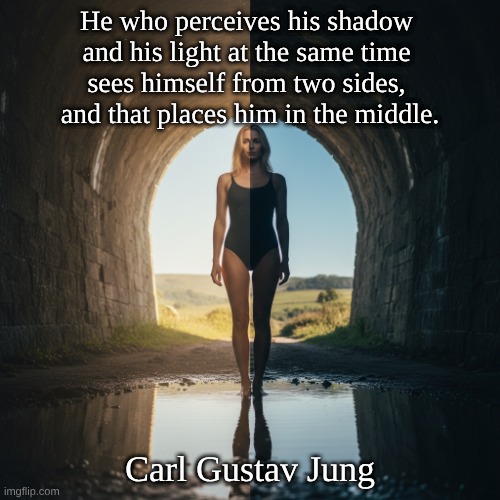
He who perceives his shadow and his light at the same time sees himself from two sides, and that places him in the middle.
Image: Peter van Geest AI. Meaning 🌗➡️⚖️:Shadow + Light: Jung speaks of the “shadow” as the unwanted or unconscious aspects of the personality, and of the “light” as conscious, desired qualities. Seeing oneself “from both sides”: True self-insight arises when you consider both perspectives, instead of identifying exclusively with your positive self-image. Coming “in the middle”: This refers to centering around the Self (Jung’s term for the totality of the psyche), a balance between opposites. The middle is not a compromise, but an integrated wholeness. Practical: Shadow work (honest self-reflection, recognizing projections, working with dreams/writing assignments/therapy) supports this integration. Author ✅:Carl Gustav Jung (1875–1961) is the likely author. The statement is thematically 100% Jungian (shadow, light, middle/center, integration of opposites). Please note: The exact sentence is often quoted, but primary references with chapter/paragraph are rarely conclusively stated. Origin/source 🔎:Most quoted German version: “We look forward to seeing our own Finsternis and being in the light, see if we can see it again, and we will be there in the Mitte.” Source status: wide secondary distribution (anthologies, quote collections, websites). A clear, verifiable placement with volume/page in Jung’s Gesammelte Werke (GW/CW) is rarely given convincingly. In terms of content, it is in line with: Two Essays on Analytical Psychology (CW 7; “Over die Beziehungen zwischen dem Ich und dem Unbewussten”):integration of shadow and unconscious. Aion (CW 9ii): “coincidentia oppositorum” (union of opposites) and centering around the Self. Conclusion: Most likely Jung, but likely a paraphrase/stylized summary of passages about shadow and the “Mitte” (center). Context: in Jung 🧠:Core motif: Becoming whole (individuation) requires confrontation with both shadow and light, whereby the ego is no longer one-sided but orients itself toward the Self as the center.“Mitte”: Jung frequently uses “Mitte/Zentrum” to indicate psychic balance/the Self.
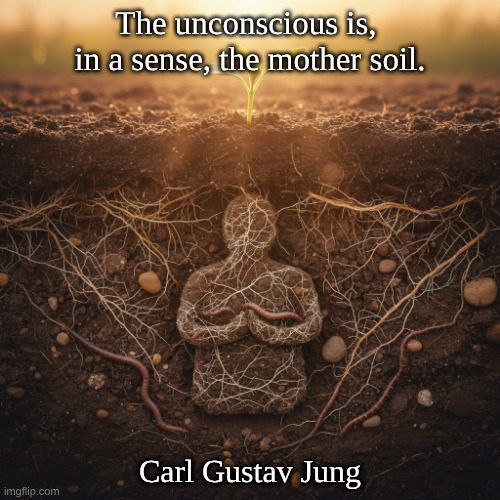
The unconscious is, in a sense, the mother soil.
Image: Peter van Geest AI. Meaning🧠🌱:“The unconscious as mother ground” = metaphor: the unconscious functions as the fertile soil from which our conscious, our ideas, impulses and symbols emerge. “In a sense” qualifies: It is not a literal, but a functional comparison—the ego gradually differentiates itself from this deeper psychological field. Implication for Jungian psychology: Growth/individuation requires a living exchange between ego and unconscious (dreams, fantasies, symbols); repression or rupture leads to one-sidedness. Author ✅: Attributed to Carl Gustav Jung. The formulation fits seamlessly with Jung’s standard imagery (unconscious as “mother ground”, “matrix”, “source”). Origin / source (context and variants): Originally formulated in German along the lines of: “Das Unbewusste ist in gewissem Sinne der Mutterboden.” Jung uses this type of metaphor in several works, including: Two Essays on Analytical Psychology (CW 7), especially in the parts about the relationship between the ego and the unconscious. The Archetypes and the Collective Unconscious (CW 9i), where he discusses the unconscious as the “matrix” of consciousness. On the Nature of the Psyche (CW 8), in broader reflections on the source function of the unconscious. Please note: translations (Dutch/English) vary in word choice (“mother soil”, “mother soil”, “matrix”, “grond/soil”). The sentence often circulates as a paraphrase that succinctly expresses Jungian thought. Why “mother soil” and not just “source”? 🌾: “Ground/soil” emphasizes: Nutrition and growth (the unconscious feeds the conscious). Continuity (consciousness in the making from a deeper field). Archetypal coloring (resonates with the “Great Mother” motif, without being reduced to it). Practical explanation 🛠️: In therapy and self-knowledge: Attention to dream images and spontaneous fantasies as “shoots” from that soil; integration of these supports individuation and creativity.
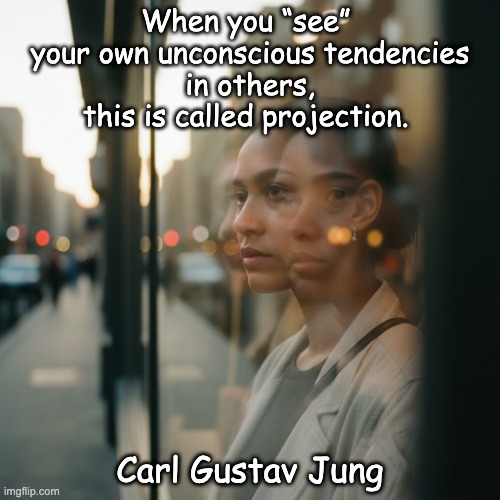
When you “see” your own unconscious tendencies in others, this is called projection.
Image: Peter van Geest AI. Meaning 🔎: The quote describes the psychological mechanism of “projection”: you (often unconsciously) attribute your own tendencies, desires, fears, or shortcomings to others. Function: Defense mechanism to reduce inner tension or protect self-image. Examples: Jealousy → suspecting another of disloyalty or envy. Perfectionism → judging others as “sloppy” or “unprofessional.”Positive projection also exists: you idealize qualities in others that you do not (yet) admit to yourself. 🧭 Origin: Psychoanalysis (early 20th century). Sigmund Freud introduced and described projection as a mechanism, including in his analysis of paranoia (Schreber case, 1911) and later texts. Anna Freud systematized projection as one of the defense mechanisms (The Ego and the Mechanisms of Defence, 1936). Carl Gustav Jung developed the idea in the context of the “shadow” (e.g., in Aion, 1951): what you reject in yourself, you often see in others. Melanie Klein (1946) and later W. R. Bion expanded it with “projective identification” (related, but not the same). Etymology: via French/English “projection” from Latin proicere (“to throw forward”). ✍️ Author of this quote: This specific English formulation is not a verifiable fixed quote from a single author; it is, in fact, a common (paraphrased) definition of “projection.” It is sometimes attributed to Carl Jung online, but this exact phrase cannot be found in his collected works. Therefore, consider it a summary description, not a literal quotation from Jung or Freud.
Stupidity, sin, sickness, old age and death still form the dark backdrop against which life’s cheerful radiance stands out.
Image: Peter van Geest AI. 🧠 Meaning: It sums up the unavoidable “dark” constants of human existence (error, moral failure, suffering, decline, mortality). “Dark foil” (as in jewelry/art) = contrasting background: It is precisely through the darkness that you experience the light, joyful aspects of life more strongly. Jungian framework: Tension of opposites and “shadow”; acknowledging the darkness deepens the experience of meaning and the brilliance of life. 🧾 Origin:Work: C. G. Jung, Aion: Beiträge zur Symbolik des Selbst (Aion: Researches into the Phenomenology of the Self). Series: An English parallel: Collected Works (CW) 9ii, trans. R. F. C. Hull (Princeton UP). The sentence appears there in equivalent wording. ✍️ Author: Carl Gustav Jung (1875–1961) 🇨🇭 Swiss psychiatrist, founder of analytical psychology; key concepts: archetypes, collective unconscious, shadow, individuation.
The sight of evil ignites evil in the soul. That is inevitable.
Image: Peter van Geest AI. Meaning: The quote suggests that “seeing” or contemplating evil in others activates the corresponding evil within ourselves. This ties in with Jung’s idea of the “shadow”: what we perceive in others can mobilise our own repressed tendencies (projection, contamination, normalisation). Implication: moral and psychological hygiene requires self-reflection and setting boundaries when confronted with destructive behaviour/images. Author: It is often attributed to Carl Gustav Jung, but there is no solid, verifiable primary source (no clear reference in the Collected Works with original German or English wording). Conclusion: probably not a literal Jung quote; rather a paraphrase of Jungian themes about shadow and projection. Origin: The specific wording in English (‘The sight of evil ignites evil in the soul. This is inevitable.’) circulates mainly on quotation websites without source attribution. There is no well-documented original publication (year/work/page number) known. Possible confusion: thematically, it is reminiscent of Nietzsche’s warning ‘Wer mit Ungeheuern kämpft…/Wenn du lange in einen Abgrund blickst…’, but that is a different, verifiable quote. Jung discusses in many places that confrontation with evil/the shadow can ‘constellate’ (activate) the evil within ourselves, including in: Two Essays on Analytical Psychology (CW 7). Aion: Researches into the Phenomenology of the Self (CW 9ii)
The encounter of two personalities is like the contact of two chemical substances: if there is a reaction, both are changed.
Image: Peter van Geest AI. 🧠 Meaning:Chemical metaphor ⚗️: Just as two substances can react upon contact and both change, so two people influence each other when there is true “chemistry.” Reciprocity 🔁: Change is not one-sided; both people experience a shift—in perspective, feelings, beliefs, or behavior. Condition: “if there is a reaction” ✅: Not every encounter is transformative; only when true interaction, resonance, or tension arises does change occur. Neutral/ambivalent ⚖️: The transformation can be positive (growth, insight) or challenging (conflict, confrontation)—but is always formative. 🧩 Origin: Attributed to: C.G. Jung, often quoted in English as “The meeting of two personalities is like the contact of two chemical substances; if there is any reaction, both are transformed.”Likely origin 🗂️: Often linked to “Modern Man in Search of a Soul” (1933) or essays within a Jungian context. An exact primary source citation is often not given unambiguously in literature and online citations; it is a core Jungian idea that encapsulates his thinking on relationship, transference/countertransference, and alchemical symbolism. 👤 About the author: Carl Gustav Jung: Swiss psychiatrist, founder of analytical psychology. Key ideas: Collective unconscious, archetypes, the path of individuation, synchronicity, symbolism, and alchemy as a psychological language. 🧭 Application and context: Psychotherapy 🛋️: Refers to the mutual influence between therapist and client (transference/countertransference) in which both learn and change. Relationships ❤️: In friendship, love, or collaboration, people transform each other through genuine encounters, not through superficial contact. Team/organization 🤝: Creative tension or “chemistry” can permanently shape cultures and individuals. 🔎 Nuances and misconceptions: Not every contact changes: Transformation only occurs through genuine involvement, conflict, resonance, or vulnerability. No romantic exclusivity: This applies equally to professional or conflictual interactions. No “power metaphor”: It emphasizes reciprocity, not dominance or one-sided influence. 📚 Short source hints: C.G. Jung – Modern Man in Search of a Soul (1933) [often cited attribution]. Jung’s essays on transference and alchemy for conceptual context.Learn the best, know the best – and then forget everything when you come to the patients.
Image: Peter van Geest AI. Meaning 🧩:The quote expresses three key points:Thoroughness: Acquire the best possible education and theoretical knowledge. Modesty: Theoretical frameworks are tools, not absolute truths. Presence: In real contact with the patient, listening, observing, and attuning to the unique person counts more than rigidly applying theory. In short: theory as a compass, not a straitjacket. 🧭 Author and attribution 🖋️:Jung (probably): There is a related, much-quoted statement circulated attributed to Jung, often along the lines of: “Learn your theories as well as you can, but put them aside when you touch the miracle of the living soul.”Evidential status: This formulation is rarely substantiated with an exact, verifiable source (section/page/paragraph) from Jung’s Collected Works. In authoritative collections of quotations it is often “attributed.”Contextual fit:The idea strongly aligns with Jung’s clinical approach: the individual and lived experience take precedence over system and doctrine. Origin and variations 🔎:Likely origin:Psychotherapy and medical education traditions that quote/paraphrase Jung to emphasize the importance of clinical presence. Close, authentic Jungian thoughts: Jung repeatedly writes that the individual case and the living encounter are leading and that theory is a tool. This is consistent, even though the exact phrase is difficult to trace. Comparable (non-Jung) traditions: William Osler (medicine): emphasis on bedside learning and the unique patient. Carl Rogers (psychotherapy): experience and the person-centered approach over doctrine. Conclusion 🎯: This is probably not a direct quote from Jung, but a striking paraphrase of an idea that aligns well with Jung’s approach: master theory, but in the encounter with the patient, prioritize the living reality of that person.
It is easy to understand why people tend to ignore or even reject the message of their dreams. Consciousness naturally resists everything unconscious and unknown.
Photo: Carolyn Christine. Meaning: The core idea is that dreams contain messages from the unconscious, and that the ego (the conscious self) tends to ignore or reject these messages. Concretely: Remaining aware of the unconscious can create tension because it touches on unfamiliar and potentially threatening content. In Jungian terms, the dream often functions as compensation: the dream content attempts to restore conscious balance by bringing unfamiliar or repressed aspects into consciousness. In summary: The statement emphasizes the tension between what is conscious and what remains unconscious, and the value of interpreting dreams for personal growth. Origin and author:Direct verification: This exact quote cannot be found as an indisputable Jungian quotation in his major works or the standard collections (CW, the Jungian Übt). Possible reality: The sentence appears to be a paraphrase or summary of Jungian ideas about dreams and the unconscious, rather than a literal quotation from his work. Conclusion:It cannot be definitively attributed to Carl Gustav Jung as the original author. It could be a contemporary reformulation that highlights Jungian concepts. What Jung writes about this (contextualization): Dreams as expressions of the unconscious. The compensatory function of dreams: when conscious life becomes one-sided, dreams reveal contradictory or repressed content. The need to interpret dream content to achieve individuation. For reliable citations, you can search for: “Two Essays on Analytical Psychology” (publication of dream theory). “Dreams” and “Dream Analysis” passages in the Collected Works. Themes such as compensation, contradictions between consciousness and the unconscious, and the role of the unconscious in psychological development.Jung argued that dreams contain a message from the unconscious and that consciousness is often inclined to ignore this content; dreams sometimes serve as compensation to bring balance.
My way is not your way, so I cannot teach you. The way is within us, but not in gods, nor in teachings, nor in laws. Within us is the way, the truth, and the life.
Photo: Chris Reyem. Meaning: Unique Path: “My way is not your way” emphasizes that each individual has their own psychological/life path. No External Recipe: Truth and direction do not lie in external dogmas, authorities, or fixed rules. Inner Orientation: The path is “within us”—connecting with Jung’s idea of individuation: getting to know and integrate your own psyche (conscious and unconscious). Biblical Echo: The phrase “the way, the truth, and the life” deliberately refers to John 14:6; Jung places this not in an external figure, but in inner experience. Author 👤: This quote is convincingly attributed to Carl Gustav Jung. It appears (in slightly varying translations) in The Red Book: Liber Novus. Jung originally wrote it in German; common translations in English and Dutch circulate. Origin / Source 📖:Work: The Red Book (Liber Novus), C.G. Jung; ed. Sonu Shamdasani; W. W. Norton, 2009. Context: Jung describes the inner journey of individuation in visionary and reflective passages. The exact location varies per edition/translation; it occurs in the sections often referred to as Liber Primus/Secundus or Scrutinies. Translation/text variants 🌐: Commonly used English versions: “Your way is not my way, therefore I cannot teach you the way. The way is within us, but not in gods, nor in teachings, nor in laws. Within us is the way, the truth, and the life.” Probable German root form (global): “Dein Weg ist nicht mein Weg, darum kann ich nicht lehren. Der Weg ist in uns, aber nicht in Göttern, neither in Lehren, nor in Gesetzen. In uns ist der Weg, die Wahrheit und das Leben.” Minor differences (word order, “nor”/”and,” commas) are due to editions and translators. Common confusions ❗: With Nietzsche: the idea “no one can build your bridge” is Nietzsche’s (Zarathustra’s), not Jung’s. With general spiritual aphorisms: this quote is more specifically Jungian in its emphasis on individuation and the reinterpretation of religious language as inner psychic reality.
When the wrong man uses the right means, the right means work in the wrong way.
Photo: Rob Martin. Meaning 📌 🧠 : It’s not just about the method/technique (“the right means”), but about the person applying it. If someone’s intention, character, maturity, or moral compass is “wrong,” even good tools or correct procedures can backfire, be misused, or lead to harmful results. In short: ✅ Good means + ❌ wrong attitude/intent = ❌ wrong effect. 🧭 Origin / Origin: The phrase is usually presented as Chinese (Taoist) wisdom/saying in Western literature. In that tradition, there is a recurring idea that inner development and right action/right humanity precede “the right technique.” ⚠️ Important: It is often difficult to link these kinds of proverbs to a single classical Chinese source text (with exactly this wording), because they regularly circulate in the West as “Chinese proverb” in various translations. 👤 Author: ✅ Jung (very likely) did make it known in the West. Carl Gustav Jung quotes this statement and uses it to make a point: methods (e.g. psychological or spiritual techniques) only work well with the right inner attitude. ❗ However: Jung is probably not the “author”. Jung usually presents it as a (Chinese) saying—so as something he adopted, not as something he made up himself. 📚 Where in Jung’s book?: You can find the statement in Jung’s commentary/preface to The Secret of the Golden Flower (a Western edition of a Chinese alchemical/meditative text, translated by Richard Wilhelm; Jung wrote the psychological commentary). (The exact page/paragraph varies by edition and language—German/English/Dutch have different editions.)
Christianity set a specific direction, excluding all other possible directions.
Photo: Cosmic Timetraveler. Meaning 🧭:Core idea: Christianity set a clear, exclusive course in faith and morality, marginalizing alternative spiritual/psychic directions. Jungian interpretation: One-sidedness of consciousness: emphasis on light, good, spirit, reason ➜ exclusion/suppression of shadow, evil, body, instinct, the feminine. ⚖️ Compensation: what is excluded returns via the unconscious (e.g. in heresies, mysticism, gnosticism, alchemy, and later in modern symbolism/psychology). 🔄: Symbol criticism: the Trinity (trinitarian thinking) tends to exclude the “fourth”; alchemy and quaternity represent the integration of the excluded. ◻️ Author and attribution ✍️: Probably not a literal quote from Jung in this form; it is a striking paraphrase of his thesis. With due scholarly care: treat it as a paraphrase of Jung, not as a literal quotation mark. ⚠️ Origin / possible source context 📚: Where Jung strongly develops this idea: Psychology and Religion: West and East (Collected Works, CW 11) — including “The Psychological Approach to the Dogma of the Trinity”: on the exclusion of the “fourth” and the resulting one-sidedness. Aion (CW 9ii) — on the Christ symbol, shadow, antitype (Antichrist), and the problem of the excluded in Christian symbolism. Answer to Job (often published within CW 11) — on the integration of good and evil in the divine image; critique of moral one-sidedness. Psychological Types (CW 6) and essays in CW 10 — reflections on cultural/ethical one-sidedness in the West. An exact, verifiable primary source with precisely this wording is difficult to find; It seems more like a paraphrase of Jung’s thought on the “one-sidedness” of Christianity. In terms of content, it closely resembles Jung’s work on how Christianity excluded certain psychic and symbolic possibilities (shadow, the “fourth,” the feminine/bodily), which were later unconsciously compensated for. 🧠Note: as far as we know, the exact sentence cannot be found verbatim in these works; the idea, however, can.
The overwhelming majority of people are completely incapable of putting themselves in someone else’s shoes.
Photo: Mariah Krafft. Meaning:Core idea: Most people struggle with empathy / perspective-taking—they interpret others through their own feelings, assumptions, and biases rather than genuinely imagining the other person’s experience. Psychological framing: It aligns with concepts like: Egocentric bias (defaulting to one’s own viewpoint). Projection (attributing one’s inner states to others): Limits in theory of mind (accurately modeling another person’s mental state). Is it really by Carl Gustav Jung? Most likely: no, not in this exact wording. This sentence is widely circulated online as a “Jung quote,” but it typically appears without a verifiable citation (book, lecture, letter, volume/page from Collected Works). As far as reliable, citable Jung sources go, this quote is best treated as misattributed or at least unverified. Bottom line: If you need to attribute it academically or responsibly, it’s safer to say: “Often attributed to Carl Jung (unverified)” rather than presenting it as a confirmed Jung quotation. Origin / source status: What we can say with confidence: The phrasing reads like a modern, internet-era paraphrase of themes common in Jungian psychology (especially projection and limited self-awareness). It is not a well-documented line from Jung in standard reference collections, and it usually circulates without primary-source details. Why it gets linked to Jung: Jung wrote extensively about how people misunderstand others because they are driven by unconscious material and projection—which can resemble the sentiment of this quote. That thematic similarity often leads to quote drift: people summarize an idea and later the summary becomes “a quote.” Closely related Jung ideas (authentic theme, different wording). Even if the exact sentence isn’t reliably Jung’s, these Jung-consistent ideas are commonly supported in his work: People often project unconscious content onto others, which makes them “see” their own mind rather than the other person. Greater understanding of others is tied to greater consciousness of oneself (reducing projection).
To me a particularly beautiful woman is a source of terror. A beautiful woman is as a rule a terrible disappointment; you cannot have your cake and eat it.
Photo: Pouriya Kafaei. Meaning and Psychological Interpretation 💡: This quote can be interpreted in various ways, especially when viewed through the lens of Jung’s own theories. 1.The Terror of Projection (Anima). In Jungian psychology, the Anima is the feminine aspect in a man’s unconscious psyche. Projection: Men tend to project their Anima archetype onto real women. The “Perfect” Woman: An exceptionally beautiful woman is a “perfect canvas” for this projection. A man sees in her not the real person, but his own inner, idealized image of the feminine. The “Terror”: This overwhelming projection can be terrifying. The man is confronted with a force he does not understand (his own unconscious), which can completely fascinate, obsess, and strip him of his rationality. He loses himself in the image he has projected onto her. 2.The “Terrible Disappointment”. When the man gets to know the beautiful woman as a real human being, the disappointment arises. Reality vs. Projection: No real woman can live up to the perfection of an unconscious archetype. She has flaws, a will of her own, and is a complex human being, not a goddess. The Disintegration of Illusion: When projection inevitably clashes with reality, disappointment follows. The man realizes that the woman he adored is not the “perfect” figure from his unconscious. 3.“You cannot have your cake and eat it.” This addition reinforces the interpretation of disappointment and a sense of reality. The Literal Meaning: You cannot keep a cake and eat it at the same time. The Figurative Meaning: You cannot both maintain the perfect, idealized illusion (the “beautiful woman” as projection) and simultaneously have a real, earthly relationship with her. A relationship requires accepting reality, which means the end of the perfect illusion. Disappointment is therefore inevitable if one clings to the idealized image. 🚩 Critical Notes and Context: It is important not to blindly accept this quote, but to examine it critically. Spirit of the Times and Sexism: Jung made this statement in a specific historical and cultural context (the mid-20th century). The statement can be seen as generalizing and sexist. 📖 The Origin and Source:The Publication: C.G. Jung Speaking: Interviews and Encounters. This is a collection of interviews and conversations Jung conducted throughout his life. It offers a direct insight into his thoughts, often in a less formal setting than his scientific writings. The Context: The fact that this quote comes from an interview is significant. It suggests that it was perhaps a spontaneous, personal reflection, or a provocative statement to illustrate a deeper psychological point, rather than a formal theoretical proposition. It reveals a more personal, perhaps even vulnerable or biased side of Jung. 👤 The Author:Carl Gustav Jung. The quote is unmistakably from Carl Gustav Jung (1875–1961). A Swiss psychiatrist and the founder of analytical psychology. His influence: Jung is one of the most important figures in the history of psychology, known for his work on the collective unconscious, archetypes (such as the Anima and Animus), dream analysis, and psychological types (introversion/extraversion). His perspective: His statements must often be understood within the complex context of his theories on the human psyche and the deeper layers of the unconscious. 📚 🧐
The creation of something new is not accomplished by the intellect but by the play instinct acting from inner necessity. The creative mind plays with the objects it loves.
Image: Peter van Geest AI. Meaning 💡: This is one of the most influential and quoted statements by the Swiss psychiatrist Carl Gustav Jung regarding the creative process. This quote contains the core of Jung’s view on creativity. It challenges the traditional idea that creativity is merely a product of logical thinking and intellectual effort. These are the key elements of the meaning: 1.The limitation of the intellect: The intellect is analytical, logical, and structuring. It is essential for ‘refining’ ideas, but according to Jung, not for the ‘origination’ of truly “new things.” The intellect often reproduces or restructures what is already known. 2.The ‘Instinct to Play’ (Play Drive): 🎨 Creativity arises from a state of freedom, experimentation, and openness. Jung calls this the “play instinct” (by analogy with Friedrich Schiller’s concept of the “Spieltrieb”). When we ‘play’, we are not bound by rigid rules or direct practical goals. This enables the mind to make new associations and think outside the box. 3.Acting out of ‘Inner Necessity’: This is a crucial distinction. This “playing” is not a random or superficial activity. It is driven by a deep, unconscious urge or need. The creative impulse stems from the unconscious and ‘must’ be expressed. The artist or explorer ‘must’ create, not because it is logical, but because an inner force compels it. 4. The ‘Objects he loves’: 🎨 Creativity is also an emotional process. The mind “plays” with subjects, ideas, materials, or concepts with which a deep emotional or psychological bond exists. Love for the subject is the fuel for the creative play. 🔍 Origin and Context: Author:Carl Gustav Jung (C.G. Jung).Source:The work “Psychologische Typen” (original German title: “Psychologische Typen”). Year of publication: 1921.Location in the work: This quote is found in ‘Paragraph 197’. In the standard English edition of his collected works, it can be found in: ‘Collected Works of C.G. Jung, Vol. 6: Psychological Types’, para. 197. 🌱 In short: For Jung, true creativity is a synthesis of a deep, inner (often unconscious) necessity and a playful, open attitude towards the world, in which the intellect plays a role only later in shaping what the “play drive” has produced.
You can’t take it with you.
Image: Peter van Geest AI. Meaning💰: This idiom simply means that when you die, you cannot take your money, property, or any other material belongings with you. It emphasizes the futility of obsessively accumulating wealth and possessions, as they have no value or purpose beyond this life. It often serves as an encouragement to enjoy life, share wealth, or focus on more meaningful pursuits. Origin and Author:While the exact origin of this idiom is not definitive, it has been used and popularized through various sources over time: Biblical Influence: While not a direct quote, the concept is echoed in several biblical passages, such as Job 1:21 (“Naked I came from my mother’s womb, and naked shall I return there”) and 1 Timothy 6:7 (“For we brought nothing into this world, and it is certain we can carry nothing out”). These passages highlight the idea that we enter and leave the world without any material possessions. 19th Century Usage: The idiom began to gain traction in the 19th century. For example, a similar expression appeared in a letter by British writer Charles Lamb in 1823: “He can’t carry his money with him.”Play and Film: The idiom was further popularized by the successful 1936 play “You Can’t Take It with You” by George S. Kaufman and Moss Hart. This play, which was later adapted into a classic 1938 film directed by Frank Capra, centers around a eccentric and carefree family who prioritize happiness and fulfillment over material wealth. The title of the play and film became synonymous with the idiom’s message. Therefore, while no single author can be definitively credited with coining the idiom, its usage can be traced back to biblical concepts and 19th-century literature, and it was significantly popularized by the well-known 20th-century play and film. Examples of Usage: “He spent his entire life amassing a fortune, but he couldn’t take it with him.” “Don’t be so stingy with your money. Remember, you can’t take it with you.” “Focus on making memories and helping others, because you can’t take your possessions with you when you die.” In conclusion: “You can’t take it with you” is a timeless idiom that reminds us of the fleeting nature of material possessions and encourages us to focus on what truly matters in life.
If an inner situation is not brought to consciousness, it appears externally as fate.
Photo: Jackson David. Meaning 🧠: This quote touches on the core of depth psychology. The statement describes a fundamental process of the human psyche. It concerns the interaction between our unconscious and our conscious reality. The unconscious: This is the part of our psyche to which we have no direct access. It contains repressed memories, desires, fears, and other psychic contents that we would rather not face. The conscious: This is the part of our mind of which we are aware: our thoughts, feelings, and actions in the present moment. The essence: When we do not make an inner situation (a conflict, a desire, a fear) conscious, i.e., do not face it and integrate it into our consciousness, then this situation will manifest “outside.” We will “attract” or “create” situations, people, and events in our lives that reflect this unconscious content. It then feels as if fate is befalling us, as if we are victims of external circumstances. An example: Imagine someone who has a deep-seated fear of abandonment but does not consciously confront this fear. This person may repeatedly find themselves in relationships where they are eventually abandoned. Although it seems as if “fate” is working against them, it is possible that their unconscious fear of abandonment is unconsciously leading them to partners and situations that reinforce this fear. Conclusion: The statement invites us to take responsibility for our inner world. By making our unconscious contents conscious, we can gain more control over our lives and stop living as a victim of “fate”.📚 Origin: This quote comes from the book “Aion: Contributions to the Symbolism of the Self” (1951). It is one of the most important works of Carl Gustav Jung.The context: In this book, Jung explores the evolution of Christianity and the figure of Christ, and how these can be understood in light of the psychology of the unconscious. The statement appears in the chapter “Christ, a Symbol of the Self”.The original text: The quote in German is: “Wenn eine innere Situation nicht bewusst gemacht wird, erscheint sie aussen als Schicksal.” The translation is quite accurate. 🖋️ Author: The author of this quote is the famous Swiss psychiatrist and psychoanalyst Carl Gustav Jung.💡 Why is this important? This quote reminds us of the importance of self-reflection and the power of our unconscious. It encourages us to look inward and explore our inner conflicts and shadow sides. By doing this, we can live more consciously and create a life that is in alignment with our deeper values and needs.
The shoe that fits one person pinches another; there is no recipe for living that suits all cases.
Photo: Huyen Nguy. Meaning 📖 👟🦶:The core message of this saying is simple yet profound: Individuality: What works perfectly for one person can be a source of discomfort or even an obstacle for another. We all have unique needs, desires, and life paths. No Universal Solutions: There is no “recipe for life” that applies to everyone and every situation. What is wise advice in one context may be harmful or inappropriate in another. Personal Quest: Every individual must find their own way, fit their own “shoe,” and discover what works for them. Respect for Diversity: It reminds us to respect the differences between people and not to judge the choices others make, even if they seem incomprehensible to us. The Pinch: The “pinch” symbolizes the discomfort, friction, and hindrance that can arise when we try to live according to the norms or expectations of others, or when we force ourselves to fit into a form that does not suit us. Author:Carl Gustav Jung (1875–1961). 🔍 Source: The saying can be found in his book “Modern Man in Search of a Soul” (originally published in 1933). Location: It appears on pages 60–61. Context: “Modern Man in Search of a Soul” is one of Jung’s more accessible books, aimed at a broader audience. It contains a collection of essays in which he explains his key theories regarding dreams, the unconscious, the psyche, psychotherapy, and the existential questions that occupy modern man. 🌟 Conclusion: This saying is a timeless reminder of the beauty and challenge of human uniqueness. It encourages us to look at ourselves and others with compassion and understanding, and to have the courage to find and wear our own unique “shoe,” even if it might seem a bit strange to others.
The pendulum of the mind alternates between sense and nonsense, not between right and wrong.
Photo: Ravi Kayden. Meaning 💡: The statement “The pendulum of the mind swings between sense and nonsense, not between right and wrong” refers to the natural movement of the human psyche. Jung argues that our mind does not continuously exist in a moral state or reason logically. Sense and Nonsense: We move between moments of clarity and meaning (sense) and moments of confusion or the irrational (nonsense). Both are necessary for psychological balance. No Morality: This swing is not about making moral choices (right versus wrong), but about the nature of how we think and experience. It is a description of psychological reality, not a manual for behavior. Balance: The ‘pendulum’ suggests that we should not remain stuck in one extreme, but that both poles have a function in our inner world.📚 Author:Carl Gustav Jung, the famous Swiss psychiatrist and founder of analytical psychology. Origin: The statement comes from his autobiographical work ‘Memories, Dreams, Reflections’. Date: This book was published in 1962, shortly after Jung’s death (1961). It is a collection of his memoirs and insights, which is often considered his most personal work.
It all depends on how we look at things, and not how they are themselves.
Photo- Alexander Grey. Meaning 📖 :Subjective Reality: The core of the statement is that our experience of the world is largely determined by our own interpretation, mindset, and inner state. It is not so much about the objective facts of a situation, but about the meaning that ‘we’ give to it. The Power of the Mind: The same event or circumstance can be experienced very differently by two different people. For one, a challenge may be a source of stress, while the other sees it as an opportunity to grow. The ‘lens’ through which we look (our beliefs, experiences, and emotions) colors our reality. Accountability and Freedom: This view places a certain responsibility on the individual. It suggests that we are not merely passive victims of our circumstances, but have the power to influence our experience by changing ‘how’ we look at something. This perspective offers a path to personal growth and emotional resilience. 🌱 Origin: Essay: The specific statement can be found in the essay collection “Modern Man in Search of a Soul”. Year of Publication: The book was originally published in 1933.Purpose of the Book: It is a collection of essays intended for a broad audience. In it, Jung attempts to make his psychological ideas accessible, including his theories on dreams, the unconscious, religion, and the search for the meaning of life. ✒️ Author:C.G. Jung (1875–1961) was a prominent Swiss psychiatrist and the founder of analytical psychology. Relevance: This statement is characteristic of his work, in which he often emphasized the importance of inner, psychological reality and the process of individuation (becoming who you truly are).
One is a psychological process that one cannot control.
Photo: Georgia Mashford. Meaning:Core idea: The psyche is a process or dynamic sequence that is not entirely under our conscious control. Implications: There are aspects of our experience that run autonomously (especially unconscious content). Humans are less sovereign over their inner processes than they might believe. Self-control has limits; a part of the psyche “follows its own course.”Origin and author: Direct quote? No reliable source confirms that this sentence is taken from a well-known work by C. G. Jung.Common problems with quotations: Bibliographically verifiable quotations are occasionally misquoted or paraphrased. Sometimes it is a modern paraphrase or an interpretation of Jung’s ideas by others. Presumed attribution: There is no reliable, confirmed source that definitively attributes this specific quotation to Jung. It is plausible that the sentence is a summary of a psychological view attributed to Jung, or that it is a falsified attribution. Jung and similar ideas (without direct quotations): Central Jungian ideas that fit thematically: The unconscious strongly influences our behavior; many processes occur outside of conscious control. The path to self-realization (individuation) means becoming aware of unconscious aspects. The psyche is often understood as an open system in which conscious control has limits. Well-known, genuine Jungian quotes that address similar themes (with reservations regarding literal accuracy): “Until you make the unconscious conscious, it will determine your life—and you will call it your destiny.” (commonly quoted form, original wording varies) Note: The literal German version varies in translations; the meaning corresponds to Jung’s emphasis on the unconscious’s influence.
Door Pieter
Mensenmens, zoon, echtgenoot, vader, opa.
Spiritueel, echter niet religieus.
Ik hou van golf, wandelen, lezen en de natuur in veel opzichten.
Onderzoeker, nieuwsgierig, geen fan van de mainstream media (MSM).


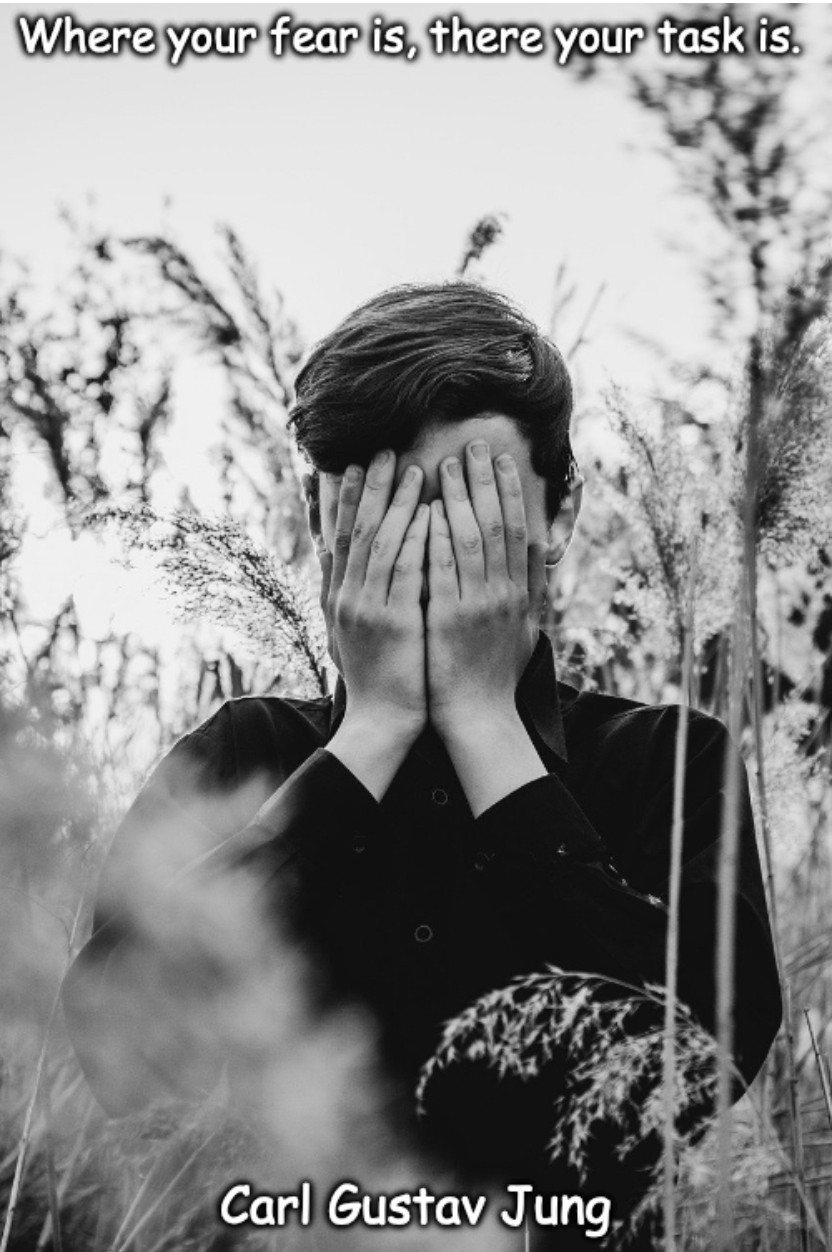
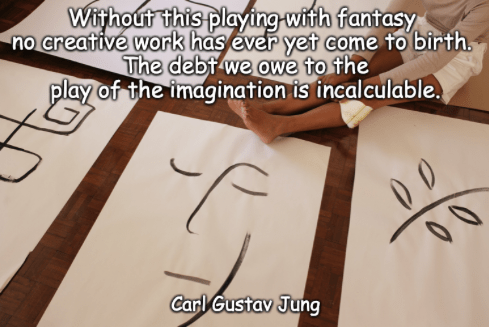

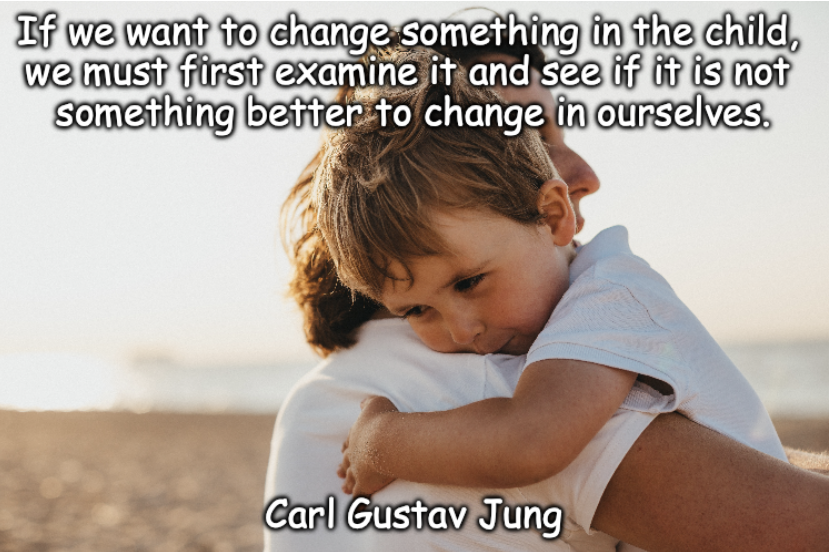
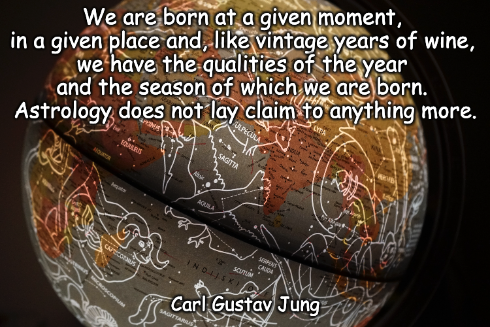
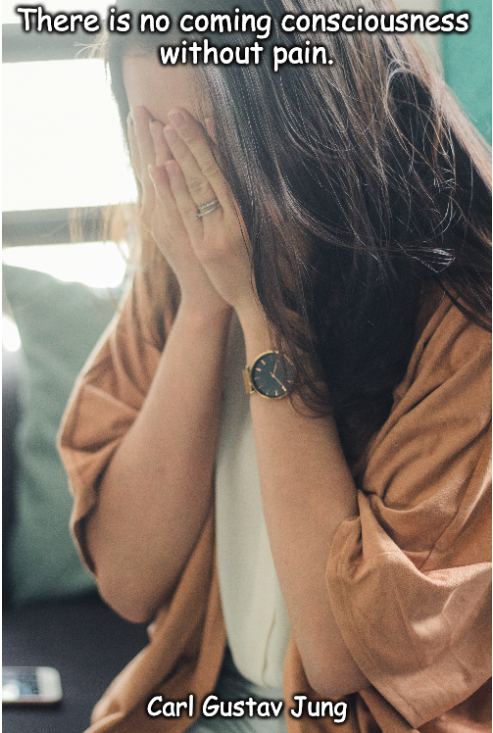
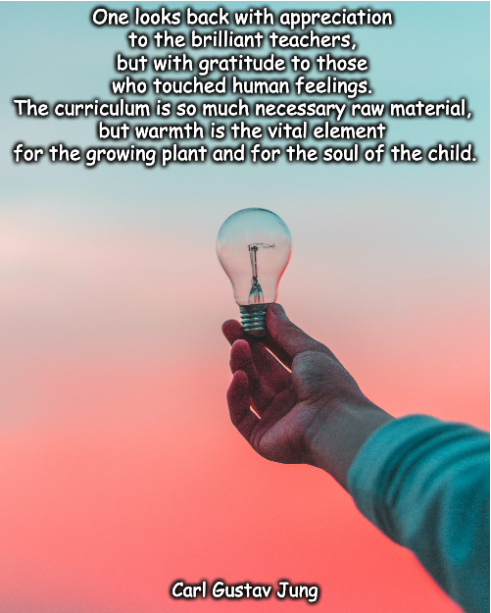
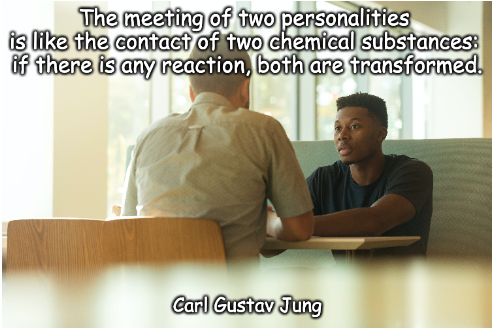

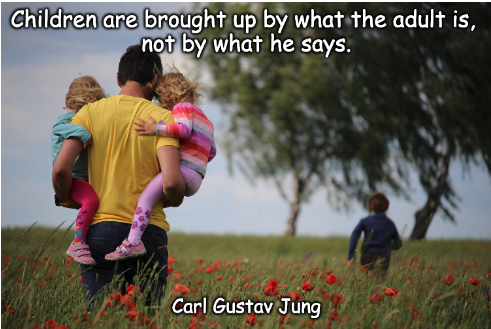
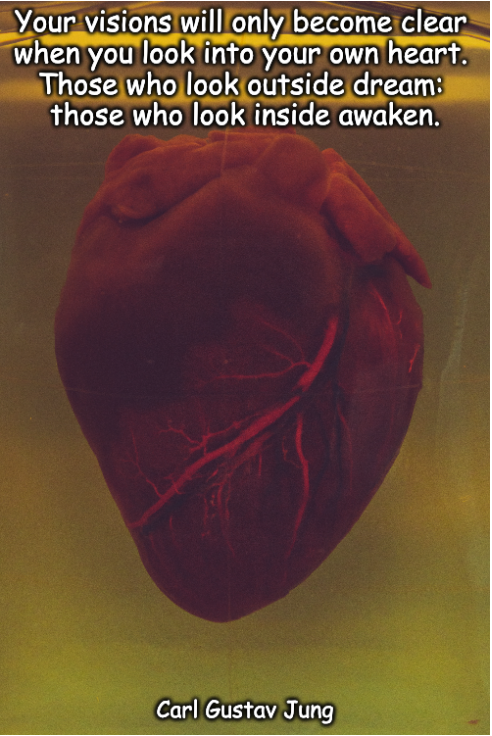
 Photo: Vlah Dumitru.Meaning and Psychological Context 🧐:




 Photo: pinterest.Meaning 🤔: This quote touches the core of Jung’s psychology. Let’s break the meaning down: