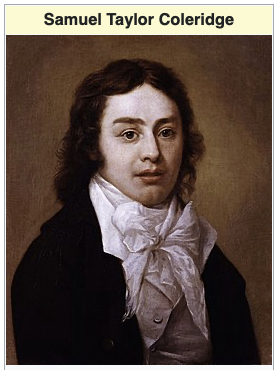
(Ottery St Mary, Devonshire, 21 October 1772 – Highgate, London, 25 July 1834).
English poet, thinker and literary critic.
Portrait of Samuel Taylor Coleridge (1772-1834), Pieter van Dyke, 1795.
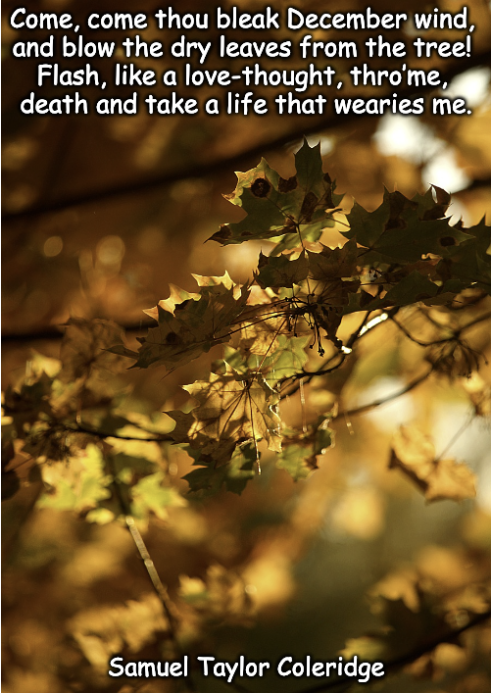
Come, come thou bleak December wind, and blow the dry leaves from the tree! Flash, like a love-thought, thro’me, death and take a life that wearies me.
Photo: Ирина Ирина. Meaning:Gloomy December Wind: Refers to the gloomy and cold atmosphere of the winter months, specifically December. Dry Leaves: Symbolizes the dying of life and the cycle of nature. Love Thought: A longing for something or someone, often with a melancholic undertone. Death and Life: The phrase plays with the themes of life, death, and the weariness that comes with living. Origin: The text is a poetry excerpt and explores the themes of transience, melancholy, and the cycle of nature. Author: Although Guido Gezelle is sometimes cited as the author, the text originates from the English poet and critic Samuel Taylor Coleridge, known for his romantic and often spiritual poetry. Context: Coleridge is an important figure in English Romanticism, and his work often explores the connection between human experience and nature, as well as the themes of dreams and the spiritual world. Additional Information: Style: Coleridge often uses rich imagery and metaphors, with a strong emphasis on emotion and nature. Impact: His influence is felt in literature and poetry, and he is often mentioned alongside other great Romantic poets such as William Wordsworth.
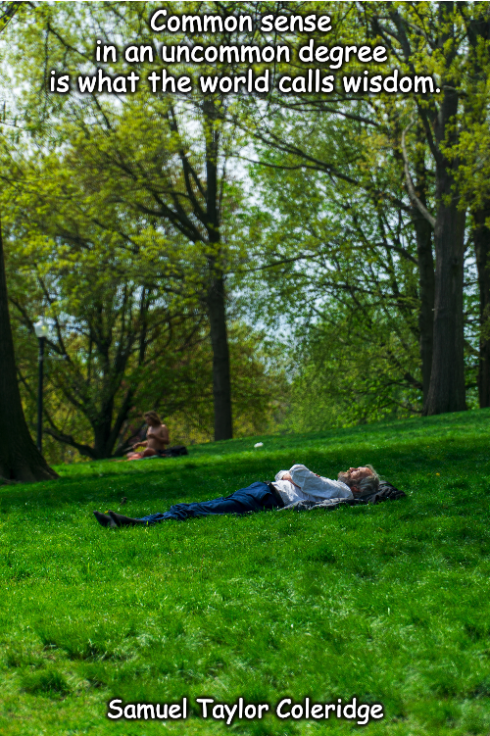
Common sense in an uncommon degree is what the world calls wisdom.
Photo by Masiyah
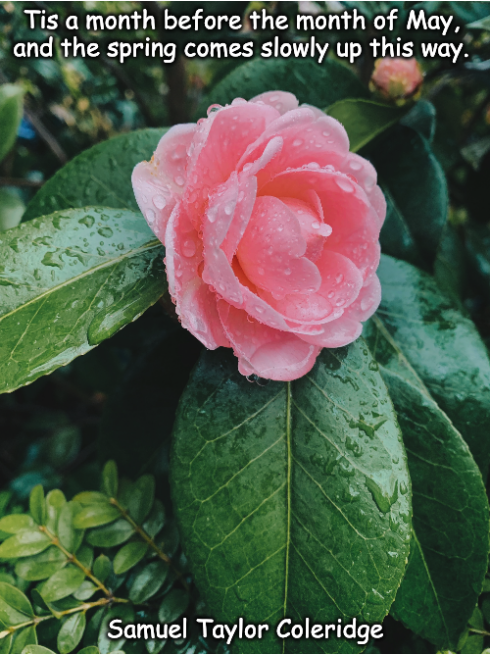
Tis a month before the month of May, and the spring comes slowly up this way.
Photo: Tereza Maik. Meaning: The poem expresses: Expectation: The feeling that spring is ‘almost’ here, but hasn’t quite set in yet. Slow progress: That the transition from winter to spring is gradual and sometimes unpredictable. Seasonality: The specific timing in early spring (late March/early April). Essentially, it describes the period when we eagerly look forward to warmer weather, but nature is still a bit reserved. Origin and Author: Now comes the interesting link to Samuel Taylor Coleridge! The origin of this saying indeed lies with the famous English poet Samuel Taylor Coleridge (1772-1834).The poem: It is not directly a ‘saying’ that he coined, but a well-known stanza from his epic poem called ‘Christabel’. The core of the expression comes directly from his poem ‘Christabel’.
Door Pieter
Mensenmens, zoon, echtgenoot, vader, opa.
Spiritueel, echter niet religieus.
Ik hou van golf, wandelen, lezen en de natuur in veel opzichten.
Onderzoeker, nieuwsgierig, geen fan van de mainstream media (MSM).