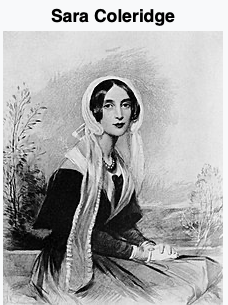
(23 December 1802 – 3 May 1852).
English author and translator. She was the third child and only daughter of the poet Samuel Taylor Coleridge and his wife Sara Fricker.
Her first works were translations from Latin and medieval French. She then married and had several children for whom she wrote instructive verses. These were published as Pretty Lessons in Verse for Good Children in 1834 which included popular poems like The Months: “January brings the snow, makes our feet and fingers glow.” In 1837, she published her longest original work – Phantasmion, A Fairy Tale – which also started as a story for her son Herbert.
Sara Coleridge. Photo:wikipedia.org
January brings the snow, makes our feet and fingers glow.
Photo: nostalgicamerica. Meaning: January is the month when winter reaches its peak and snowfall is common. Symbol of warmth: Despite the cold of the snow, the expression refers to the warmth and coziness people experience, such as being together and enjoying warmth (literally and figuratively). Contrasts: It contrasts the cold of the outside world with the warmth people feel in their interactions and experiences. Origin:Seasonal change: January symbolizes winter and the accompanying snow. Warmth and coziness: Despite the cold of the snow, the expression refers to the warmth people experience in their interactions, such as coziness and togetherness. Author: The phrase is taken from a poem by Sarah Coleridge, in which she describes the beauty and challenges of winter.
Dull November brings the blast, Then the leaves are whirling fast.
Photo by proartspb
Hot July brings cooling showers, apricots, and gillyflowers.
Photo by Diana Serbichenko
March brings breezes loud and shrill, Stirs the dancing daffodil.
Photo: Louisem.com. 🌬️ Meaning: These lines vividly describe the characteristics of the month of March. “March brings breezes loud and shrill”: This refers to the often powerful, cold, and sometimes stormy winds typical of early spring. March is known for its unpredictable weather, where fresh, piercing gusts are not uncommon. “Loud and shrill” emphasizes the audible and sometimes cutting nature of these breezes. “moves the dancing daffodil”: Here, the impact of that wind on nature is described. The daffodil is one of the first flowers to appear in spring, often in March. The wind causes the delicate flowers and stems to move, making it seem as if they are “dancing.” This is poetic and beautiful imagery that contrasts the fragility of the early spring bloomers with the power of the March wind. The ‘moving’ can also evoke a sense of emotion, as if the wind is bringing the daffodil to life after its winter dormancy. Together, the lines paint a picture of a March that is both dynamic and powerful (the wind) as well as tender and hopeful (the emerging daffodils). It captures the essence of the transition from winter to spring. 📝 Origin: These lines come from the poem “The Months,” also known as “The Garden Year,” by Sara Coleridge.Poem: “The Months” is a didactic poem describing each month of the year, aimed at young readers. It combines observations of nature with simple, catchy rhymes, ideal for introducing children to the seasons and the changes in nature. Context in the poem: Each stanza of the poem is dedicated to a specific month. ✍️ Author:Sara Coleridge (1802-1852).Background: Sara Coleridge was an English writer and poet, and the only daughter of the famous Romantic poet Samuel Taylor Coleridge (known for “The Rime of the Ancient Mariner” and “Kubla Khan”). She grew up in an intellectual environment and was exceptionally talented herself. Work: In addition to “The Months,” she also wrote the popular fairy tale novel “Phantasmion” and a series of essays and critiques. She was also a diligent editor of the works of her father and brother. Influence: Although her work may be less well-known than that of her father, Sara Coleridge contributed significantly to the literature of her time, especially for children. Her poems, such as “The Months,” are beloved for their simplicity, charm, and striking descriptions of nature. Conclusion: This particular weather proverb is therefore not a traditional folk saying, but a beautiful poetic description of the month of March, created by the talented Sara Coleridge, which has remained popular over the years due to its striking imagery and rhythm.
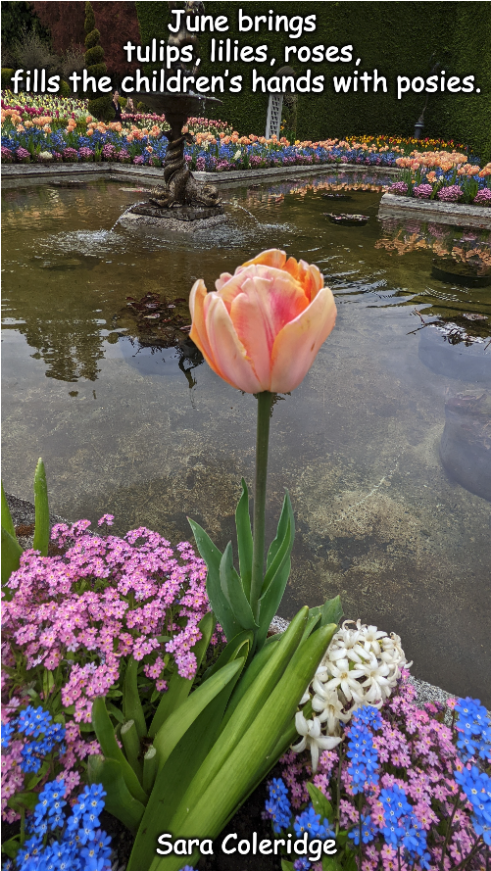
June brings tulips, lilies, roses, fills the children’s hands with posies.
Photo: Arjun Ken. Meaning 🌼 🌸: This line of verse expresses that: – “June” is the month of ‘blossom, abundance, and beauty’; – there are many flowers then, such as: – ’tulips’ – ‘lilies’ – ‘roses’ – children, as an image of joy and innocence, can ‘pick or carry bouquets / bunches’. Symbolic meaning: – 🌞 ‘summer feeling’ – 🌷 ‘natural splendor’ – 👧🧒 ‘childlike joy’ – 💐 ‘abundance of flowers’ It is therefore more of a ‘poetic rule about nature’ than a proverb with a hidden life lesson. 📚 Origin: The line comes from the poem “The Months”, a well-known English nursery rhyme. Original version: The poem lists, month by month, what characterizes that month. The June line is: > ‘June brings tulips, lilies, roses, Fills the children’s hands with posies.” Origin: – Language: English – Genre: children’s poetry / didactic verse – Period: 19th century The poem became very popular in English anthologies and schoolbooks. 👩🦳 Author: Sara Coleridge. – Sara Coleridge (1802–1852) – English writer, translator, and poet – Daughter of the famous poet ‘Samuel Taylor Coleridge’ Why her name sometimes appears uncertainly That is because: – the poem was often included in ‘schoolbooks and anthologies’ without a clear source; – some people consider it a ’traditional nursery verse’; – translations sometimes circulate independently of the original author. But the usual and accepted attribution is Sara Coleridge.
February brings the rain, thaws the frozen lake again.
Meaning🌦️:Literally: In February, rain falls and the winter ice begins to thaw. Figurative/cultural: Marker of the transition from deep winter to an early thaw. Helps children remember the months through recognizable weather images and simple rhymes (“rain/again”). About the author 👩🏫:Sara Coleridge (1802–1852) was an English writer and poet, daughter of the Romantic poet Samuel Taylor Coleridge. Known for pedagogical verses and literary works; “The Months” is her most quoted children’s verse. Short quote (original) ✒️: “February brings the rain, thaws the frozen lake again.”
Door Pieter
Mensenmens, zoon, echtgenoot, vader, opa.
Spiritueel, echter niet religieus.
Ik hou van golf, wandelen, lezen en de natuur in veel opzichten.
Onderzoeker, nieuwsgierig, geen fan van de mainstream media (MSM).