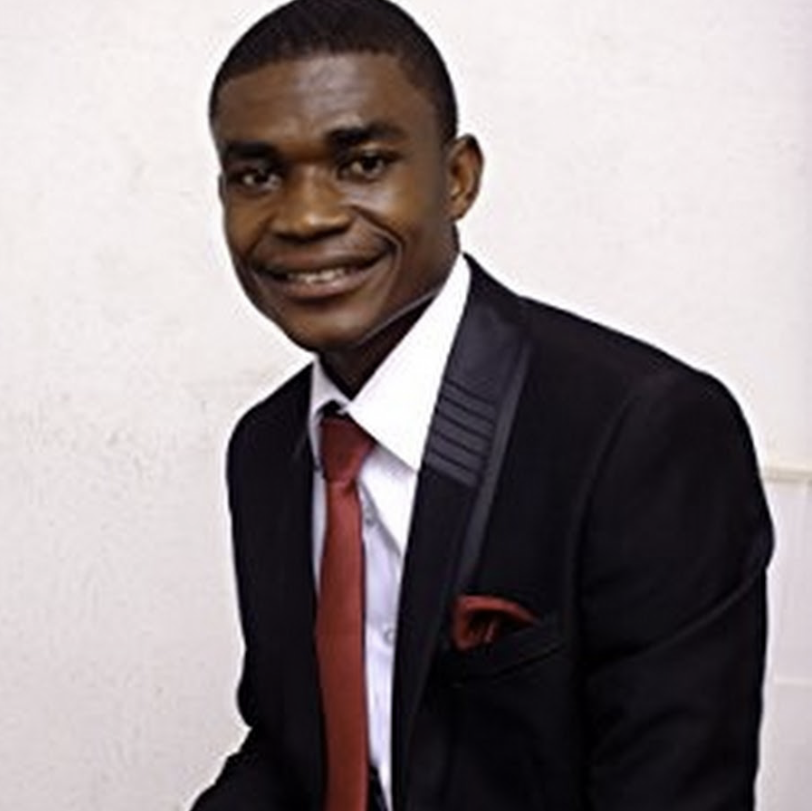
Ghanaian born writer. He is the author of the must read ‘distinctive footprints of life’, ’the untapped wonderer in you’.
Ernest Agyemang Yeboah. Photo: Youtube
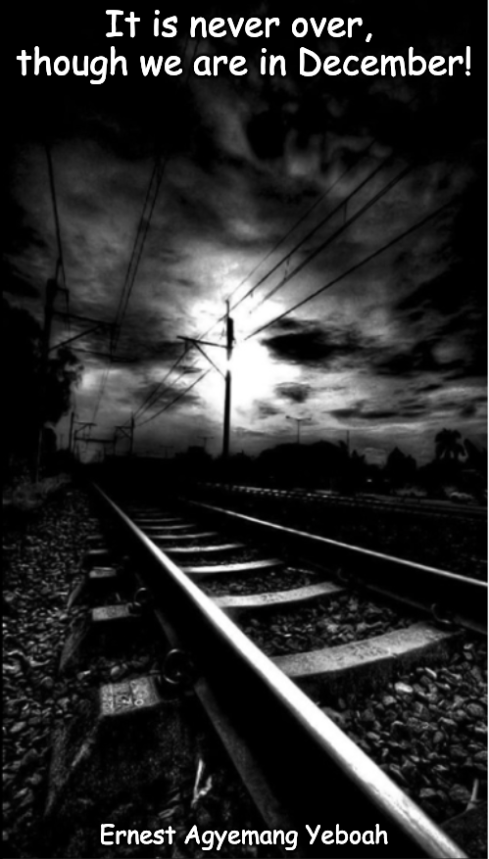
It is never over, though we are in December!
Photo by b&wphotography
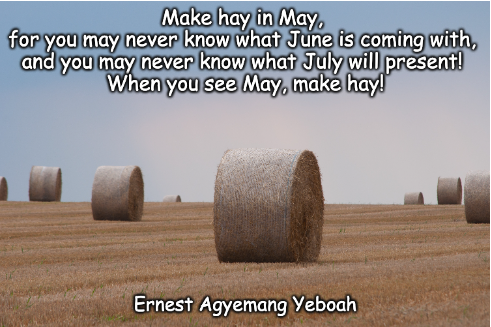
Make hay in May, for you may never know what June is coming with, and you may never know what July will present! When you see May, make hay!
Photo by Hes Mundt
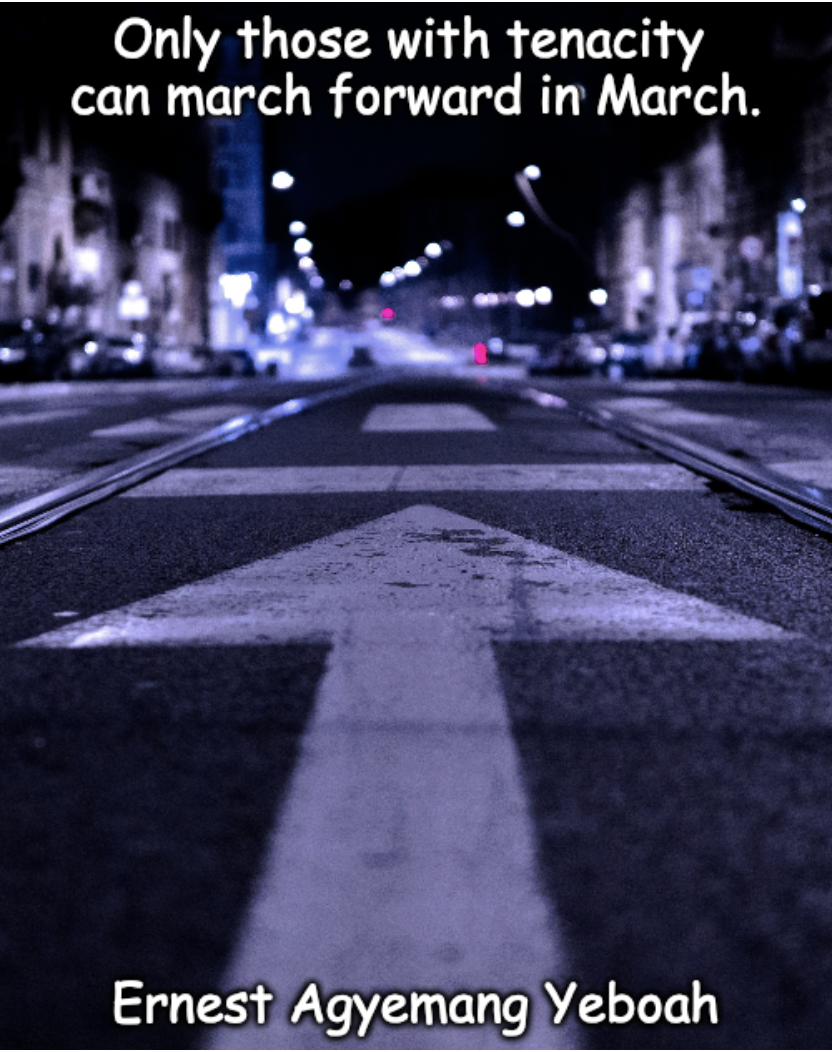
Only those with tenacity can march forward in March.
Photo: Vek Labs. 🇳🇱 Meaning: This saying emphasizes the crucial importance of perseverance and resilience. It suggests that only those who remain steadfast despite challenges can progress and achieve their goals. “Tenacity”: Represents perseverance, persistence, and refusal to give up. “Marching forward in March”: This can literally refer to the month of March, which is often associated with new beginnings or continuing efforts after winter. Figuratively, it represents making progress, achieving success, or overcoming obstacles along the way. In short, it is an encouragement to stick to your goals even when things get difficult, because this is the only way to actually move forward. 🌍 Origin: The exact context or moment when Ernest Agyemang Yeboah first uttered or wrote this saying is not always clear. It seems to be part of his broader oeuvre of inspirational quotes and aphorisms. Yeboah is known for his motivational writing style and his focus on personal growth, leadership and overcoming adversity. Many of his quotes are intended to encourage and inspire readers. ✍️ Author:Ernest Agyemang Yeboah is a renowned author and speaker, best known for his inspirational quotes and books on spirituality, motivation and personal development. He has a large online presence and his statements are often shared on social media because of their depth and applicability to everyday life. He has published several works aimed at empowering individuals and encouraging a positive mindset. His writing style is often direct and concise, making his messages easy to remember and share.
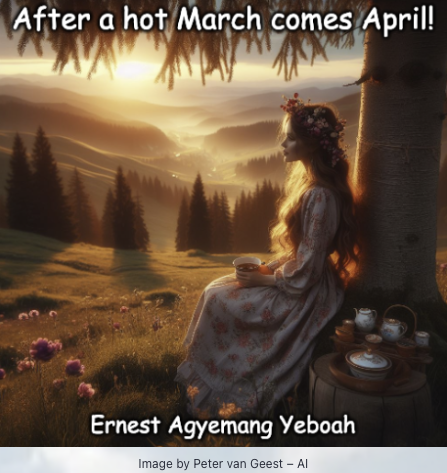
After a hot March comes April!
Meaning 🧐:This proverb has a twofold meaning: Weather forecasting: The most direct meaning is that an unusually warm or dry month of March is often followed by a month of April with cooler and wetter weather. It is a piece of folk wisdom regarding the unpredictability of spring weather in our regions. Symbolic meaning: Figuratively, it can mean that a period of intense activity, passion, or even adversity (the “hot March”) is often followed by a time of cooling, rest, or change (“April”). It reminds us that everything is cyclical and that extremes are rarely permanent. Origin 🕰️: The origin of this specific proverb cannot be established with absolute certainty. It is likely an old piece of folk wisdom that has been passed down for generations. Weather folklore: Many weather proverbs originated from observations by people closely connected to nature, such as farmers and fishermen. They noticed patterns in the weather and recorded them in easy-to-remember sayings. No specific source: Unlike quotes from famous people, folk proverbs rarely have a single specific author or source that can be identified. They are part of oral tradition and may have been adapted over time. It is unlikely that Ernest Agyemang Yeboah is the author of this originally English proverb. Time difference: The proverb “After a hot March comes April!” (or variants thereof) has been in circulation much longer than the career of the Ghanaian writer Ernest Agyemang Yeboah. It is a proverb deeply rooted in European, and particularly Dutch, folk culture. Other context: Ernest Agyemang Yeboah is known for his motivational and philosophical quotes, but it is unlikely that he coined a traditional Dutch proverb about the weather. In summary ✨: The proverb “After a hot March comes April!” is an old piece of folk wisdom that warns of the changeability of spring weather and reminds us that extremes are temporary. The exact origin is unknown, but it was certainly not invented by Ernest Agyemang Yeboah, although he is listed as the author on many internet websites.
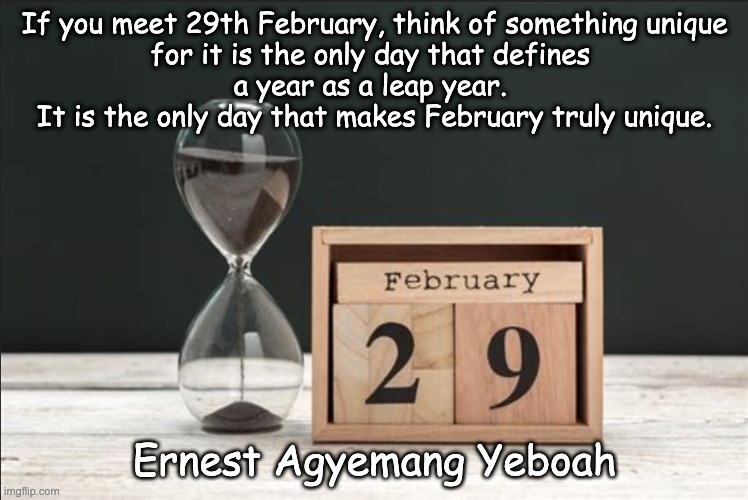
If you meet 29th February, think of something unique for it is the only day that defines a year as a leap year. It is the only day that makes February truly unique.
Photo: rd.com. Meaning📌 🧠: The quote uses February 29th as a metaphor for rarity and opportunity: Rare day = rare opportunity; February 29th only comes around once in a while → so: if you encounter such a moment, make it meaningful. “Leave a distinctive footprint” = leave something lasting. Do something that stands out, something you remember later, or something that has an impact on others. Carpe diem-like undertones. It emphasizes: don’t wait for “perfect” moments; seize the exceptional when it presents itself. 🗓️ “It’s the only day that defines a year as a leap year” — is that correct? 🔎 Poetic/rhetorical: The sentence is mainly meant symbolically. Technically: A year is a leap year because of a calendar rule (Gregorian: divisible by 4, except century years unless divisible by 400). February 29th is rather the visible consequence of that rule. Why it works as a metaphor: In practice, people experience: “Leap year = the year with February 29th.” So as a metaphor, it’s effective, even though it’s not mathematically “the definition.” 🌍 Origin (genre & distribution) 🧾 This isn’t a traditional English proverb with ancient folklore origins, but rather: Modern motivational quote / aphorism. Likely spread via: quote sites, social media, quote aggregators. The style (repetition “If you meet February 29th…”, exhortation, moral) fits very well with contemporary inspirational writing. ✅ Author ✍️: The quote is often attributed to: Ernest Agyemang Yeboah. Important caveat: The source, in this case, “goodreads” is usually a secondary source (user quotes, sometimes without an exact origin such as book/title/page). This means that the attribution is plausible, but only truly “hard” if you find the quote in a primary source (book, poem, blog post, official social post of the author).
Door Pieter
Mensenmens, zoon, echtgenoot, vader, opa.
Spiritueel, echter niet religieus.
Ik hou van golf, wandelen, lezen en de natuur in veel opzichten.
Onderzoeker, nieuwsgierig, geen fan van de mainstream media (MSM).