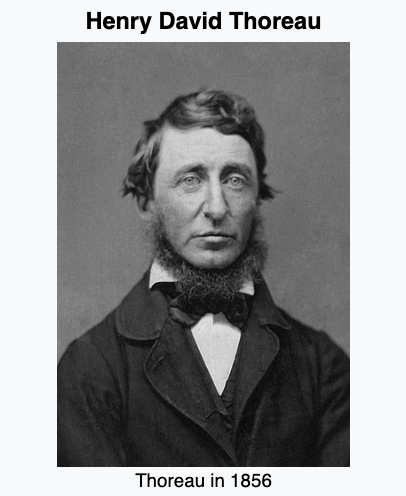
Born as David Henry Thoreau.
(Concord (Massachusetts), 12 July 1817 – there, 6 May 1862). American essayist, teacher, social philosopher, naturalist and poet.
Photo: wikipedia.org
The question is not what you look at, but what you see.
Photo by Shima Abedinzade
Experience is in the fingers and head. The heart is inexperienced. –
Photo by Gerd Altmann
If one advances confidently in the direction of his dream, and endeavors to live the life with he has imagined, he will meet with a succes unexpected in common hours.
Photo by Dana Tentis
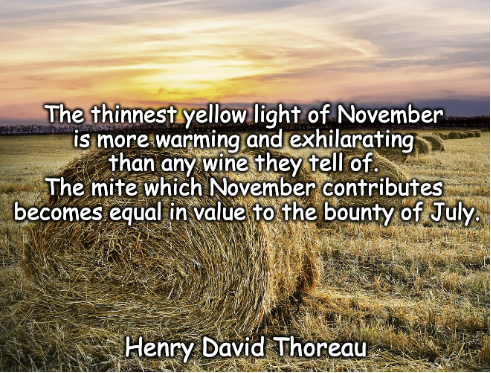
The thinnest yellow light of November is more warming and exhilarating than any wine they tell of. The mite which November contributes becomes equal in value to the bounty of July.
Photo by Pete Linforth
You must live in the present, launch yourself on every wave, find your eternity in each moment. Fools stand on their island of opportunities and look toward another land. There is no other land; there is no other life but this.
Photo by wenaturelovers
October is the month of painted leaves. Their rich glow now flashes round the world. As fruits and leaves and the day itself acquire a bright tint just before they fall, so the year nears its setting. October is its sunset sky; November the later twilight.
Photo by proartspb
We can never have enough of nature.
Photo by Henry David
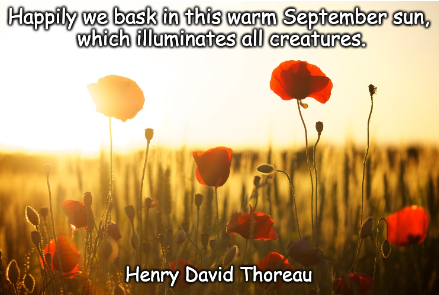
Happily we bask in this warm September sun, which illuminates all creatures.
Photo by Dani Géza
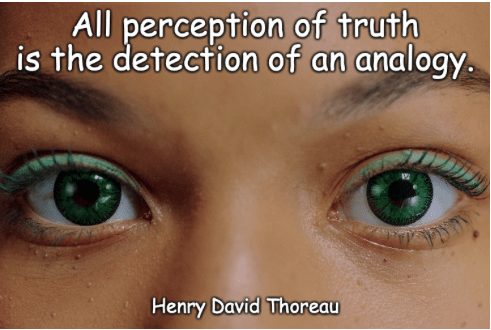
All perception of truth is the detection of an analogy.
Photo by Ron Lach
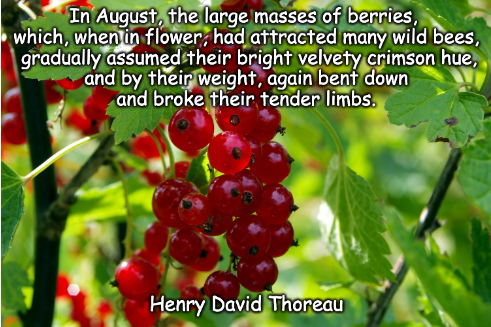
In August, the large masses of berries, which, when in flower, had attracted many wild bees, gradually assumed their bright velvety crimson hue, and by their weight, again bent down and broke their tender limbs.
Photo by Henryk Niestrój
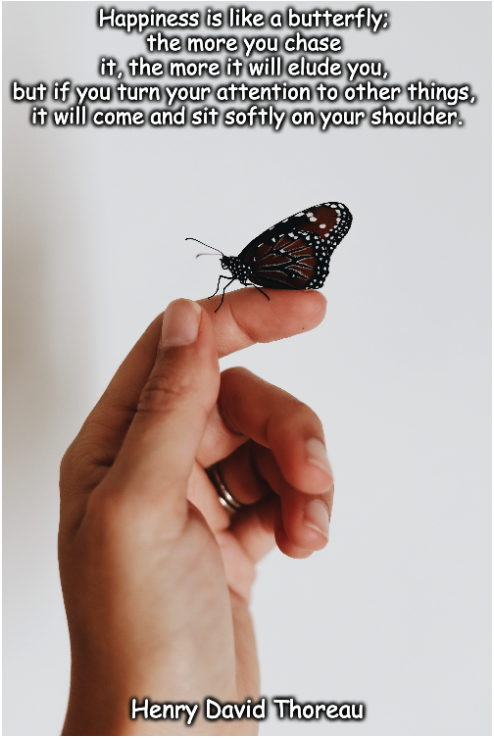
Happiness is like a butterfly; the more you chase it, the more it will elude you, but if you turn your attention to other things, it will come and sit softly on your shoulder.
Photo by Amy Humphries
What’s the use of a fine house if you haven’t got a tolerable planet to put it on?
Photo by Florian Schmidinger
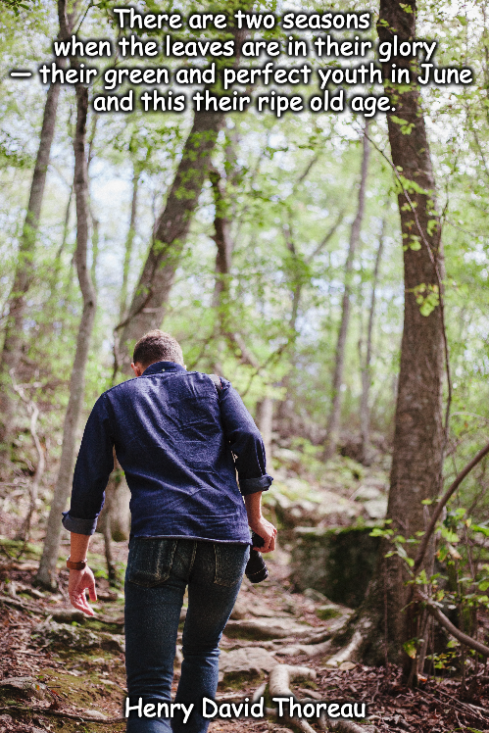
There are two seasons when the leaves are in their glory—their green and perfect youth in June and this their ripe old age.
Photo by James Ftzgerald
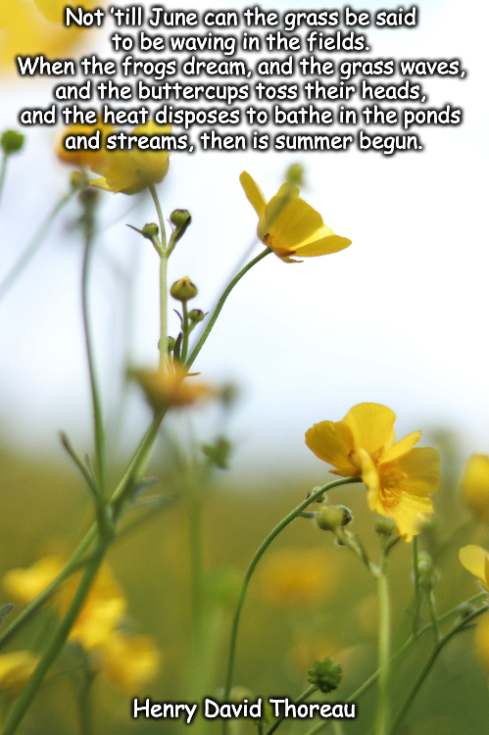
Not ’till June can the grass be said to be waving in the fields. When the frogs dream, and the grass waves, and the buttercups toss their heads, and the heat disposes to bathe in the ponds and streams, then is summer begun.
Photo by Rachael
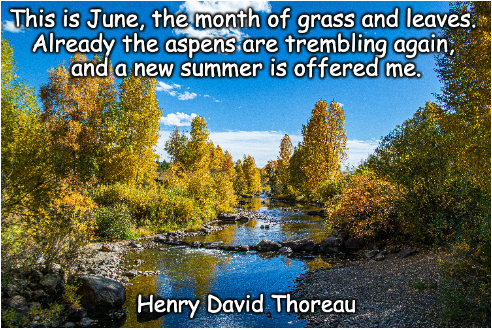
This is June, the month of grass and leaves. Already the aspens are trembling again, and a new summer is offered me.
Photo by Matthew Hernandez
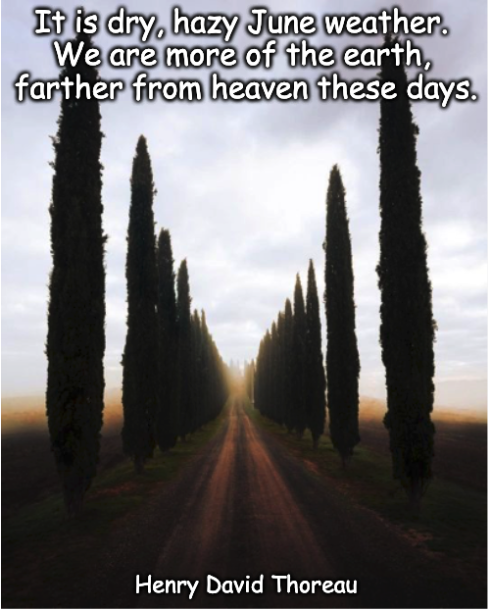
It is dry, hazy June weather. We are more of the earth, farther from heaven these days.
Photo by proartspb
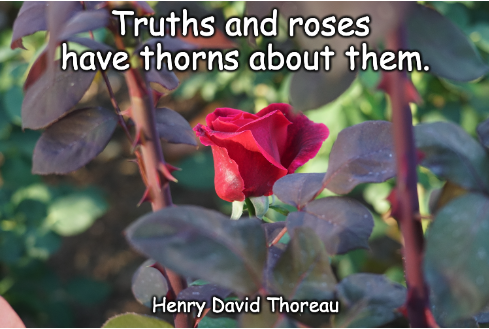
Truths and roses have thorns about them.
Photo by Josh Ogden
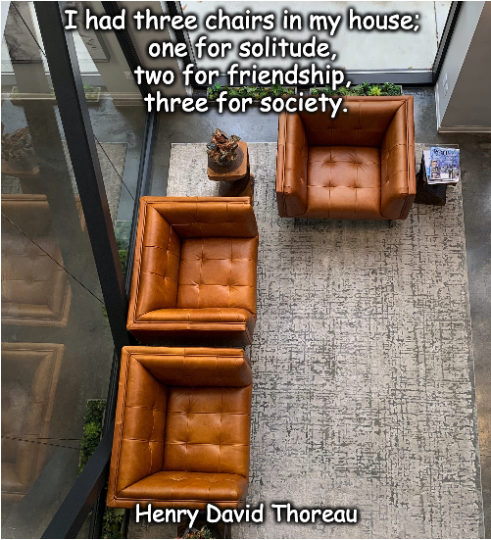
I had three chairs in my house; one for solitude, two for friendship, three for society.
Photo by Jan Canty
Dreams are the touchstones of our character.
Foto: Artie Navarre. Origin: A touchstone is a deep black form of lydite used in determining the gold content in an alloy.
Say what you want to say, instead of what others want to hear.
Photo by Michael Parzuchowski
Disobedience is the true foundation of liberty.
Photo by Suzanne Morris
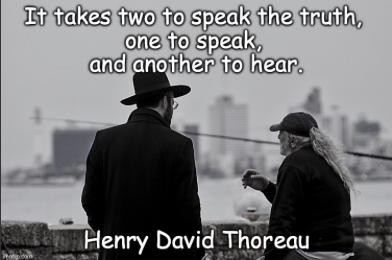
It takes two to speak the truth, one to speak, and another to hear.
Photo: альберт
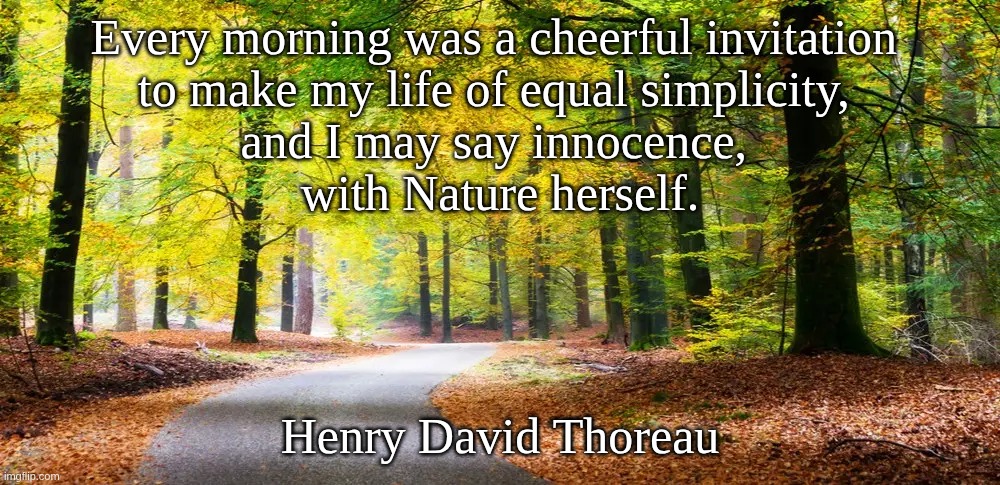
Every morning was a cheerful invitation to make my life of equal simplicity, and I may say innocence, with Nature herself.
Photo: adresjesdeveluwe
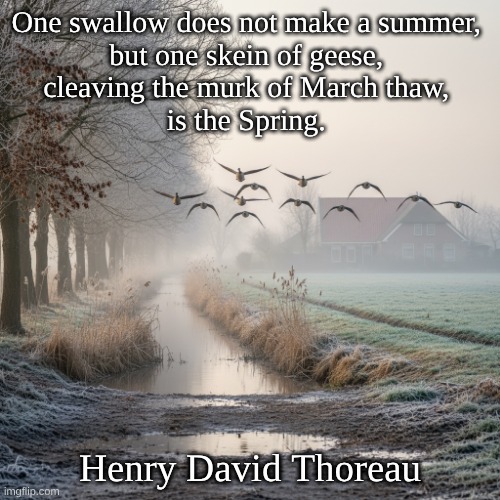
One swallow does not make a summer, but one skein of geese, cleaving the murk of March thaw, is the Spring.
Image: Peter van Geest AI. Meaning 🐦☀️: The saying “One swallow doesn’t make a summer, but one wedge of geese, cutting through the fog of the March thaw, is spring” combines two observations about the beginning of seasons: “One swallow doesn’t make a summer”: This is a well-known expression meaning that one positive sign doesn’t guarantee a larger, dramatic change. The first swallow you see doesn’t necessarily mean summer has begun; cold days may still follow. It warns against jumping to conclusions based on a single piece of evidence. “But one wedge of geese, cutting through the fog of the March thaw, is spring”: This part qualifies the first statement and gives a much more reliable sign of spring. “Wedge of geese”: Geese fly in a V-shaped formation (a ‘wedge’ or ‘goose in a point’) and are known as migratory birds. “Mist of the March Thaw”: This evokes early spring, when the winter chill slowly recedes, snow melts, and damp, foggy days are common. “Cleft”: This is a powerful verb suggesting that the geese, with their flight, pierce the winter atmosphere and clear the way for spring. Together, the proverb means that while individual signs can be misleading, the collective and powerful presence of returning migratory birds (such as geese) in early spring is an unmistakable and definitive signal that spring has truly arrived. It’s the scale and nature of the sign that matters. Origin and Author 📝🌿: This specific formulation is not a traditional Dutch weather proverb in the sense of an old, anonymous saying passed down from generation to generation. While the first part (“One swallow does not a summer make”) is indeed a very old and internationally known proverbial expression (already known in ancient Greece, attributed to Aristotle in his Nicomachean Ethics), the addition about the geese and the mist of the March thaw is of a more modern literary nature. It sounds like a fragment from a poem, a song lyric, or a prose text with a poetic slant. After research, this specific line turns out to be a direct translation of a passage from the work of the famous American physicist and philosopher Henry David Thoreau. Author:Henry David Thoreau (1817-1862) Work: The line is taken from his influential work “Walden; or, Life in the Woods” (1854). The original English text reads: “One swallow does not make a summer, but one wedge of geese, cleaving the / March mist high above the alder-swamp, is a sign of spring.” Thoreau was known for his profound observations of nature and his philosophical reflections on them. He spent two years, two months, and two days in a cabin on Walden Pond, studying nature and living according to his principles of simplicity and self-sufficiency. This saying perfectly suits his style: close observation of nature combined with depth and poetry. So, although “one swallow doesn’t a summer make” is ancient, the addition that makes it a complete and beautiful saying about spring is thanks to Henry David Thoreau.
Door Pieter
Mensenmens, zoon, echtgenoot, vader, opa.
Spiritueel, echter niet religieus.
Ik hou van golf, wandelen, lezen en de natuur in veel opzichten.
Onderzoeker, nieuwsgierig, geen fan van de mainstream media (MSM).