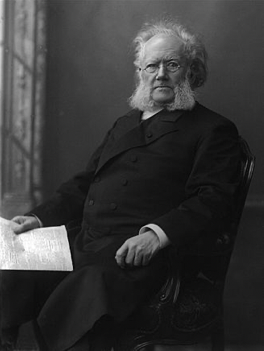
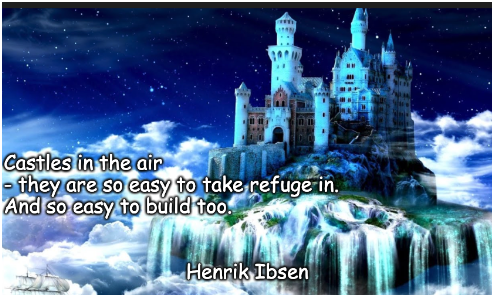
Castles in the air – they are so easy to take refuge in. And so easy to build too.
Photo: unknown. Meaning: Castles in the air refers to unrealistic dreams or plans that are difficult or impossible to realize. The phrase emphasizes how easy it is to escape into fantasies and ideals, as well as the ease with which these plans can be devised. The term “castles in the air” is often associated with the themes of idealism and unreality. The idea that dreams and plans often cannot be put into practice is a recurring theme in literature. Origin: Henrik Ibsen is the original author of this expression, which plays a significant role in his theme.
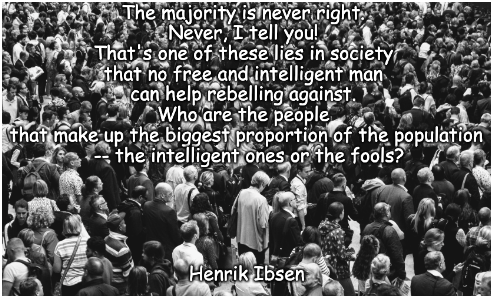
The majority is never right. Never, I tell you! That’s one of these lies in society that no free and intelligent man can help rebelling against. Who are the people that make up the biggest proportion of the population — the intelligent ones or the fools?
Photo: Rob Curran. Meaning:Core idea: The statement asserts that the majority of the population often does not hold the correct or most sensible views.Rebellion against conformity: It calls for people not to blindly follow the opinion of the majority, but to think independently.Smart versus stupid: The author distinguishes between ‘intelligent’ people (the few) and ‘stupid’ people (the majority), suggesting that the stupid often prevail in society. The statement challenges us to think critically about the views of the majority and to form our own, well-considered opinions. It emphasises the importance of individual intelligence and independence in thinking. Origin: Although Friedrich Nietzsche is often cited as the author, Henrik Ibsen is the original author of this statement.
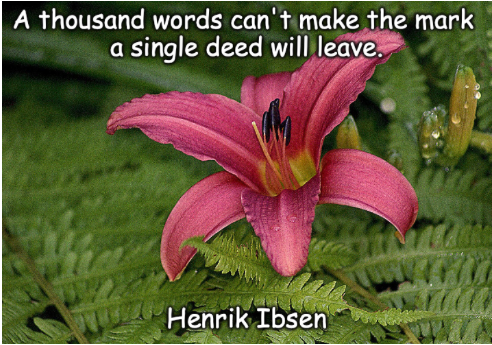
A thousand words can’t make the mark a single deed will leave.
Photo by Bronisław Dróżka
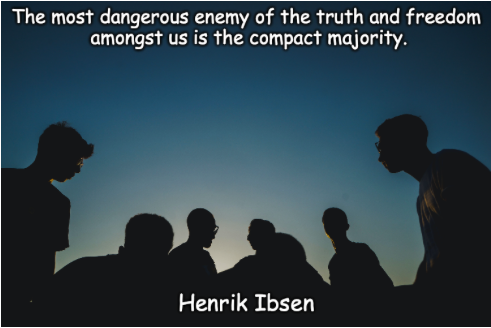
The most dangerous enemy of the truth and freedom amongst us is the compact majority.
Photo by Papaioannou Kostas
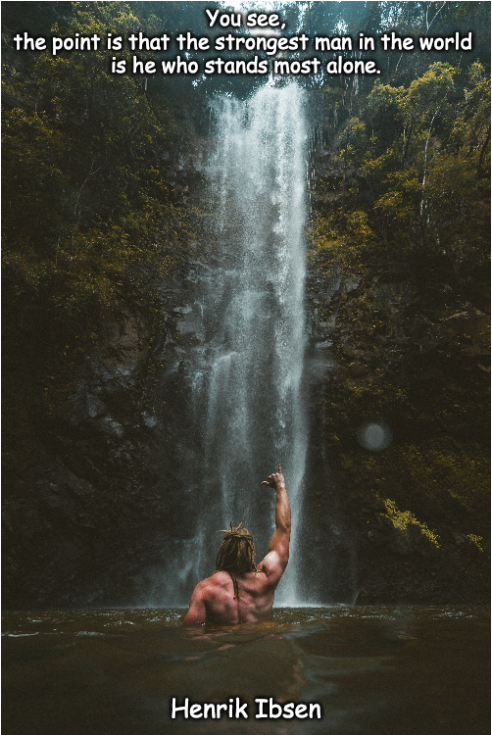
You see, the point is that the strongest man in the world is he who stands most alone.
Photo by Karsten Winegeart. Meaning: Expresses that true strength sometimes consists of standing alone, even when everyone turns against you. It is about moral strength, refusing to give up your convictions and values, even if that leads to isolation, hostility and personal sacrifice. Origin: Taken from the play An Enemy of the People (1882) by Norwegian writer and playwright Henrik Ibsen. It is a statement made by the main character, Dr Thomas Stockmann.
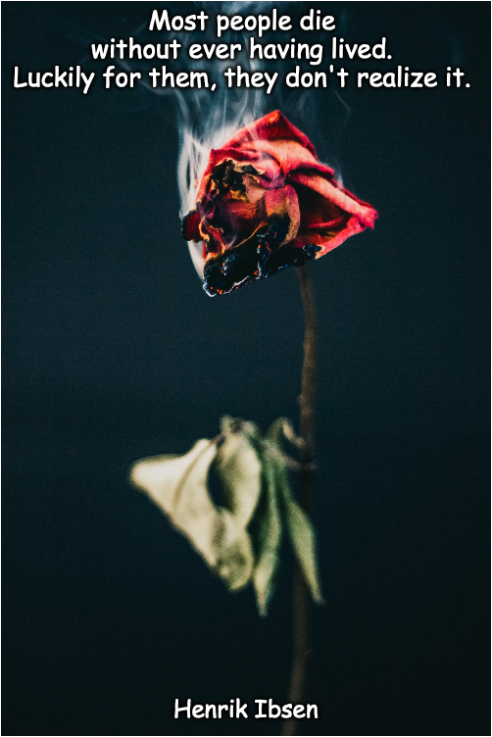
Most people die without ever having lived. Luckily for them, they don’t realize it.
Photo by Caleb Shong
Door Pieter
Mensenmens, zoon, echtgenoot, vader, opa.
Spiritueel, echter niet religieus.
Ik hou van golf, wandelen, lezen en de natuur in veel opzichten.
Onderzoeker, nieuwsgierig, geen fan van de mainstream media (MSM).