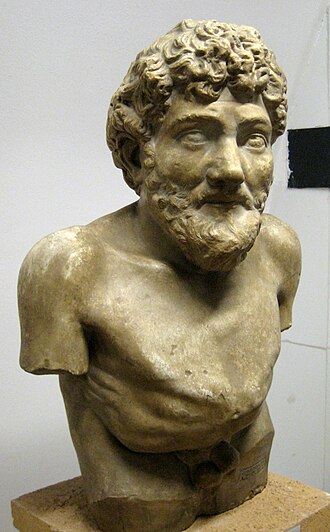
(Ancient Greek: Αἴσωπος) (probably 6th century BC), Greek poet of fables. Aesopus’ fables enjoyed fame in antiquity and inspired later authors.
Photo: wikipedia.org
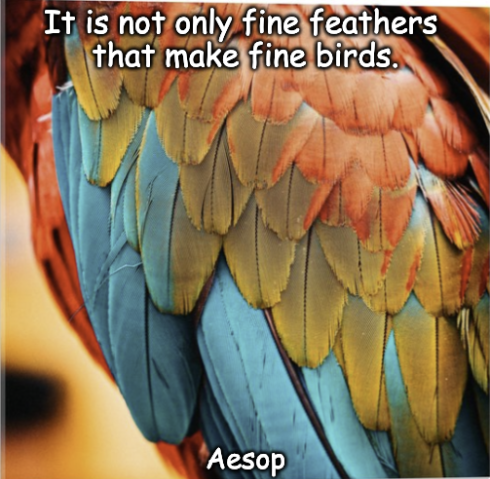
It is not only fine feathers that make fine birds.
Photo by Jan Kopřiva
We hang the petty thieves and name the greats in a public office.
Photo: Rafael Nir
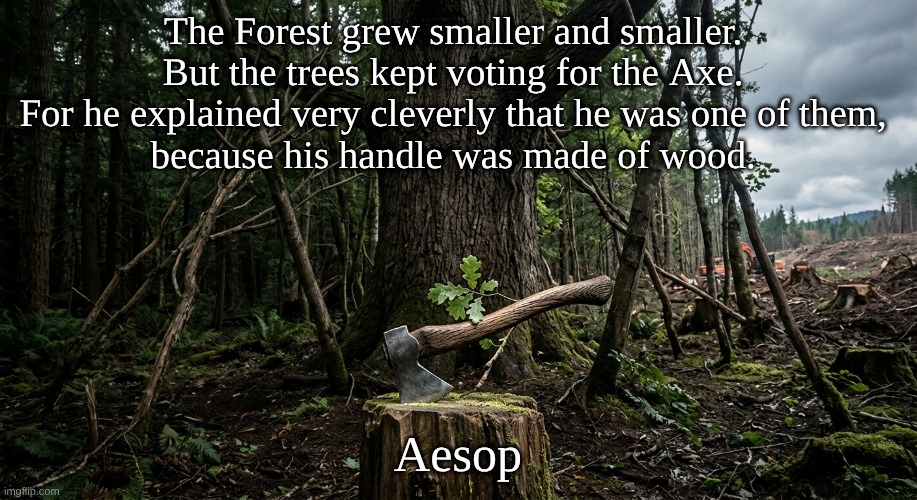
The Forest grew smaller and smaller. But the trees kept voting for the Axe. For he explained very cleverly that he was one of them, because his handle was made of wood.
Image: Peter van Geest AI. Meaning 📖 💡: This saying is a powerful and widely used political allegory. It warns against manipulation and the consequences of voting against one’s own interests. The allegory works on several levels: The Metaphor: The Forest 🌳: Represents a group of people or a society. The Trees 🌲: Are the individual citizens, often those who are vulnerable or ordinary working people. The Axe 🪓: Symbolizes an external force, a dictator, an oppressive government, or a political system that will ultimately harm the group. The Wooden Handle 🪵: This is the crucial element. It is the deceptive connection the Axe uses to win the trust of the Trees. It is a superficial resemblance that is misleading. The Central Theme: The saying illustrates how people can be persuaded to support a leader or policy that will ultimately harm them. The Axe convinces the Trees that he is “one of them,” despite the fact that his true nature and function (a murder weapon) are destructive to them. 🏺 Origin and Variations: The origin of this fable is ancient and has deep roots in Western literature. Aesop’s Fables: The basic idea comes from the Greek fabulist Aesop (circa 600 BC). In his fable “The Woodcutter and the Forest,” a woodcutter asks the trees for a piece of wood for a handle for his axe. The trees, foolishly enough, grant his request. As soon as the axe has a handle, the woodcutter begins chopping down the forest. The moralizing ending warns against giving the means of destruction to your enemy. Various Versions: The concept has been adapted and reinterpreted over the centuries. There are versions in which the trees quarrel and choose a ‘king’ (the axe), who then destroys them. A well-known English version,“The Woodman and the Trees,” follows a similar story. 🖋️ Author of this Specific Version: The specific wording in your image: “The Forest grew smaller and smaller. But the trees kept voting for the Axe. For he told very cleverly, that he was one of them, because his handle was made of wood.” is a modern, highly concentrated paraphrase. It cannot be attributed to one specific modern author. Instead, it is an evolved, more cynical, and directly political version that has become popular in public debate and on social media. It is often used as a critique of populism or political ignorance. Conclusion:Although the core idea harks back to Aesop, the modern “voting for the axe” version has become a powerful, anonymous piece of political folklore. 🌳🪓
Door Pieter
Mensenmens, zoon, echtgenoot, vader, opa.
Spiritueel, echter niet religieus.
Ik hou van golf, wandelen, lezen en de natuur in veel opzichten.
Onderzoeker, nieuwsgierig, geen fan van de mainstream media (MSM).